
Reviewed · HAARLEM TOURS
Haarlem: Windmill ‘De Adriaan’ Guided Tour
Haarlem’s De Adriaan windmill is more than a pretty picture beside the Spaarne. Inside, you’ll see the gears, millstones, flour floor, and timber structure that made wind power useful long before modern machinery. The guides explain it with working details and scale models, not just dates.
I like two things in particular: the practical explanation of windmill technology and the chance to step onto the 12-meter gallery for a clear view across Haarlem. Guides such as Fred, Jan, and Michiel have brought plenty of warmth, humor, and local interest to the hour. The main drawback is simple: the stairs are steep, with no elevator, so this is not a good fit if you have mobility limits or dislike heights.
Key points to know before you go
- A real working mill: See the special grinding stones, flour-collecting floor, gears, and other inner workings of De Adriaan.
- A useful introduction to Dutch windmills: Detailed models show how different mills worked and what jobs they performed.
- A 12-meter outdoor gallery: Walk around the deck for views of Haarlem and the Spaarne.
- A guide-led visit only: You enter the mill under the supervision of a guide, with tours available in English or Dutch.
- Steep access: You climb five increasingly steep stair sections, and the descent can feel just as demanding.
- Excellent value at $9: The one-hour visit combines a museum-style lesson, a working historic structure, and a city viewpoint.
Why De Adriaan is worth an hour in Haarlem
Haarlem is easy to enjoy on foot, with its old streets, canals, and handsome central squares. De Adriaan adds something different: it shows how Dutch engineering shaped daily life, rather than simply giving you another historic building to admire from outside.
The mill sits in the city center beside the Spaarne, which makes it easy to add to a day of sightseeing. You do not need to set aside half a day. The guided visit lasts about one hour, making it a smart stop between Haarlem’s other sights, a canal walk, or lunch.
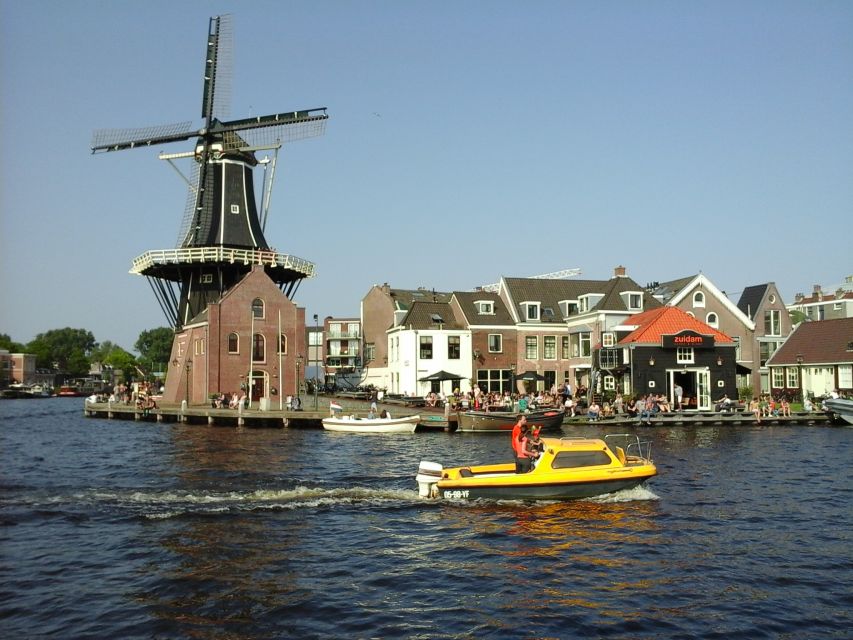
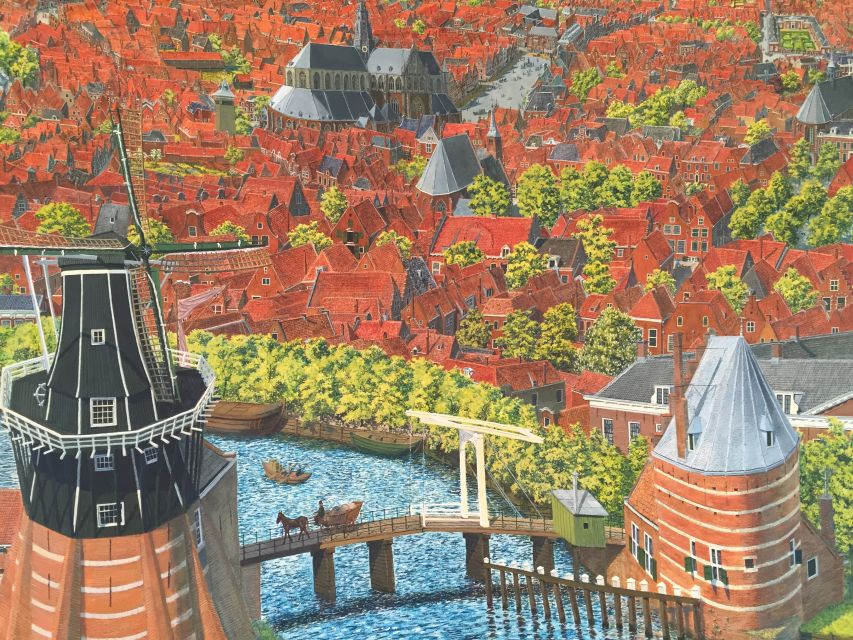
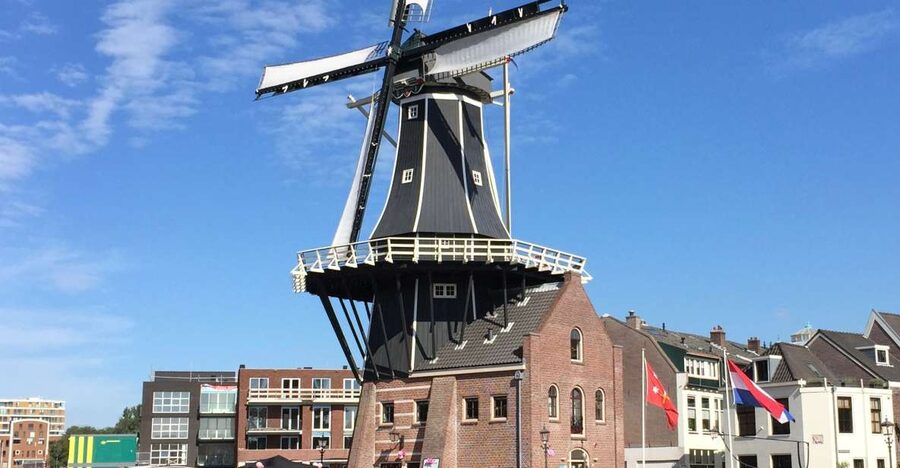
The setting is part of the appeal. From street level, the mill has the familiar Dutch outline, with its wooden body and turning sails when conditions allow. Inside, the structure feels much less decorative and much more mechanical. You begin to understand that a windmill was a workplace, power station, storage area, and piece of industrial equipment all at once.
The price also makes this an easy choice. At $9 per person, you are paying less than many major Dutch attractions charge for admission alone. Here, that fee includes entry and a live guide who explains what you are seeing. Donations for upkeep are appreciated, an understandable request for a landmark that depends on care and volunteer support.
More windmill trips around Haarlem:
- Haarlem: Dutch Windmill & Spaarne River Sightseeing Cruise
★ 4.1 · 152 reviews - Haarlem: De Adriaan Windmill Tour + Open Canal Cruise
★ 4.6 · 66 reviews - Amsterdam: Guided Zaanse Schans, Windmills & Cheese Tour
★ 4.4 · 4,826 reviews
Start with models that make windmill technology clear
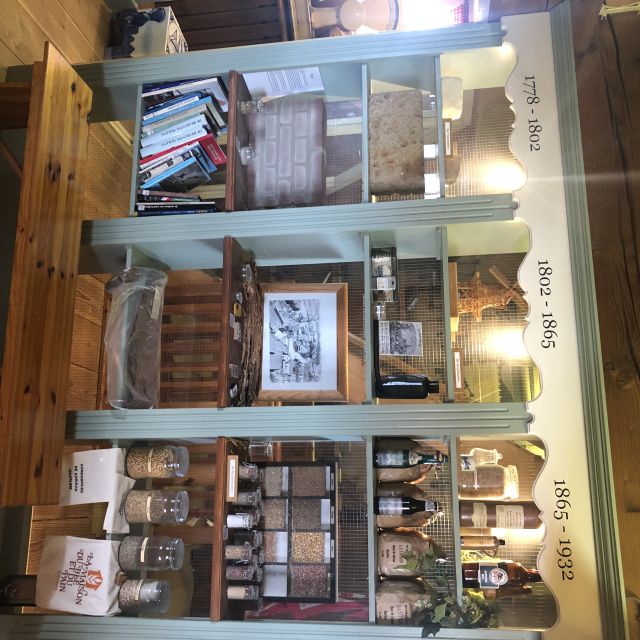
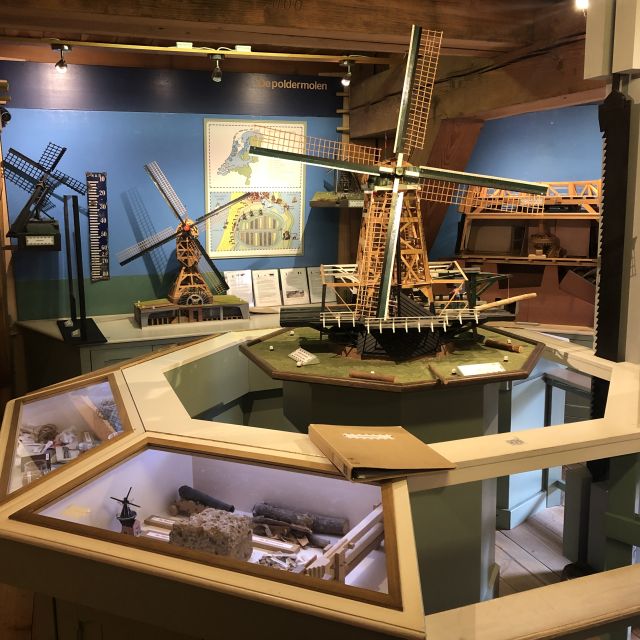
The tour begins on two floors filled with detailed models of different windmill types. This is a strong opening because the models give you a visual key for the rest of the visit.
Dutch windmills did not all perform the same task. Some were used to grind grain, while others handled different forms of industrial work. The guide uses the models to show how wind moved the sails, how that power traveled through the machinery, and how the mill’s design matched its job.
I find this part especially useful if you know windmills mainly as postcard scenery. A quick look at the outside does not tell you much about the machinery inside. The models help you see why the shape, position, and internal parts mattered.
The guides also place De Adriaan in the wider story of the Netherlands. Windmills helped people manage land and water and supported work that would otherwise have required much more human or animal effort. You get a basic lesson in Dutch engineering, but the talk remains tied to the building around you.
The best guides make this section interactive. Fred has been praised for mixing technical detail with humor, while Jan and Michiel have also been described as warm, engaging, and clear. Guide assignments can change, of course, but the experience depends heavily on these volunteers, and their enthusiasm is one of the visit’s real strengths.
See the milling floor and its unusual machinery
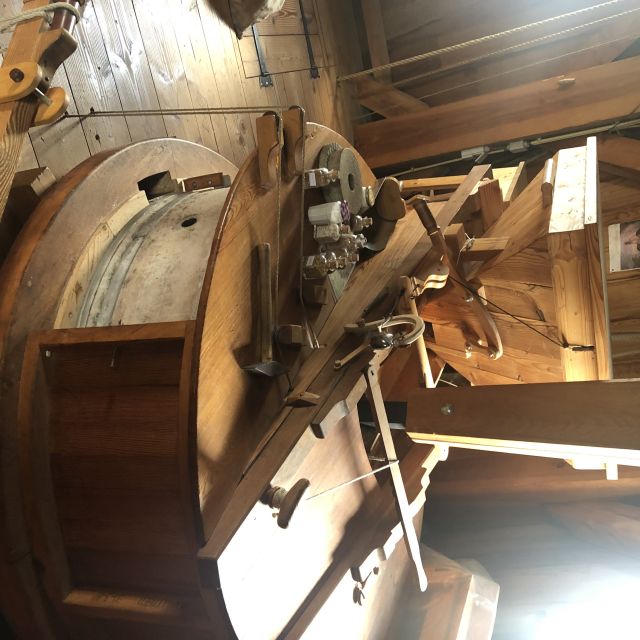
After the introductory models, the group climbs toward the top floor, known as the milling floor. Here you see the pair of special grinding stones used to mill grain into flour.
This is the point where the tour shifts from explanation to machinery. You are no longer looking only at a model or diagram. You are standing beside the equipment and can follow the basic path from grain to flour.
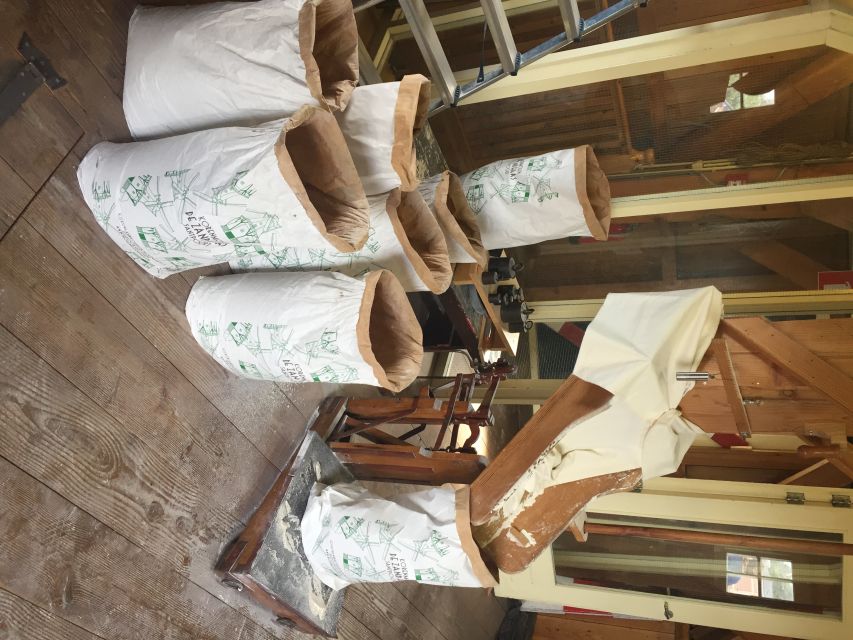
The floor below is where the flour is collected and bagged. That small detail helps you picture the whole operation. Grain entered the working system, was ground between the stones, and then moved down for collection. The mill’s levels were arranged around the production process.
Some of the visit’s most memorable details are physical. The guides may demonstrate parts of the system or use objects in the mill to make the lesson easier to grasp. One guide used a flour sack as a playful teaching aid, helping visitors understand the scale and movement of the work without turning the tour into a dry lecture.
You may also hear about the mill’s wider place in Haarlem’s past. One particularly interesting strand is the connection to the World War II Resistance, which adds a human layer to the building’s story. The visit is mainly about wind power and milling, but the mill has more than one chapter worth hearing.
Step onto the 12-meter gallery for Haarlem views
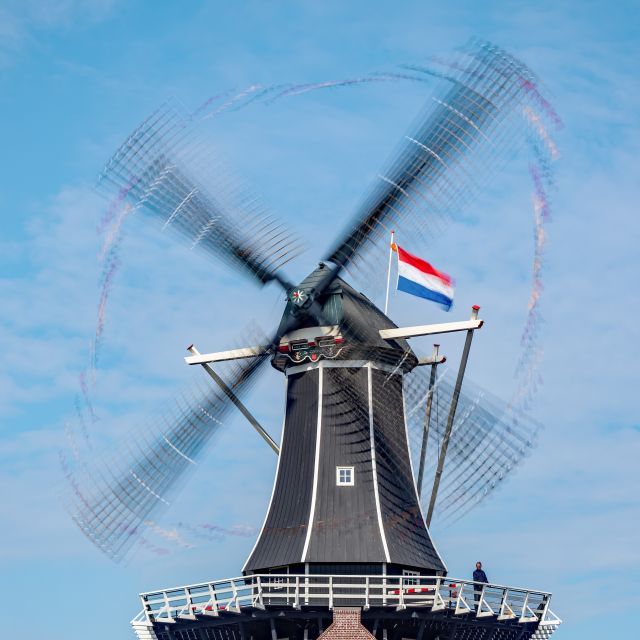
The flour floor leads outside to the gallery, or outer deck, about 12 meters, or 40 feet, above the ground. This is the payoff for the climb.
From the gallery, you can look across Haarlem and along the Spaarne. The view is not a separate observation platform with a long list of sights. It is better than that in a quieter way: you are seeing the city from a working structure that has been part of its story for roughly 250 years.
Bring your camera, but allow yourself a few minutes to look without it. The river, rooftops, and city center come together from an angle you will not get at street level. Several guides leave enough time for photographs and for visitors to take in the view before heading back down.
The deck is also where you feel the height most clearly. If you are uneasy around open edges, you may find this part uncomfortable. The attraction specifically warns people who are afraid of heights, and that warning should be taken seriously.
The outer gallery is not a reason to skip the tour if you simply want a city view, since Haarlem has plenty of pleasant streets and waterways. It is valuable because it connects the view to the mill itself. You see the town from a place built to harness the wind.
A few more Haarlem trips worth a look
- Haarlem: Sightseeing Canal Cruise through the City Center
★ 4.3 · 762 reviews - Haarlem: Sightseeing Boat Tour with Snacks and Drinks
★ 4.5 · 398 reviews - Haarlem: Guided Highlights Canal Cruise on Open Boat
★ 4.7 · 363 reviews - Haarlem: 50 minutes Boat Cruise
★ 4.5 · 272 reviews
Take the stairs seriously
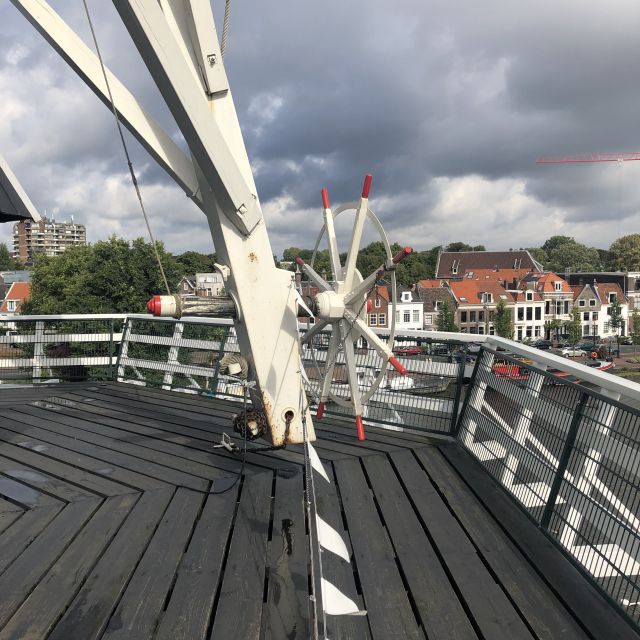
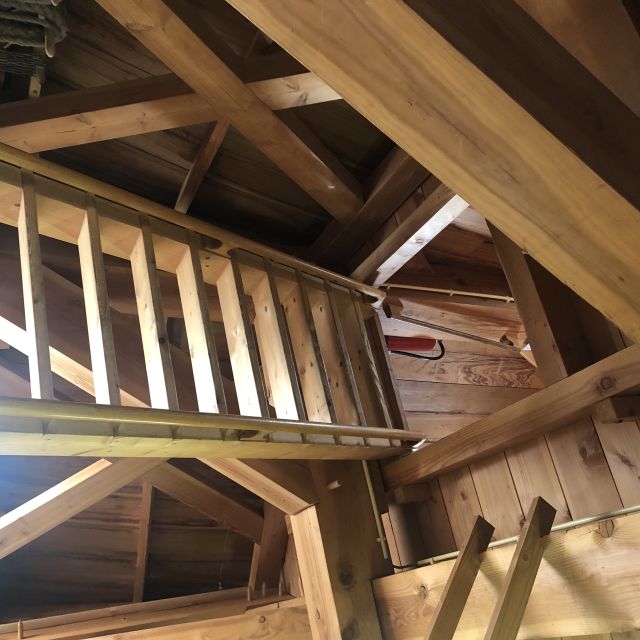
The access is the one major practical issue. There are five stair sections, and they become steeper as you go up. The route has no elevator, and some parts feel more like ladders than ordinary museum stairs.
You need to climb carefully and follow the volunteers’ instructions and the signs inside. The descent can be the harder part, especially when you are looking down through a narrow, steep run. Wear stable shoes and keep both hands available rather than trying to carry too much.
This visit is not suitable for people with mobility impairments or children under five. It is also a poor choice for anyone who is afraid of heights. Entry and stair use are at your own risk, so be honest with yourself before booking.
For everyone else, the climb is manageable if you take your time. The guides set a measured pace, and the hour is not built around rushing from one floor to the next. Families with older children can enjoy the models and machinery, and one guide has been praised for keeping children involved.
If you need special assistance or have a tight schedule, contact the mill at least 48 hours ahead. The staff can discuss the situation, but the lack of an elevator and the steep internal route remain important limits.
Language and guide style
Tours are offered in Dutch and English. About 90 percent of the tours are in English, but you should confirm the language when booking if it matters to you.
If you read another language, handouts are available in Dutch, English, French, German, Italian, Russian, Spanish, and Ukrainian. These handouts are useful for following the technical explanation, but they do not replace a live guide in every language.
You can ask about a private group if you need the tour in a particular language. With at least 48 hours’ notice, the mill will try to assign a volunteer who can guide in Dutch, French, German, Italian, or Spanish. This is the better option if a language barrier would prevent you from following the machinery lesson.
The tone is usually friendly and informal. The guides are volunteers, but that does not mean the visit feels thin. The strongest guides clearly enjoy windmills and Dutch history, and that enthusiasm comes through in the questions, jokes, and small demonstrations.
The experience does vary slightly by guide. You might get a more technical explanation from one person and more historical context from another. That is part of the character of a volunteer-run landmark, not a reason to avoid it.
How the one-hour visit fits your day
The advertised duration is one hour, and that is about right for the guided portion. The tour can feel shorter if you move quickly through the gallery, or closer to the full hour if you pause for photographs and questions.
Show your reservation at the counter when you arrive. If needed, additional tickets can be bought there. The visit is supervised, so you cannot simply wander through the mill on your own at any time.
Build in a little breathing room around the start time. You are dealing with a guided visit in a small historic building, and the climb works better when the group is not being hurried. If you arrive early, you can ask whether an earlier group has space, but do not count on being moved.
A flexible booking policy helps if your Haarlem plans are uncertain. You can cancel up to 24 hours in advance for a full refund, and a reserve-now, pay-later option is available. Check the available starting times when choosing your date, since the one-hour length does not mean the tour runs continuously.
The mill also sells coffee, tea, water, soft drinks, cookies, and souvenirs. These are extras, not part of admission. They can be handy after the climb, but the main value is the tour itself.
Who will get the most from De Adriaan
I would choose this for anyone who wants more than a quick photograph of a Dutch windmill. You get a clear explanation of how the machines worked, a look at the grinding stones, and a city view in one compact visit.
It suits families with children over five, especially if the children like machines, puzzles, or hands-on explanations. The models give younger visitors something concrete to look at, while the guide’s demonstrations can make the technical side easier to follow.
It also works well for history-minded visitors. The mill’s 250-year story, its role in Dutch engineering, and the mention of Haarlem during World War II give the hour more substance than a standard viewpoint stop.
You should think twice if you have knee, balance, or mobility problems. The steep stairs are not a minor footnote. Someone who is comfortable walking around Haarlem may still find the mill’s internal climb difficult.
People with a strong fear of heights should skip it. The outdoor gallery is one of the visit’s best features, but it is also exposed enough to cause real discomfort.
Is $9 good value?
Yes, provided you can manage the stairs. For $9, you get admission to a historic mill, a live explanation, access to the working floors, and the gallery view over Haarlem and the Spaarne.
The price is especially fair because the guide gives context that would be hard to gain by walking around the exterior. You learn what the models represent, how the machinery transfers power, and why the grinding stones and flour floor are arranged as they are.
There are cheaper ways to see a windmill in the Netherlands, including looking at one from the outside. Those options do not give you this close view of the inner workings or the chance to ask questions.
The only qualification is that the visit is short. If you want a long museum experience with many rooms and extensive displays, this is not that. Think of it as a focused, well-priced lesson with a viewpoint attached.
Should you book Windmill De Adriaan?
Book it if you want a compact, authentic Haarlem experience and are physically comfortable with steep stairs. The combination of scale models, real millstones, flour machinery, volunteer guides, and a 12-meter gallery gives you much more than a photo stop.
I would place it high on a first visit to Haarlem, especially if you have an hour to spare beside the Spaarne. Choose another attraction if you cannot safely climb, dislike heights, or need a fully accessible route.
For the best visit, wear sensible shoes, allow time for the climb down, and request a preferred language at least 48 hours ahead. At $9, De Adriaan is an easy recommendation for curious adults and older children who want to understand how a windmill actually worked.
FAQ
How long does the Windmill De Adriaan guided tour last?
The guided tour lasts about one hour.
How much does the tour cost?
The listed price is $9 per person.
Where does the tour meet?
Show your reservation at the windmill’s counter. You can also buy additional tickets there if necessary.
Is the tour available in English?
Yes. Live tours are offered in English and Dutch, and about 90 percent of the tours are in English.
Are handouts available in other languages?
Yes. Handouts are available in Dutch, English, French, German, Italian, Russian, Spanish, and Ukrainian.
Can I request a tour in another language?
You can consider the Private Group option. With at least 48 hours’ notice, the mill will try to assign a volunteer for Dutch, French, German, Italian, or Spanish.
Is there an elevator inside the windmill?
No. You climb five stair sections that become steeper as you go up.
Is the windmill suitable for people with mobility impairments?
No. The experience is not suitable for people with mobility impairments because of the steep stairs and lack of an elevator.
Can I cancel my booking?
Yes. You can cancel up to 24 hours in advance for a full refund. A reserve-now, pay-later option is also available.
Just added around Haarlem
- Haarlem Walking Tour. Unknown and Surprising★ 5.0 · 4 reviews
- BBQ on Board Haarlem Cruise★ 5.0 · 4 reviews
- Walking Tour of Haarlem with a Local Guide★ 4.5 · 4 reviews
- Delightful Haarlem★ 5.0 · 7 reviews
- Haarlem Self-Guided Taste, Culture & History Walk★ 5.0 · 7 reviews
- Haarlem Cheese and Wine Cruise★ 4.5 · 7 reviews
- Haarlem: 90-minute Beer Tasting Cruise★ 3.5 · 8 reviews
- Local Cheese and Wine Cruise through Haarlem★ 4.1 · 10 reviews
Haarlem Tours, compared.
Sightseeing Canal Cruise through the City Center
Read our review →
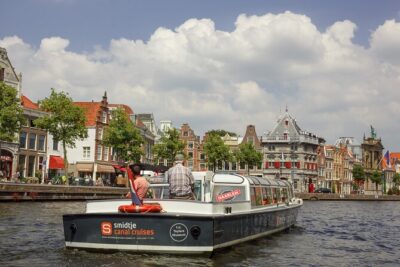

Haarlem Open-Boat Canal Cruise with Live Guide (Electric Boat)
Read our review →
Dutch Windmill & Spaarne River Sightseeing Cruise
Read our review →
Frans Hals Museum Entrance Ticket with Audio Guide
Read our review →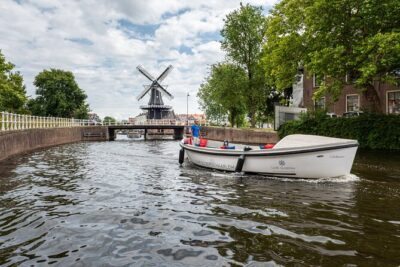
Browse the lists this tour appears in