
Reviewed · AMSTERDAM TOURS
Exclusive small-group Amsterdam Red Light District tour
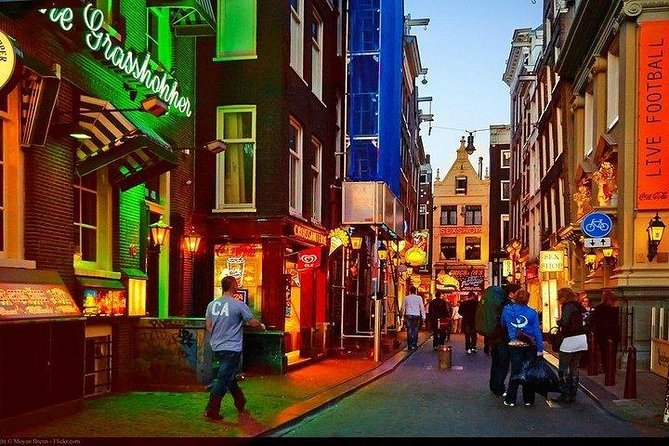
Amsterdam’s Red Light District makes more sense when you stop treating it as a collection of neon windows and look at the old city beneath it. This two-hour walk through De Wallen covers sex work and coffeeshop culture, but it also brings you to wooden buildings, medieval defenses, the Waag, and Amsterdam’s famously narrow homes.
I like the local point of view, which helps separate fact from tourist myth. I also like the compact route and range of start times, useful when you have only a short stay. Guides including Adam and Aarre are associated with lively, flexible tours, with Aarre even adapting a walk to suit a group’s needs.
The main drawback is group size: a maximum of 32 people is larger than the phrase small group may suggest. The route is also on foot through narrow streets and is not recommended for people with limited mobility.
Key points to know before you book
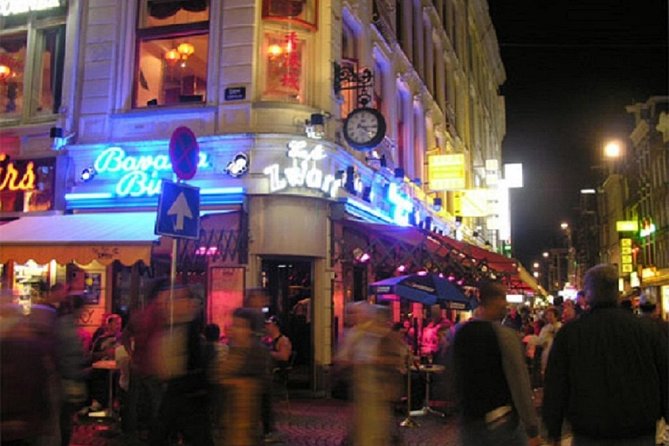
- The route mixes adult topics with old Amsterdam history, including the Waag, wooden foundations, and Int Aepjen.
- You spend about two hours walking, with the tour beginning and ending at Geldersekade 2HS.
- The group can reach 32 people, so do not expect a private or hushed walk.
- Guides such as Adam and Aarre bring a personal style, with time for questions and possible adjustments to the route.
- The tour costs $63.67 per person, a fair price if you want context and conversation rather than a quick look at the windows.
- Free cancellation is available up to 24 hours before departure, which gives you some room to adjust your plans.
Seeing De Wallen as Amsterdam’s oldest quarter
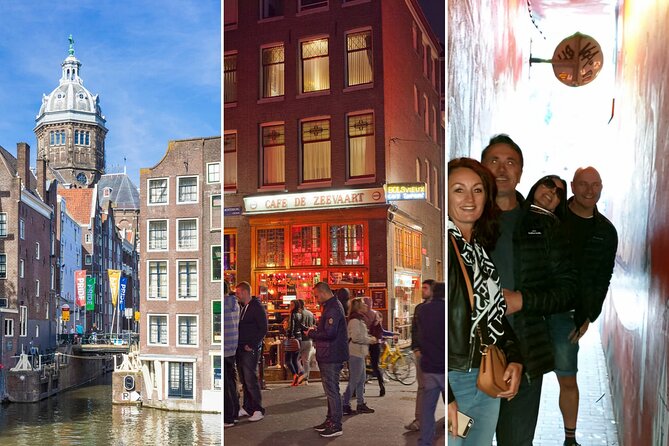
The Red Light District, known locally as De Wallen, is part of Amsterdam’s Old Town. That matters because the area is not a new entertainment zone dropped into the center of the city. It grew from the oldest part of Amsterdam, where trade, religion, defense, housing, drinking places, and sex work developed close together.
I appreciate that this tour treats the district as a working part of the city, not just a spectacle. You learn about the sex work industry and coffeeshop culture while also noticing how the streets, buildings, and canals reflect Amsterdam’s early growth.
The best approach is to arrive with an open mind and a basic sense of courtesy. This is a neighborhood where people live and work. The tour gives you a way to understand the area without turning private lives into entertainment.
The guide’s role matters here. Adam is described as entertaining while still bringing plenty of information, and Aarre is noted for being accommodating and willing to shape the tour around a group’s needs. Those details suggest a walk that can be conversational rather than a fixed speech, though your exact experience will depend on the guide and group.
More Red Light District walks:
- Amsterdam: Red Light Secrets Museum Entry Ticket
★ 4.2 · 5,722 reviews - Amsterdam: Red Light District Tour in German/English/Italian
★ 4.9 · 5,623 reviews - Amsterdam Red Light District & Coffee Shop Tour
★ 4.6 · 4,134 reviews
Meeting at Geldersekade 2HS
The tour starts at Geldersekade 2HS, 1012 BH Amsterdam, and returns to the same meeting point. That simple out-and-back arrangement is useful if you are fitting the walk between other Old Town plans.
The meeting point is near public transportation, and confirmation arrives when you book. Multiple start times add flexibility, especially if you want to visit museums or take a canal ride earlier in the day.
Give yourself enough time to reach Geldersekade without rushing. Amsterdam’s Old Town streets can be busy, and the route begins in a part of the city where it is easy to pause and look at the buildings. Since the activity ends where it began, you do not need to plan a complicated pickup or find your way across the city afterward.
The two-hour length is a good middle ground. It is long enough for real context, yet short enough to fit into a day of sightseeing. If you want an all-evening examination of Amsterdam’s adult entertainment scene, this will feel brief. If you want a clear introduction before exploring on your own, the timing works well.
The Dam and Amsterdam’s wooden foundations
One of the early stops concerns Dam Square, or De Dam, and the wooden poles that support many Amsterdam buildings. The city sits on layers of fen, clay, and water, so builders drove wooden foundation piles down to a firm layer of sand roughly 11 meters below ground.
This is the kind of detail that improves your whole visit. Once you understand why Amsterdam has been called a city built on trees, old buildings stop looking like leaning curiosities and start making structural sense.
The subject also explains something about the city’s visual character. Amsterdam’s narrow houses, crowded plots, and unusual angles are tied to difficult ground and limited urban space. A guide can connect those practical problems to the streets you are walking, rather than leaving the information as an isolated fact.
There is no admission charge for the walking tour itself. The value comes from having someone point out details you could easily pass without noticing and explain how the Old Town developed.
Int Aepjen, one of two old wooden buildings
Pub The Ape, or Int Aepjen, dates to around 1540 and is one of only two remaining wooden buildings in Amsterdam. That makes it a striking stop in a city where brick facades became the rule after a major fire in 1452.
The building gives the walk a useful change of mood. You move from modern questions about sex work and coffeeshop culture to a physical reminder of how old the city is and how quickly fire changed its architecture.
The guide can explain why the government pushed for brick fronts after the fire. You do not need to enter the pub to benefit from the stop, but the exterior helps you see how rare surviving wooden construction has become in Amsterdam.
This is also where the tour shows its strongest balance. You are not spending two hours on adult subjects alone. The route uses De Wallen as a doorway into the city’s building traditions, public policy, and street life.
A few more Amsterdam trips worth a look
- Amsterdam: Van Gogh Museum Ticket
★ 4.7 · 52,054 reviews - Amsterdam Classic Saloon Boat Cruise with Drinks and Cheese
★ 5.0 · 31,825 reviews - Amsterdam Luxury Canal Cruise + Unlimited Drinks & Bites option
★ 5.0 · 30,518 reviews - Amsterdam: Heineken Experience Ticket
★ 4.6 · 30,055 reviews
The Waag and the old city defenses
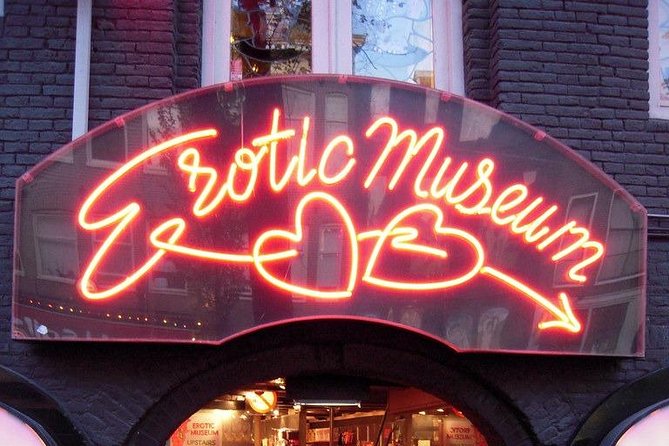
The Waag is another major historical stop. Built around the 1400s, it once formed part of Amsterdam’s defensive wall and served as one of the city gates. It is also described as the second-oldest building in Amsterdam.
Later, the Waag housed guilds, the organizations that represented craftsmen and regulated trades. That gives you a look at how medieval urban life worked. Work was not simply an individual matter. Skilled trades had their own structures, rules, and places in the city.
I find this stop especially useful because it places the Red Light District within a wider civic setting. The area was shaped by the same walls, markets, trades, and movement that shaped the rest of Old Amsterdam.
The Waag also helps you read the street plan. A district that feels maze-like today had practical reasons for its lanes and gates. Your guide can tie the surviving building to the city’s earlier role as a defended trading center.
The smallest house and the pressure of city space
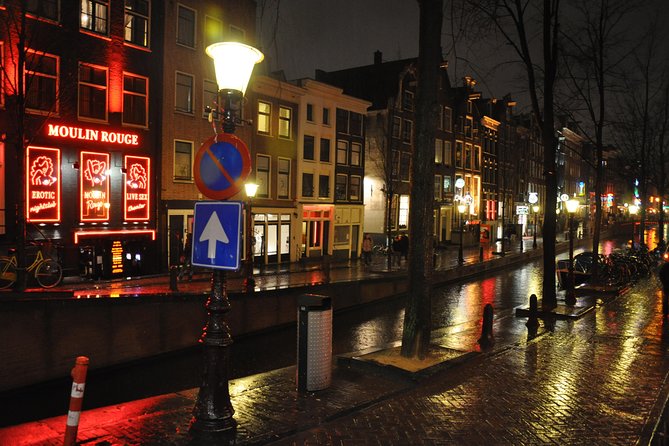
The smallest house of Amsterdam dates to around the 1700s. It was first used as storage for the Dutch East India Company, then later became a home.
The story is a neat lesson in Amsterdam’s shortage of space. A building designed for storage could eventually be used for living, showing how valuable even a very narrow plot became as the city grew.
Do not expect a large museum-style visit here. The stop is about scale and urban history. You pause, look closely, and understand that Amsterdam’s tiny houses are not just cute photo subjects. They reflect trade, property, and the need to make every bit of city land work.
This is one reason a walking tour can be more useful than a vehicle tour. You can stop beside a small facade, compare it with neighboring buildings, and hear how the street developed. The details are easy to miss when you are focused only on the district’s famous windows.
Coffeeshops, sex work, and respectful context
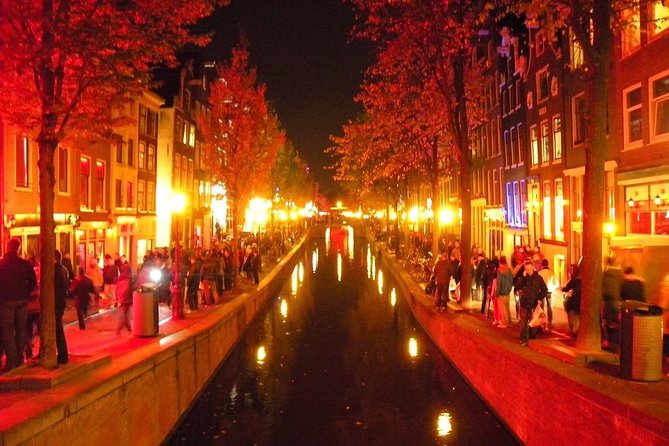
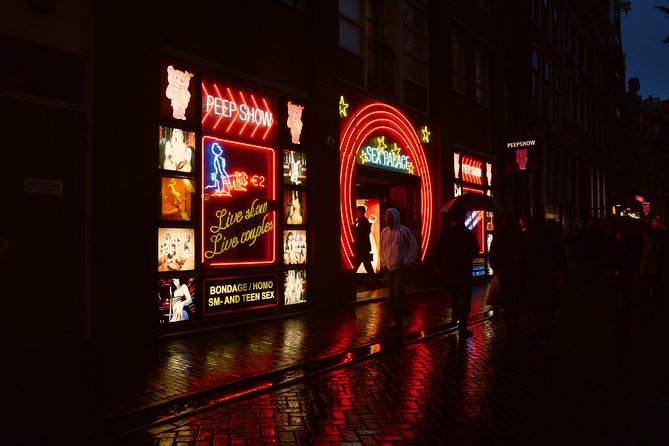
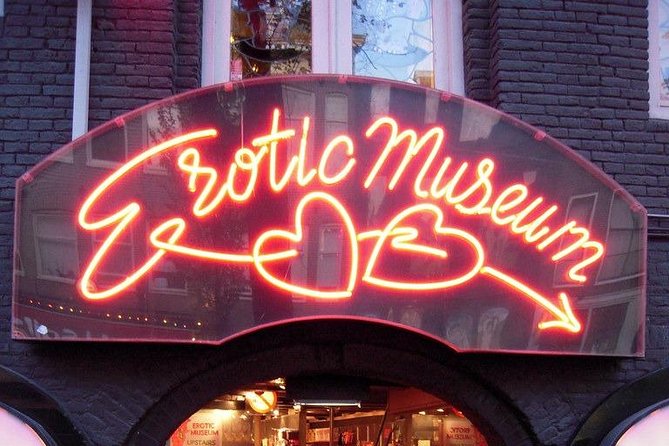
The tour explains coffeeshop culture and the sex work industry in Amsterdam. These subjects are central to De Wallen, but they need more care than a quick joke or a list of sensational facts.
A good guide helps you understand the difference between what the district looks like to an outsider and how its businesses function within Amsterdam’s social and legal setting. You also get room to ask questions, which is important here. The subject is personal, political, and often surrounded by half-truths.
The walk is not presented as a chance to photograph workers or treat the area like a theme park. You should follow the guide’s instructions, respect privacy, and keep your attention on the streets and history rather than trying to turn people into part of the tour.
The guide’s personality will shape this section. Adam is described as both entertaining and well informed, while Aarre is noted for offering a highly adaptable experience. That combination can make difficult subjects easier to discuss without making them shallow.
One caution: the tour may not suit every age group or every family. The content concerns sex work, adult entertainment, and coffeeshop culture. Check your own group’s comfort level before booking.
The world’s first dedicated condom shop
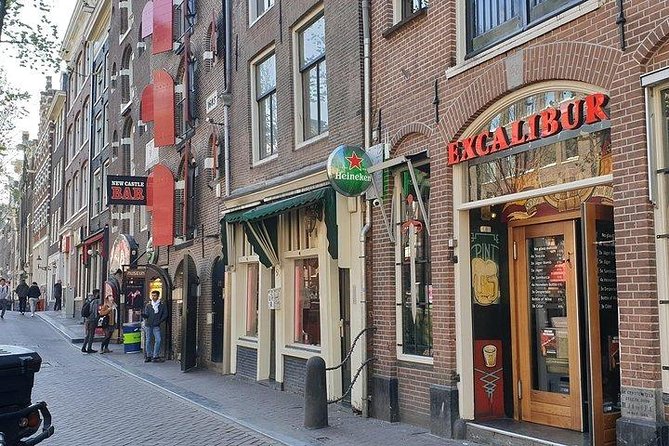
The route includes a condom shop that has been in place since 1987 and is described as the world’s first shop devoted specifically to condoms. It sells many types, including size-customized options.
This stop adds a lighter note, but it also shows how De Wallen has developed businesses around its adult reputation. You get a tangible example of the district’s commercial side, rather than hearing only broad statements about sex work.
For some people, this will be a memorable and amusing part of the walk. For others, it may feel more commercial than cultural. I would treat it as a quick stop that rounds out the story, not as the main reason to book the tour.
Is $63.67 good value for two hours?
At $63.67 per person, this is not the cheapest way to stroll through De Wallen. You can walk the streets independently for free, and many of the buildings are visible without an admission ticket.
The price makes more sense if you want interpretation. You are paying for a local guide, a planned route, explanations of the district’s adult industries, and historical connections that are difficult to assemble on your own in two hours.
The value is strongest for a first visit. If you already know Amsterdam’s Old Town well and have read extensively about coffeeshop culture and sex work, you may find the price harder to justify.
The group discount may help if you are booking for several people, though the exact saving is not provided. With a maximum of 32 participants, this is not a private walk. I would book it for access to a guide’s perspective, not for personal attention at every stop.
A two-hour tour also leaves your day open. You can use it as an introduction, then return to the district later with a better sense of what you are seeing. That makes the cost easier to accept than a longer, more expensive activity that dominates your schedule.
Who will enjoy this walk most?
I would recommend it to first-time Amsterdam visitors who want to understand De Wallen rather than simply pass through it. It also suits anyone who enjoys city history, unusual architecture, and candid discussion of modern urban culture.
It works well for:
- Adults interested in coffeeshop culture and sex work
- Short-stay visitors with only two hours to spare
- People who prefer walking and conversation to formal museums
- Small groups looking for a scheduled activity with several start times
- Anyone curious about the connection between Old Amsterdam and the modern district
I would be more cautious if you have limited mobility. The activity takes place on foot through narrow Old Town streets and is specifically not recommended for people with limited mobility.
Service animals are allowed, and most people can participate. Still, the adult subject matter and street setting are worth considering before you reserve.
Practical details that affect your day
The maximum group size is 32, so stand near the guide at the start if you want to hear every explanation clearly. Narrow streets and city noise can make it harder to follow from the back.
Wear shoes suitable for two hours of walking. That is practical advice based on the format, not a promise about exact pavement conditions. The tour ends at the starting point, Geldersekade 2HS.
You receive confirmation at booking, and free cancellation is available until 24 hours before the local start time. After that cutoff, cancellations and changes are not accepted and the amount paid is not refunded.
Because the tour averages booking 37 days ahead, reserve early if your Amsterdam dates are fixed. That lead time may be especially useful if you need a certain start time or are traveling with a group.
Should you book the De Wallen walking tour?
Book this tour if you want a brisk, guided explanation of Amsterdam’s most famous adult district, with enough Old Town history to give the streets meaning. The Waag, Int Aepjen, the smallest house, Dam Square, and the condom shop create a varied route, while the discussion of sex work and coffeeshops addresses the subjects most people come to De Wallen wondering about.
Skip it if you want a private walk, a very small group, or a strictly architectural tour. A group of up to 32 can feel sizable, and the adult themes are not a side note.
For most first-time visitors who want context, the $63.67 price is reasonable. You will not just see the Red Light District. You will learn how an old fortified trading quarter became the Amsterdam neighborhood it is today.
FAQ
How long is the Amsterdam Red Light District tour?
The tour lasts approximately two hours.
Where does the tour start?
It starts at Geldersekade 2HS, 1012 BH Amsterdam, Netherlands.
Where does the tour end?
The activity ends back at the meeting point on Geldersekade.
How much does the tour cost?
The listed price is $63.67 per person.
How many people can join the tour?
The maximum group size is 32 people.
What areas does the tour cover?
It covers Amsterdam’s Red Light District, also known as De Wallen, and parts of the Old Town.
What topics are discussed?
The tour discusses the history of De Wallen, coffeeshop culture, and Amsterdam’s sex work industry.
What sights are included?
Stops include Dam Square, Int Aepjen, the Waag, the smallest house of Amsterdam, and a condom shop that has been in place since 1987.
Is the tour suitable for people with limited mobility?
The tour is not recommended for travelers with limited mobility.
Can I cancel for a full refund?
Yes. You can cancel up to 24 hours before the experience start time for a full refund. Cancellations or changes made less than 24 hours before the start are not accepted.
Just added around Amsterdam
- Amsterdam: Giethoorn Tour with Canal Cruise and Windmills★ 5.0 · 3 reviews
- Amsterdam: Chocolate Fondue in the Dark★ 5.0 · 3 reviews
- Full-day excursion to Edam, Volendam, and Marken★ 3.7 · 3 reviews
- Amsterdam Old-West Vegan Food Tour with Local Guide★ 4.7 · 3 reviews
- Amsterdam Family Friendly Historical Walking Tour★ 5.0 · 3 reviews
- Amsterdam Private Walking Tour of Famous Painters★ 5.0 · 3 reviews
- From Amsterdam: visit Zaanse Schans, Muiderslot and more!★ 5.0 · 3 reviews
- Amsterdam Walking Tour with Dutch Pancake Lunch★ 5.0 · 3 reviews
Amsterdam Tours, compared.


Amsterdam Classic Saloon Boat Cruise with Drinks and Cheese
Read our review →
Amsterdam Luxury Canal Cruise + Unlimited Drinks & Bites option
Read our review →


Classic Boat Cruise with Optional Cheese & Wine
Read our review →
Evening Cruise with Optional Wine and Snacks
Read our review →
75 Minute City Canal Cruise with Audio Guide
Read our review →Browse the lists this tour appears in