
Reviewed · ARNHEM TOURS
Apeldoorn: Het Loo Palace Entry Ticket
Het Loo Palace gives you an unusually close look at royal life, not just grand state rooms. You can walk through the home of Dutch monarchs, climb to the roof where Queen Mary drank tea, and look down on gardens laid out to display royal power.
I like the choice of three palace stories, especially the account of Willem III and Mary told through their friend Hans Willem Bentinck. I also like the mix of rooms, royal vehicles, family objects, and gardens, which makes the palace feel more personal than a quick parade of portraits.
The main drawback is that your ticket does not include parking. If you drive, add the €8 parking charge. If you are coming from The Hague, public transport is described as a good connection, and staff are noted as friendly.
Key points to know before you go
- Three ways into the palace story: Follow Willem and Mary, Wilhelmina’s Home, or At Home with the Royals through an app or a €2.50 audio device.
- A rooftop view with royal roots: See the gardens’ strict patterns from above and visit the place where Queen Mary took tea.
- A 350-year royal home: Explore rooms used by Dutch kings and queens over more than three centuries.
- Baroque gardens built to impress: Fountains, statues, flowers, and formal symmetry show Willem and Mary’s wealth and power.
- Royal transport on display: See the carriages and cars used for major royal occasions.
- Easy planning for a full day: Your ticket covers the palace and gardens, with free cancellation up to 24 hours before your visit.
Why Het Loo feels different from a standard palace visit
Het Loo was not simply a ceremonial address. It was a home, a workplace, a political center, and a stage for royal power. That mixture gives the visit its appeal.
The palace was used by Dutch royalty for over 350 years. As you move through its rooms, you are not only looking at furniture and paintings. You are seeing the setting for family life, official duties, religion, politics, and the private routines of monarchs.
The experience is also built around several layers. You can study the architecture, follow one of the audio stories, pause over royal objects, and then step outside into gardens designed with almost mathematical precision. You control the pace, so a short visit is possible, but the ticket makes most sense if you give yourself much of the day.
The new underground foyer provides the entry point beneath a glass-bottom fountain. From there, you reach the palace and museum galleries. This modern arrival area contrasts with the old royal rooms, giving the visit a clear beginning rather than sending you straight into a historic corridor.
A few more Arnhem trips worth a look
- Kröller-Müller Museum Entrance Ticket
★ 4.4 · 241 reviews - Otterlo: De Hoge Veluwe National Park Entry Ticket
★ 4.5 · 97 reviews - Arnhem: Burgers’ Zoo Entry Ticket
★ 4.7 · 88 reviews
Choosing your palace story
You can choose between three different stories during your visit. Audio is available through an app, or you can pay €2.50 for an audio device. The content is offered in Dutch, English, and German.
The first story, Willem and Mary, follows the original occupants of Paleis Het Loo. Willem III and Mary were a young couple whose lives mixed power, family, and religion. Their story grew even larger when they became king and queen of England.
The palace then became a major center of European power. Hans Willem Bentinck, Willem III’s best friend, guides this account and shares details about 17th-century politics and palace secrets. I would choose this story if you enjoy political history and want to understand why a country residence could matter far beyond its gardens.
Wilhelmina’s Home shifts the focus to a later royal generation. Wilhelmina, the great-grandmother of King Willem-Alexander, considered Het Loo her favorite palace. Guides Ziarah and Mark lead you into her world and explain palace life in the 19th and 20th centuries.
This option should suit you if you prefer a more intimate look at how royalty lived. The emphasis is not only on public ceremony, but also on the people who called the palace home.
The third option, At Home with the Royals, asks a simple question: can a palace feel cozy? The rooms hold expensive furniture and old paintings, but a home needs more than impressive objects. This story looks at comfort, daily life, and the difference between a grand building and a place where people actually live.
You do not need to treat the audio choices as competing tours. They are different lenses for the same rooms. If you care most about political events, choose Willem and Mary. For a closer look at a later queen, choose Wilhelmina’s Home. For family life and the feeling of the house, choose At Home with the Royals.
Inside the royal rooms
The palace rooms are the heart of the visit. Here you see where Dutch kings and queens lived and worked over more than three centuries.
The value is in the connection between the objects and the people who used them. A formal room can tell you about status and ceremony, while a more domestic space can suggest how royal life functioned away from public events. The At Home with the Royals story is especially useful if you want help reading those differences.
Do not rush through the rooms simply because the furniture looks familiar from other European palaces. Het Loo has its own Dutch royal setting, and its stories link the rooms to Willem III, Mary, Wilhelmina, and later members of the House of Orange-Nassau.
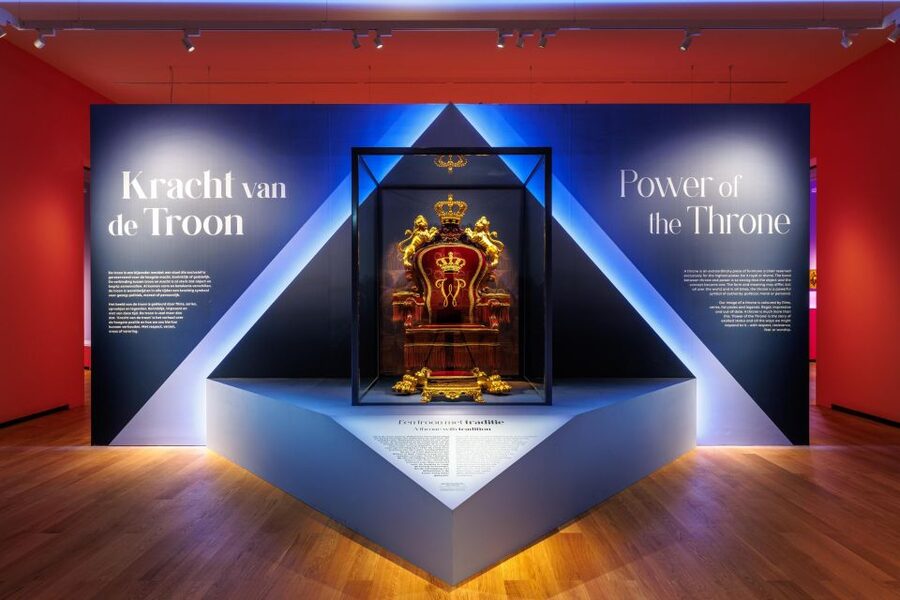
You will also find an exhibition devoted to the House of Orange-Nassau. It brings together works of art, objects, and photographs from the royal family. This section connects the rooms to the wider story of the Dutch monarchy and offers a more private look at the family.
I like this combination because it prevents the visit from becoming only an architecture stop. The furniture and paintings matter, but photographs and personal objects can make the royal family easier to understand as people rather than symbols.
The roof and Queen Mary’s tea spot
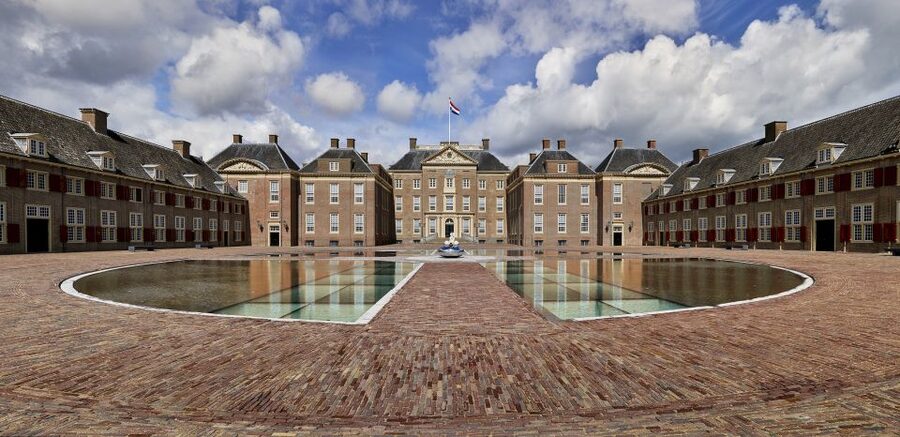
The palace roof offers one of the clearest reasons to look up from the rooms. This is identified as the place where Queen Mary drank her tea, and it gives you a wide view over the park.
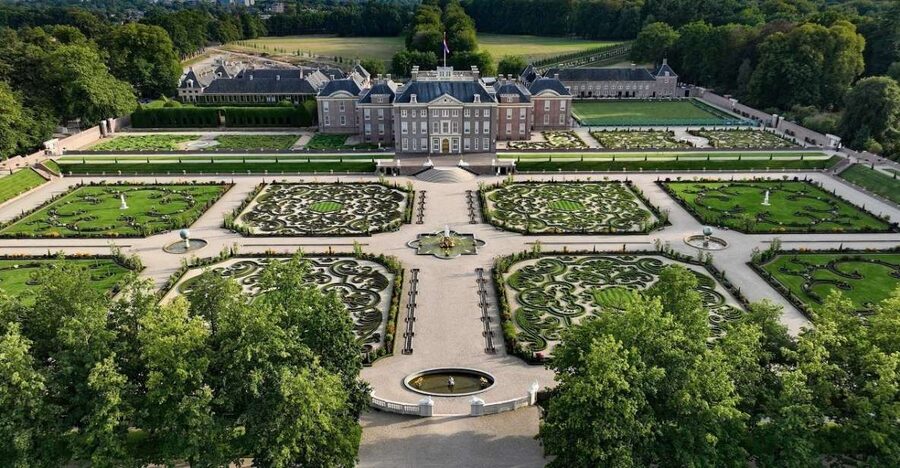
From above, you can see the structure of the baroque gardens much better. Their symmetry and repeating patterns are difficult to grasp fully from ground level. On the roof, the fountains, planting beds, paths, and formal design come together as one large composition.
This view also explains why the gardens were so important. They were not casual green space. Willem and Mary created them to display wealth, control, and royal taste. The arrangement tells you as much about power as the palace interiors do.
The rooftop visit is a small part of the ticket, but it adds a useful change of scale. Inside, you examine rooms and objects at close range. Outside and above, you see how the entire estate was planned.
Same country, a completely different kind of day:
- Oosterbeek: Airborne Museum Hartenstein Entry Ticket
★ 4.7 · 58 reviews - e-Scavenger hunt Arnhem: Explore the city at your own pace
★ 4.0 · 19 reviews - 2,5 hour Battle of Arnhem Tour with Private Guide
★ 5.0 · 16 reviews - Arnhem: 8-hour culinary car tour of Veluwe
★ 3.6 · 10 reviews
The formal gardens of Willem and Mary
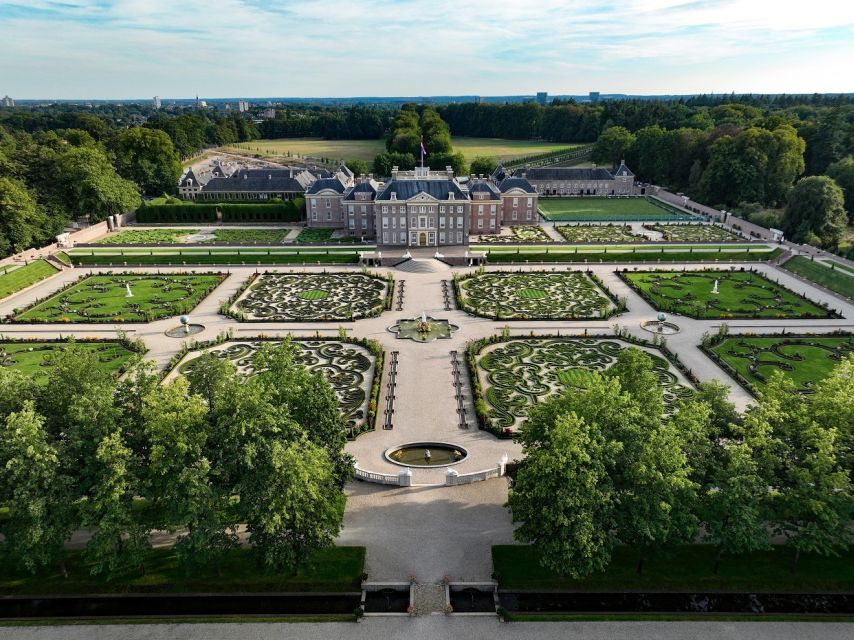
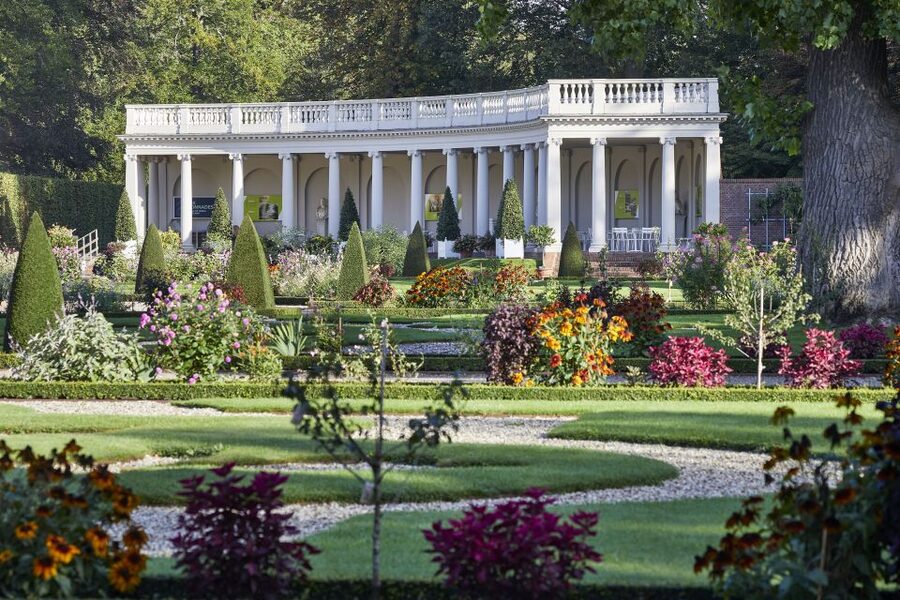
The gardens are laid out in the baroque style chosen by Willem and Mary. High fountains, statues, fragrant flowers, and carefully arranged plants give the grounds a sense of ceremony.
The design has been recreated to match the way the first inhabitants had it laid out. That matters because the gardens are not simply an attractive modern addition. They help you understand the original purpose of the estate.
Baroque gardens were made to be read from particular angles. Paths guide your eye, fountains create movement, and the repeated shapes show order. At Het Loo, the garden was a public statement of royal control and wealth, even when it served as a private retreat.
I would plan enough time to see the gardens after the palace rooms, then consider returning to the roof view. The two perspectives work together. On the ground, you notice flowers, statues, and water. From above, you see the full design.
The garden may be less appealing if you want a loose, natural park with winding paths and wild planting. Its charm comes from structure. You are looking at a formal royal garden, not a quiet woodland walk.
Carriages, cars, and royal occasions
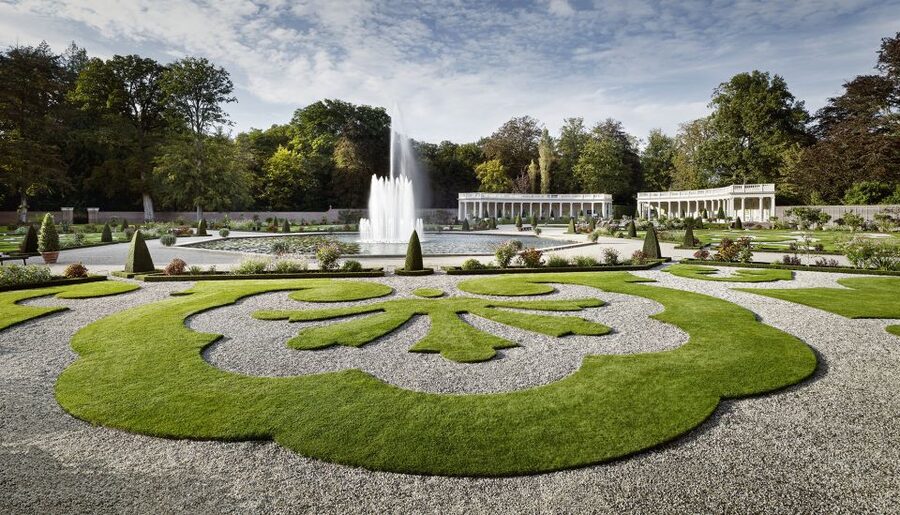
The collection of carriages and cars adds a practical side to the royal story. These vehicles were used by Dutch royalty for important events, so they show how monarchs appeared in public and moved through official life.
A palace can sometimes feel sealed off from ordinary routines. The vehicles help bridge that gap. They show the machinery of ceremony, from the transport itself to the public occasions that required it.
The collection should appeal to visitors who enjoy design, engineering, or transport as much as royal interiors. It also gives families a change of pace after the rooms and paintings.
I would not treat the carriages and cars as a separate reason to book the ticket unless you already have a strong interest in them. Their real value comes from the way they support the wider story of the Dutch monarchy.
The House of Orange-Nassau exhibition
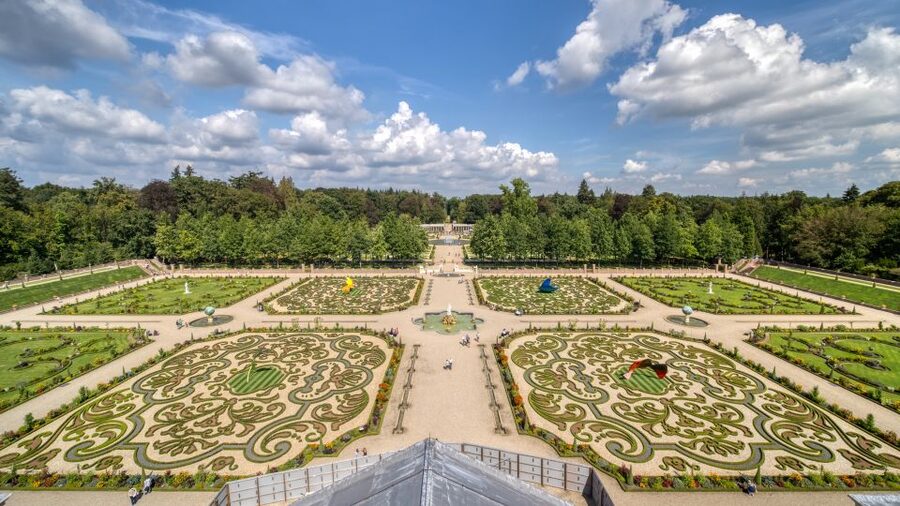
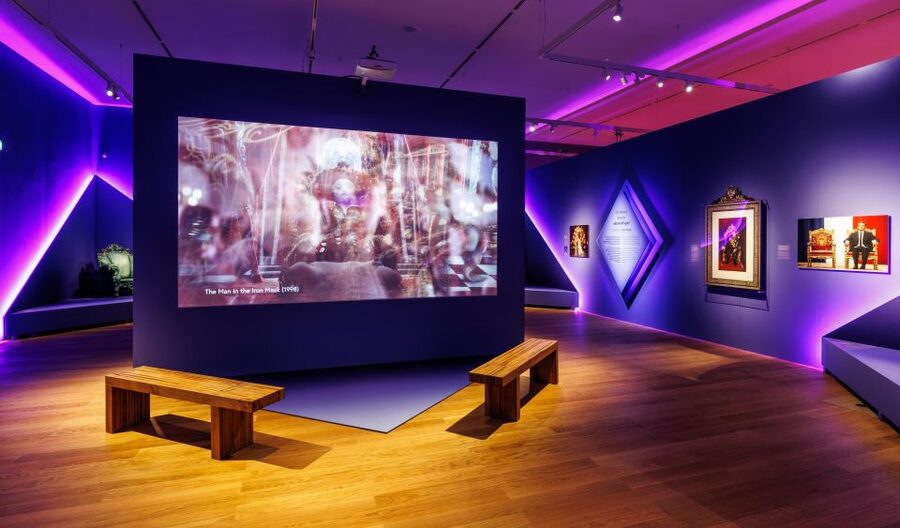
The House of Orange-Nassau exhibition gathers works of art, objects, and photographs connected with the royal family. It takes you beyond the rooms of one palace and places Het Loo within the longer story of the Dutch monarchy.
Photographs are especially useful here. They can show people in settings that feel less formal than a painted portrait, while personal objects offer clues about taste and private life.
This is a good section for visitors who want context rather than just pretty rooms. It can also help you connect the earlier palace stories to the later royal family, including Wilhelmina and the family line leading to King Willem-Alexander.
Give yourself time to read and compare rather than treating the exhibition as a passageway. The palace rooms show where royal life happened. The exhibition helps explain who these people were and how the monarchy changed over time.
How much time should you allow?
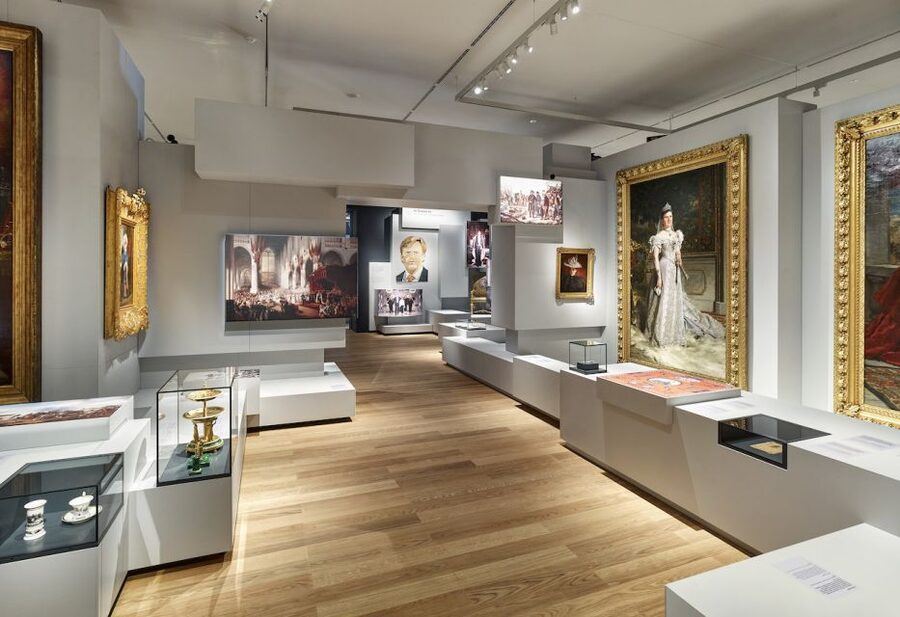
The ticket is valid for one day, and that is helpful because the visit includes several distinct parts: the palace, the museum galleries, the rooftop view, the vehicle collection, and the gardens.
You can move through the palace quickly, but doing so would weaken the experience. The audio stories are designed to add character and context, and the gardens deserve time at ground level as well as from the roof.
I would treat Het Loo as a substantial day visit rather than a quick stop between other Apeldoorn sights. The exact amount of time you need depends on how closely you follow the audio story and how long you spend outside, but the one-day validity lets you set your own rhythm.
A full day also gives you room to pause. Palace visits become tiring when every room is treated as a required stop. Here, you can alternate indoor displays with open-air garden time.
Price, parking, and practical value
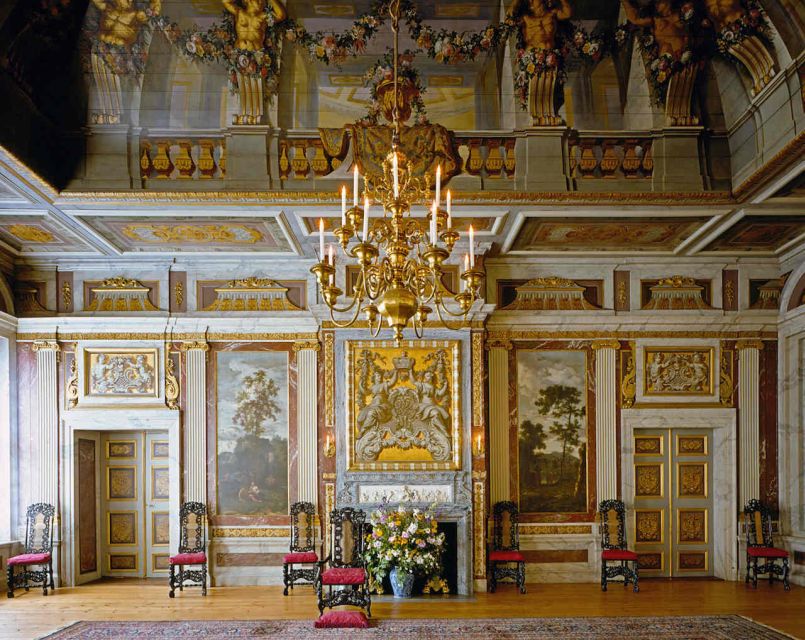
The listed price is $25 per person. Parking is not included, and the on-site parking ticket costs €8.
At that price, the ticket offers good value if you plan to see both the palace and the gardens. You are not paying for a short guided walk through one building. The entry covers the royal rooms, museum galleries, gardens, rooftop access, and displays of royal cars and carriages.
The audio device costs an additional €2.50 if you do not use the app. I consider that a sensible small extra if you want the story explained as you go, particularly if this is your first visit and you want help sorting out Willem III, Mary, Wilhelmina, and the House of Orange-Nassau.
Drivers should include the parking fee when comparing the total cost. If you are using public transport, the connection from The Hague is described as good, which can make the visit easier for a day trip. The information provided does not give a full route or journey time, so check your exact connection before leaving.
The ticket allows free cancellation up to 24 hours in advance and offers reserve now, pay later booking. Those terms are useful if your schedule depends on weather, transport, or other plans.
Who will enjoy Het Loo most?
I would recommend Het Loo to anyone interested in Dutch royal history, palace architecture, formal gardens, or the private side of public figures.
It is also a strong choice for families because the experience changes focus often. Children who are not keen on paintings may enjoy the cars and carriages, the rooftop view, or the garden fountains. The different audio stories give adults a way to choose a level of historical detail.
Garden lovers should make the grounds a central part of the visit rather than an afterthought. The formal design is one of the clearest ways to understand Willem and Mary’s ambition.
You should think twice if you want a short, tightly guided activity with a fixed schedule. This is a self-paced entry experience. Its strength is freedom, but you need to decide how much attention to give each section.
The site is wheelchair accessible, which makes the ticket practical for visitors who need an accessible venue. Specific details about every route or facility are not provided, so you may want to confirm any personal access needs before booking.
Should you book the Het Loo Palace ticket?
Book it if you want more than a quick look at a royal residence. The best reason to go is the combination of royal rooms, personal stories, and formal gardens, supported by the roof view and the collection of cars and carriages.
Choose the Willem and Mary story for politics and European power, Wilhelmina’s Home for a later royal perspective, or At Home with the Royals for daily life and comfort. Add the audio option if you want the rooms to speak more clearly.
Skip it only if you have very little time in Apeldoorn or dislike formal gardens and historic interiors. For a full day focused on Dutch monarchy, palace life, and carefully designed grounds, the $25 entry price is reasonable, with the €8 parking charge as the main extra cost for drivers.
FAQ
Where is Het Loo Palace located?
Het Loo Palace is in Apeldoorn, in the province of Gelderland in the Netherlands.
How long is the ticket valid?
The entry ticket is valid for one day.
What does the ticket include?
It includes entry to Paleis Het Loo and the palace gardens.
Is parking included?
No. Parking is separate, and a parking ticket can be bought on site for €8.
Is an audio guide available?
Yes. You can use audio through an app or pay €2.50 for an audio device. The stories are available in Dutch, English, and German.
What palace stories can I choose?
You can choose Willem and Mary, Wilhelmina’s Home, or At Home with the Royals.
Is Het Loo Palace wheelchair accessible?
Yes. The activity is wheelchair accessible.
Just added around Arnhem
- Exciting Murder Mystery – Interactive city walk in Arnhem★ 4.5 · 3 reviews
- Otterlo: E-chopper rental★ 4.5 · 4 reviews
- Otterlo: De Hoge Veluwe National Park Entry & E-bike★ 4.5 · 4 reviews
- Arnhem Self Guided Sherlock Holmes Murder Mystery Game★ 4.5 · 5 reviews
- 1,5 hour private guided Mural Street Art tour in Arnhem★ 5.0 · 5 reviews
- 6 Hour Battle of Arnhem Tour by Car with Private Guide★ 5.0 · 6 reviews
- Arnhem: Dutch Open Air Museum Entry Ticket★ 4.7 · 6 reviews
- Discover Arnhem with a self-guided Outside Escape city game tour!★ 5.0 · 8 reviews
Arnhem Tours, compared.



e-Scavenger hunt Arnhem: Explore the city at your own pace
Read our review →

Discover Arnhem with a self-guided Outside Escape city game tour!
Read our review →Browse the lists this tour appears in