
Reviewed · AMSTERDAM TOURS
Amsterdam’s Hidden Facts: 750 Years of Secrets ⭐
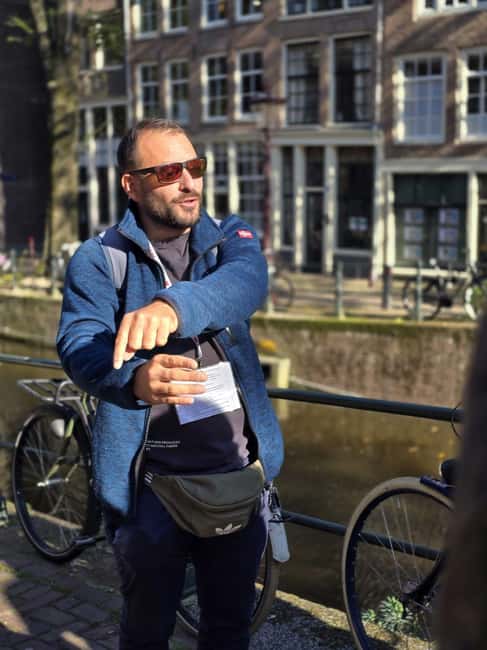
Amsterdam’s strangest facts often sit right in front of you. On this two-hour walk, Antonis connects leaning houses, muddy ground, dams, dikes, floods, trade, war, and liberal change into one clear story about how the city grew.
I like the small group limit of 12, which gives the guide room to answer questions and keep the walk personal. I also like the handwritten postcard with a Dutch stamp, a simple souvenir that ties into Amsterdam’s past. The main consideration is that this is a walking tour, so comfortable shoes and sensible clothing matter, especially in wet or windy weather.
Key Points
- 750 years in two hours: Follow Amsterdam from its first dam and dikes to modern times without sitting through a formal lecture.
- Facts hiding in plain sight: Learn why houses lean, why Amsterdam was built on mud, and what the city’s XXX symbol means.
- Antonis as your guide: Expect warmth, humor, strong local interest, and an attentive approach.
- Small-group format: With no more than 12 people, you can hear the stories and ask questions without fighting through a crowd.
- A postcard with a purpose: Receive a handwritten postcard and Dutch stamp inspired by Amsterdam’s past.
- Flexible planning: Book now and pay later, with free cancellation up to 24 hours before the tour.
Amsterdam’s Story Begins With Mud, Water, and a Dam
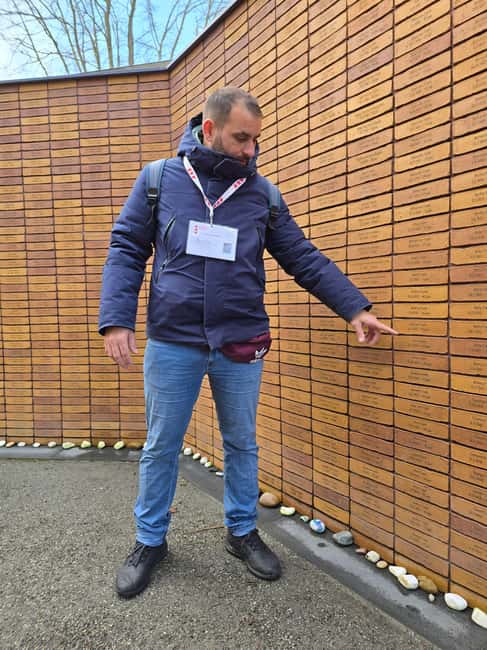
This tour starts with a question that explains much of Amsterdam: how do you build a city on wet, unstable ground?
The answer involves water control, early settlers, dams, and dikes. Those subjects may sound technical, but they are useful for understanding the city you see around you. Amsterdam is not simply a collection of attractive canals and old houses. It is a place shaped by people trying to manage water every day.
Antonis presents this early chapter as a story rather than a list of dates. You learn how the first communities dealt with the ground beneath them and how practical water systems allowed Amsterdam to expand. That gives the rest of the walk a useful foundation.
You should expect the tour to move through central Amsterdam while connecting visible details to these older events. The exact route can vary with the meeting time and local conditions, but the subject remains the same: how a settlement near water became a major city.
This part will appeal to you if you like knowing why a place looks the way it does. It is less about admiring a canal in silence and more about understanding the work, risk, and planning behind it.
A few more Amsterdam trips worth a look
- Amsterdam: Van Gogh Museum Ticket
★ 4.7 · 52,054 reviews - Amsterdam Classic Saloon Boat Cruise with Drinks and Cheese
★ 5.0 · 31,825 reviews - Amsterdam Luxury Canal Cruise + Unlimited Drinks & Bites option
★ 5.0 · 30,518 reviews
Why Amsterdam’s Houses Lean
The city’s leaning houses are among its most familiar sights, but the tour treats them as clues rather than photo backdrops.
You learn why houses lean and how Amsterdam’s soft ground affects old buildings. The point is not just to memorize a curious fact. It is to see the city with sharper eyes. Once you know what to look for, crooked facades and unusual building angles become part of a much larger story.
This is one of the tour’s strongest features because it turns ordinary sightseeing into a search for evidence. You are not only walking past old buildings. You are asking what their shape tells you about the ground, construction, and changing needs of the city.
The guide’s humor helps here. Antonis is described as warm, attentive, and highly engaged with his adopted city, and that matters on a fact-heavy walk. A guide can list information, or he can make you pause and think. This experience aims for the second approach.
Do not expect a building-entry tour or an architectural study with technical drawings. The value comes from the connection between streets, buildings, and the forces that shaped them.
The XXX Symbol and Amsterdam’s Unexpected Details
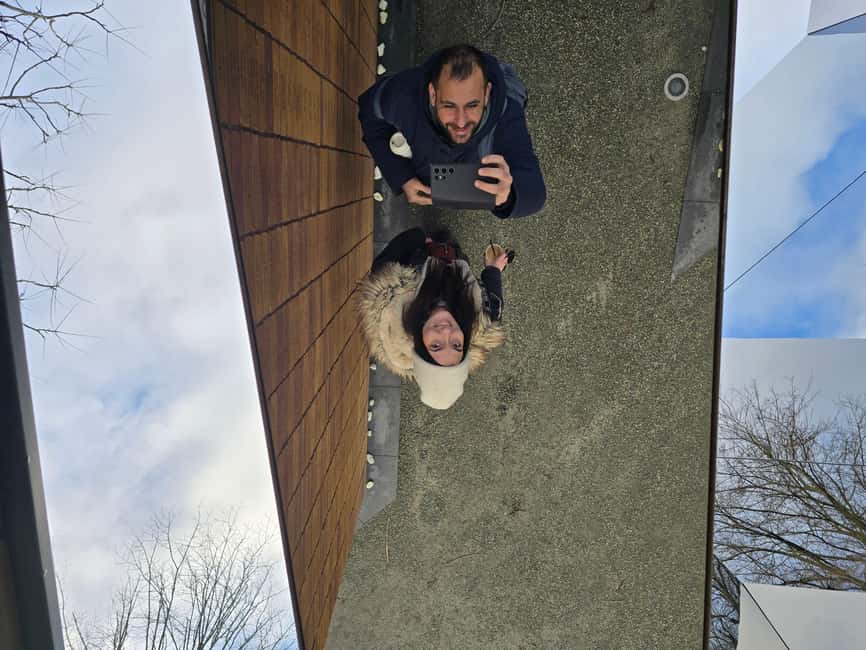
Amsterdam’s three XXX symbols raise questions for almost everyone who notices them. This walk explains what they mean and places them within the city’s wider story.
That is the sort of detail that makes this experience useful early in your visit. You can keep spotting the symbol after the tour and remember the explanation each time. The same is true of the other unusual facts woven into the route.
The tour promises plenty of strange-but-true information, but it does not treat facts as party tricks. The larger theme is how Amsterdam developed a reputation for independent thinking, practical problem-solving, and radical ideas. Old religions, liberal revolutions, and changing social values all enter the story.
You may enjoy this section most if you are the person in your group who keeps asking why. The tour is designed for curious people who want more than a quick photograph and a short caption.
There is a tradeoff. Two hours is enough to introduce many subjects, but not enough to examine every one in detail. If you want an academic study of Dutch religion, politics, or architecture, you will need more time elsewhere. If you want a lively framework for exploring the city on your own, the pace makes sense.
Trade, the Golden Age, and the City’s Expansion
Amsterdam’s Golden Age forms another major part of the walk. The tour looks at how trade helped the city grow and how expansion changed its streets, buildings, and place in the world.
This is not presented as a simple success story. The value of a good city walk is that it links prosperity to the systems and choices that made it possible. You learn about growth, but also about the pressures that came with it.
The guide’s approach appears especially suited to this period because he moves between major events and smaller clues. Instead of asking you to retain a long chain of names and dates, he uses familiar Amsterdam details to explain how the city worked.
For you, this can make the Golden Age easier to understand than a museum label or a standard sightseeing script. Amsterdam’s past becomes a series of connected decisions involving water, trade, religion, public life, and space.
The tour does not include a museum admission, boat ride, or extended visit inside a landmark. It remains a street-level experience. That keeps the price down and lets the city itself serve as the setting, but you should choose a separate museum visit if you want paintings, objects, or indoor displays.
Same country, a completely different kind of day:
- Amsterdam: Heineken Experience Ticket
★ 4.6 · 30,055 reviews - Amsterdam: Rijksmuseum Entry Ticket
★ 4.7 · 25,535 reviews - Amsterdam: Classic Boat Cruise with Optional Cheese & Wine
★ 4.6 · 22,925 reviews - Amsterdam: Evening Cruise with Optional Wine and Snacks
★ 4.4 · 19,696 reviews
Floods, Dikes, and the Systems That Saved Amsterdam
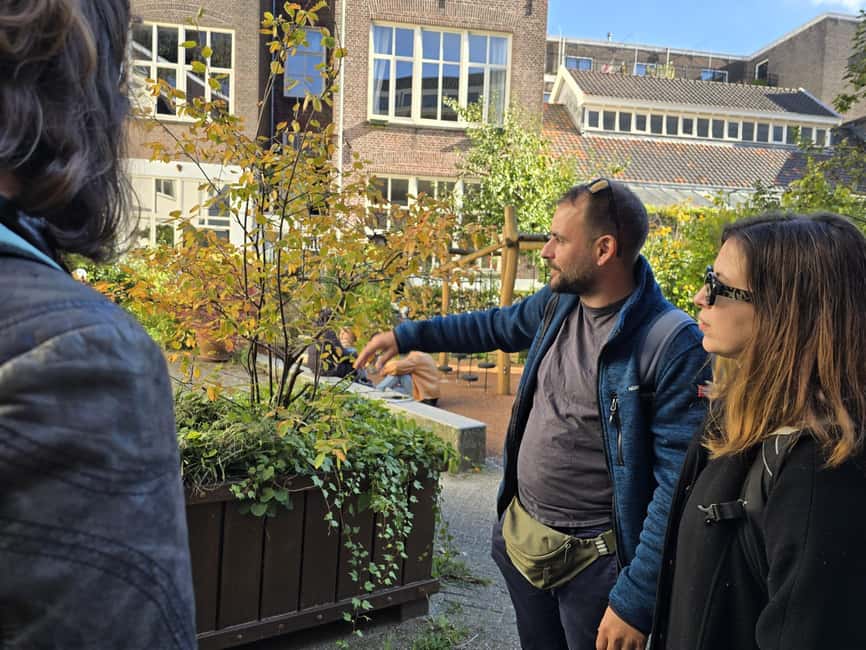
The story takes a serious turn when it reaches devastating floods and the systems built to protect the city.
This subject gives the tour practical weight. Water is not just part of Amsterdam’s charm. It has threatened homes, streets, and livelihoods. Learning how residents responded helps you understand why dikes and other water controls matter so much here.
I like that the tour treats resilience as something built over time. The city did not simply happen to survive on difficult ground. People created systems, adjusted them, and depended on cooperation and trust.
You will not be visiting a flood museum or touring a water-control facility. Instead, Antonis uses the walk to explain the forces that shaped the city. That makes the information accessible, though readers who love engineering may want a more specialized activity afterward.
This section also balances the lighter material. Facts about leaning houses and city symbols keep the mood easy, while floods remind you that Amsterdam’s development involved real danger and hard choices.
World War II and Amsterdam’s Defining Moments
World War II is included among the major periods covered on the tour. The subject brings a darker layer to the city’s past and shows that Amsterdam’s story is not only about trade, tolerance, or attractive old streets.
Because the experience covers 750 years in two hours, you should expect a focused introduction rather than a full wartime history. The tour’s purpose is to place the war within the broader sequence of events that shaped Amsterdam.
That broad timeline is useful when you are new to the city. You get a sense of how the present was formed by several very different periods, including hardship and loss. The guide’s conversational tone can help keep this section human without turning the entire walk into a solemn memorial visit.
If World War II is your main interest, this should be a starting point, not your only activity. You may want a dedicated museum or memorial visit for more detail. Still, including the war prevents the tour from offering an overly cheerful picture of Amsterdam.
Antonis, the Small Group, and the Feel of the Walk
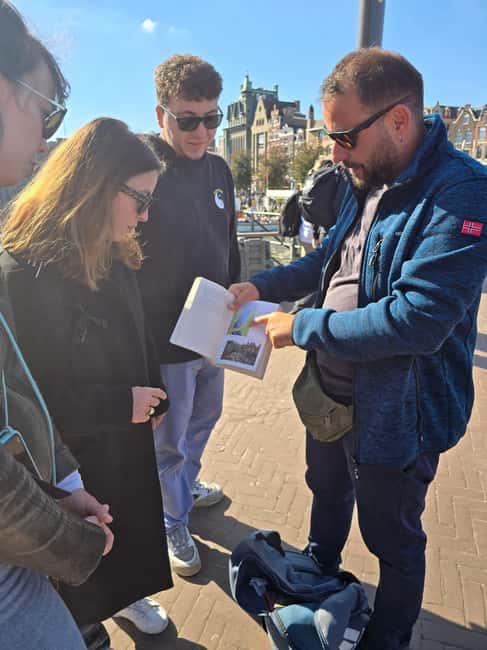
Antonis is the named guide for this experience, and his style is central to the appeal. The tour description presents him as part guide, part friend, and part history enthusiast, with warmth, humor, and a touch of obsession.
In practical terms, that means you should expect storytelling rather than a rigid lecture. The tour is designed to make space for curiosity, questions, and reactions. An attentive approach is especially valuable if you book alone, since a large commercial group can easily make a solo participant feel invisible.
The group limit is 12 people. That is small enough for a more direct exchange, while still giving the tour the energy of a shared walk. You will not have to depend on an umbrella flag or strain to hear from the back of a large crowd.
The meeting point is in front of the Bull, and the tour ends back at that same meeting point. No hotel pickup or drop-off is included, so plan your own way to and from the start. Check the available start times before booking, since the tour lasts two hours and the schedule can affect the rest of your day.
The walk is offered in English and Greek. Video recording is not allowed, but you can bring a camera for photographs.
The Postcard With a Dutch Stamp
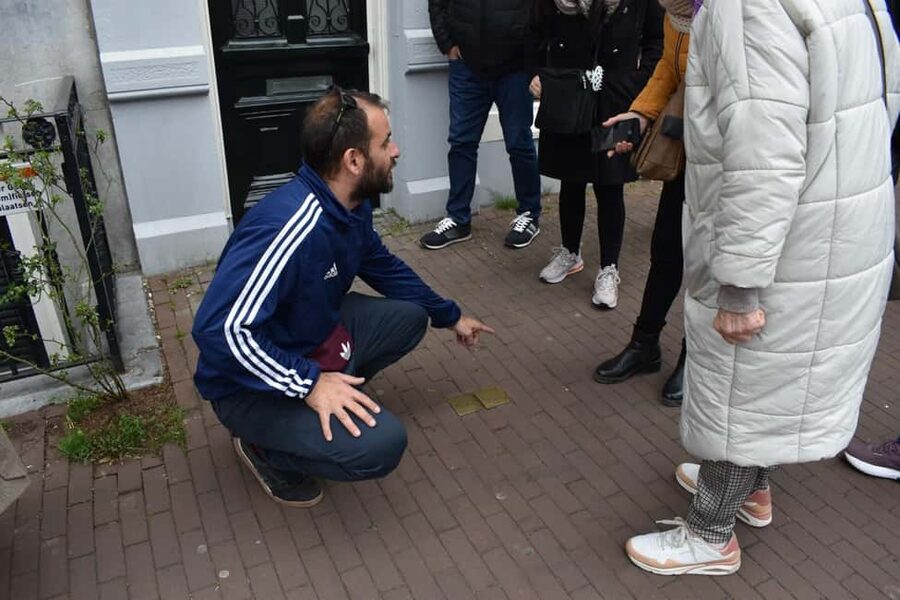
The handwritten postcard is a small extra, but it is more thoughtful than the usual generic souvenir.
You receive an Amsterdam postcard with a Dutch stamp, presented as part of the story rather than as a marketing freebie. You can send it home, keep it in your journal, or use it as a physical reminder of the facts you picked up during the walk.
I like this because it gives the experience a human finish. Most walking tours end when the guide says goodbye. Here, you leave with something connected to old-fashioned communication and Amsterdam’s past.
Do not book the tour just for the postcard. Its value is modest on its own. The appeal comes from the combination of a personal guide, a small group, a clear historical thread, and a souvenir that fits the theme.
Is $28 a Fair Price for Two Hours?
At $28 per person, the experience sits in a reasonable range for a guided city walk, especially with a professional guide and a maximum of 12 people.
The value depends on how you use it. If you want a quick orientation and a collection of facts that will improve the rest of your time in Amsterdam, the price is easy to justify. You are paying for interpretation, not transport or admission to a major attraction.
The small group matters here. A cheaper walk with a very large crowd may offer less chance to hear clearly or ask questions. With 12 people or fewer, you are buying a more personal format.
The tour is less useful if you want a packed sightseeing checklist. It does not promise hotel transport, museum entry, or a cruise. It is also not designed as a full-day history course.
For the best value, take it near the start of your stay. You can then use the explanations about dams, leaning houses, the XXX symbol, trade, and floods as you explore Amsterdam afterward.
Who Will Enjoy This Amsterdam History Walk?
I would recommend this tour to you if you like facts, unusual details, and a guide who clearly cares about the subject.
It works well for solo visitors, couples, and friends. The small group and attentive style are particularly helpful if you are traveling alone and want a more social but not overwhelming activity.
You will probably enjoy it if you often stop to ask wait, how did that happen? The tour is built around surprises and connections. It gives you enough context to understand the city without expecting you to study beforehand.
It may be a weaker match if you dislike walking, want lots of free time for photographs, or prefer quiet sightseeing with no commentary. It is also not the right choice if your main aim is to enter famous buildings or focus only on World War II.
Wear comfortable shoes, bring water, carry a camera if you like taking pictures, and dress for the weather. Amsterdam’s conditions can change, and this is an outdoor activity for the full two hours.
Should You Book Amsterdam’s Hidden Facts?
Book this walk if you want Amsterdam to make more sense, not just look attractive.
The strongest reasons are the small group, Antonis’s personal storytelling style, and the range of subjects covered in a short time. You get the city’s basic foundations, its Golden Age, its water problems, its unusual symbols, its political and religious changes, and its wartime past.
The main limitation is breadth. Seven hundred and fifty years cannot be covered in detail in two hours. Think of this as a lively foundation that helps you explore with better questions afterward.
The $28 price is fair for a small-group experience with a named guide and a personal postcard. Free cancellation up to 24 hours before the start and reserve-now, pay-later booking also make it easy to fit into a changing itinerary.
FAQ
How long does the tour last?
The walking tour lasts two hours. Check the available start times when planning your visit.
Where does the tour start?
The meeting point is in front of the Bull.
Where does the tour end?
The activity ends back at the meeting point.
What languages are available?
The live tour guide is available in English and Greek.
Who is the guide?
The guide is Antonis, who leads the tour with historical storytelling, warmth, humor, and personal enthusiasm for Amsterdam.
How many people can join the group?
The group has a maximum of 12 participants.
What is included in the price?
The price includes the two-hour storytelling walk, a professional local guide, and a handwritten Amsterdam postcard with a Dutch stamp.
Can I cancel or pay later?
You can cancel up to 24 hours in advance for a full refund. You can also reserve your place and pay later, so no payment is required today.
Just added around Amsterdam
- Rijksmuseum guided tour without queues, in Spanish or English.★ 4.5 · 3 reviews
- Small-Group Tour to Windmills & Giethoorn with boat tour★ 5.0 · 3 reviews
- Half-Day Private Guided Sightseeing Tour of Zaanse Schans★ 5.0 · 3 reviews
- Amsterdam Red Light District and Old Town Walking Tour★ 5.0 · 3 reviews
- Amsterdam: Ludwig’s Halloween Pub Crawl with VIP Club Entry★ 5.0 · 3 reviews
- Amsterdam: Layover Flight Private Guided Tour (3h or 5h)★ 5.0 · 3 reviews
- privatetour Delft, The Hague&Rotterdam Kinderdijk from Amsterdam★ 5.0 · 3 reviews
- Amsterdam: Giethoorn Tour with Canal Cruise and Windmills★ 5.0 · 3 reviews
Amsterdam Tours, compared.


Amsterdam Classic Saloon Boat Cruise with Drinks and Cheese
Read our review →
Amsterdam Luxury Canal Cruise + Unlimited Drinks & Bites option
Read our review →


Classic Boat Cruise with Optional Cheese & Wine
Read our review →
Evening Cruise with Optional Wine and Snacks
Read our review →