
Reviewed · AMSTERDAM TOURS
Amsterdam: Jewish Quarter and History Guided Tour
Amsterdam’s Jewish Quarter is not a museum behind glass. It is a working part of the city, where ordinary streets carry stories of Jewish life, Nazi persecution, resistance, and loss. This two-hour walking tour helps you read those streets, from the Amstel River to the area around Anne Frank House.
I like the way the walk connects big events to specific buildings, especially the former Jewish Council headquarters and the Dokwerker memorial. I also like the small-group and private options, which give you room to ask difficult questions. The main drawback is pace: there is a lot to cover, and one past participant found there was not always enough time to pause at each monument.
Key points to know before you book
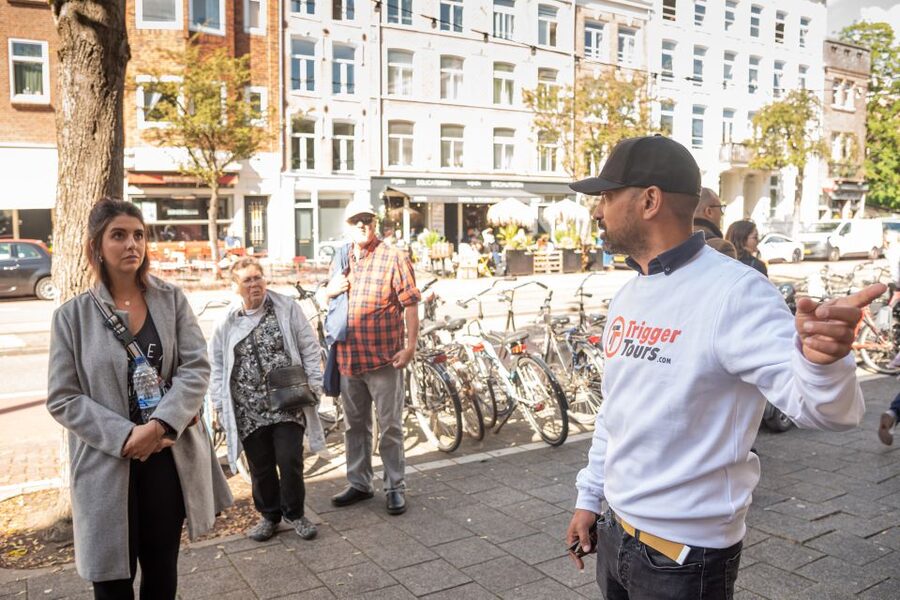
- The route links Jewish life and wartime history: You learn about Amsterdam’s Jewish community before, during, and after the Nazi occupation.
- The Amstel River begins the story: The opening location places the quarter within the wider city rather than treating it as a separate museum zone.
- Important memorials are part of the walk: Expect the Dokwerker and Auschwitz Monument, with explanations of what each represents.
- You finish near Anne Frank House: The tour gives context about Anne’s diary and Otto Frank, but it does not include entry to the house.
- Small groups make a difference: Private tours and smaller shared groups allow more questions and a quieter tone.
- Book with time to think afterward: The subject is serious, and the experience works best when you are not rushing straight to a noisy attraction.
Why this Jewish Quarter walk adds value
You can walk through Amsterdam’s old Jewish Quarter on your own, but plaques and façades rarely explain how the neighborhood worked. A guide can show how religious institutions, homes, offices, and public memorials fit together. That context is the main reason to pay for this experience.
The tour focuses on Jewish life during the Second World War, but it also reaches further back. The Portuguese Synagogue and Jewish Historical Museum point to the long presence of Jewish communities in Amsterdam. The wartime story then becomes more personal: where people lived, how regulations affected daily routines, and how the occupation changed the city.
I would not treat this as a light sightseeing stroll. It deals with Nazi rule in the Netherlands from 1940 to 1945, deportation, persecution, and the Holocaust. The strongest guides, including James, Aaron, Jyry, Masha, Marsha, Joshua, and Guido, have been praised for presenting the subject with care, clarity, and patience. Guide assignments can vary, so you should not book solely to hear one named guide.
The price is $23 per person, which is fair for a live two-hour walk if you want interpretation rather than a quick look at landmarks. You are paying for the guide’s connections between places, not transportation, food, or admission tickets. Since the tour is outdoors and walking-based, comfortable shoes and weather-ready clothing matter more than anything you need to pack.
More History Tours in Amsterdam
- Amsterdam Food and Cultural Tour with Tastings
★ 5.0 · 2,442 reviews - Amsterdam: Haunted History and Ghost Walking Tour
★ 4.5 · 488 reviews - Amsterdam High-End Dutch Food & History Tour – Up to 8 guests
★ 5.0 · 482 reviews
Starting beside the Amstel River
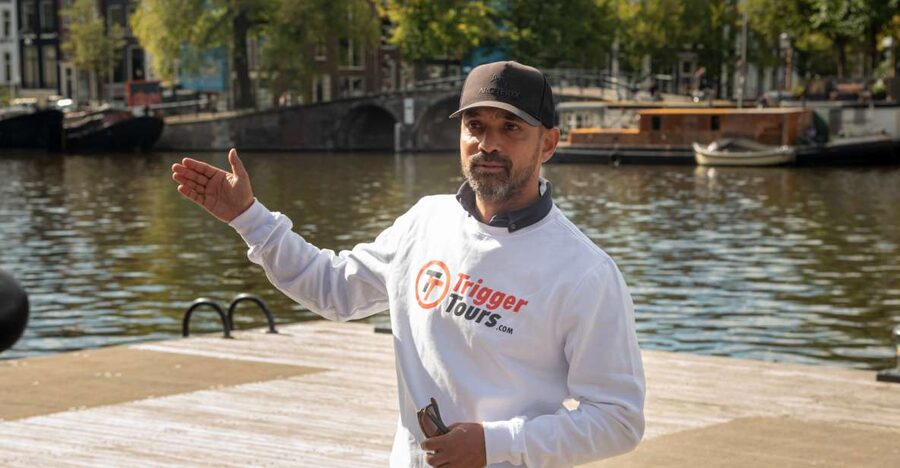
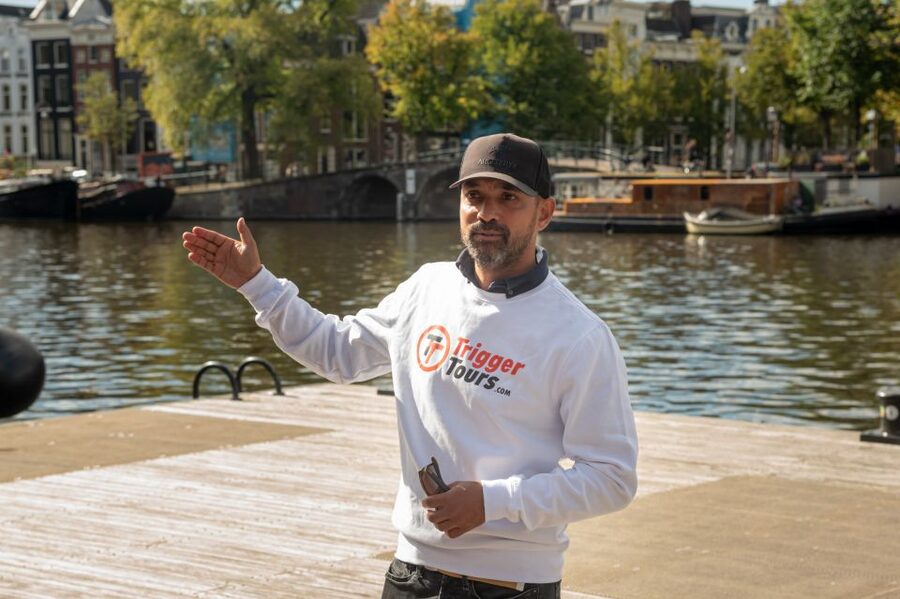
The walk begins by the Amstel River, though the exact meeting point can vary with the option you book. This is a useful starting place because it lets the guide set the Jewish Quarter within Amsterdam’s broader history.
Rather than beginning with a single famous victim or memorial, the introduction covers the Nazi occupation and its effect on Amsterdam. You get the political frame first, then move toward the lived experience of the Jewish community. That order helps keep the tour from becoming a string of disconnected tragedies.
The Amstel area also gives the guide a chance to explain how the city developed around its waterways and neighborhoods. Listen for the shift from general history to specific streets. The most useful information comes when the guide points out that a normal-looking building once had a particular role in Jewish or wartime life.
This opening section may feel talk-heavy if you prefer to start walking at once. I think it earns its place, since the rest of the route depends on understanding the occupation and the restrictions placed on Jewish residents.
The Portuguese Synagogue and Jewish Amsterdam before the war
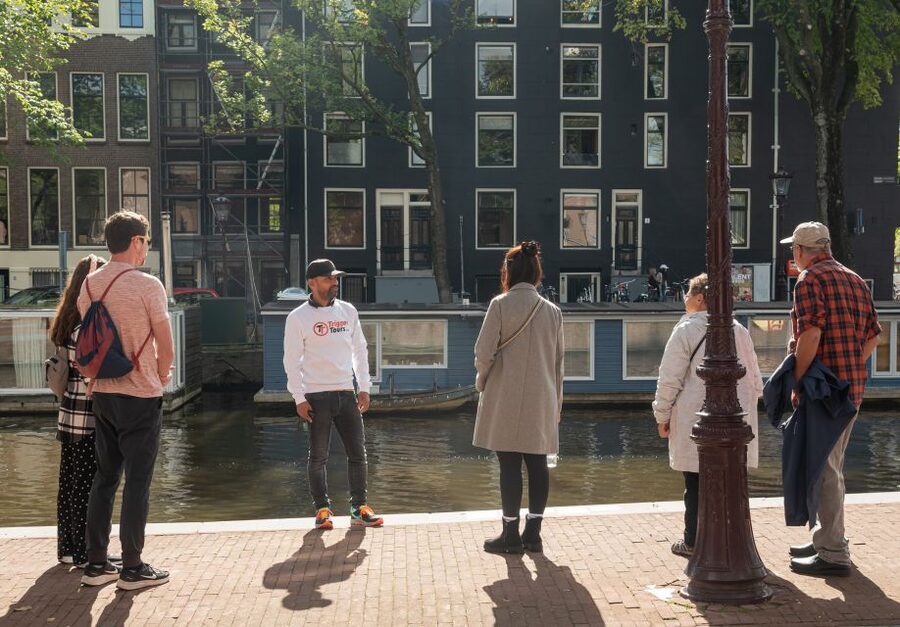
The Portuguese Synagogue is one of the route’s most important reminders that Amsterdam’s Jewish story did not begin in 1940. Its presence points to centuries of religious, cultural, and family life in the city.
You should expect to view the synagogue as part of the walking route rather than assume that the tour includes an interior visit. The supplied details list the walking tour and guide as included, with no admission included. If you want to go inside this or another museum, plan that separately.
This stop matters because it gives the group something more than a wartime narrative. Jewish Amsterdam was not defined only by persecution. It had institutions, worship, education, businesses, homes, and community ties. Seeing the synagogue before discussing the occupation helps you understand what was at stake when that life was dismantled.
A good guide will also help you notice the difference between a landmark and a living community site. The building is not simply a photogenic stop. It is evidence of a society that existed long before the war and whose presence still shapes Amsterdam.
The Jewish Historical Museum and the shape of community life
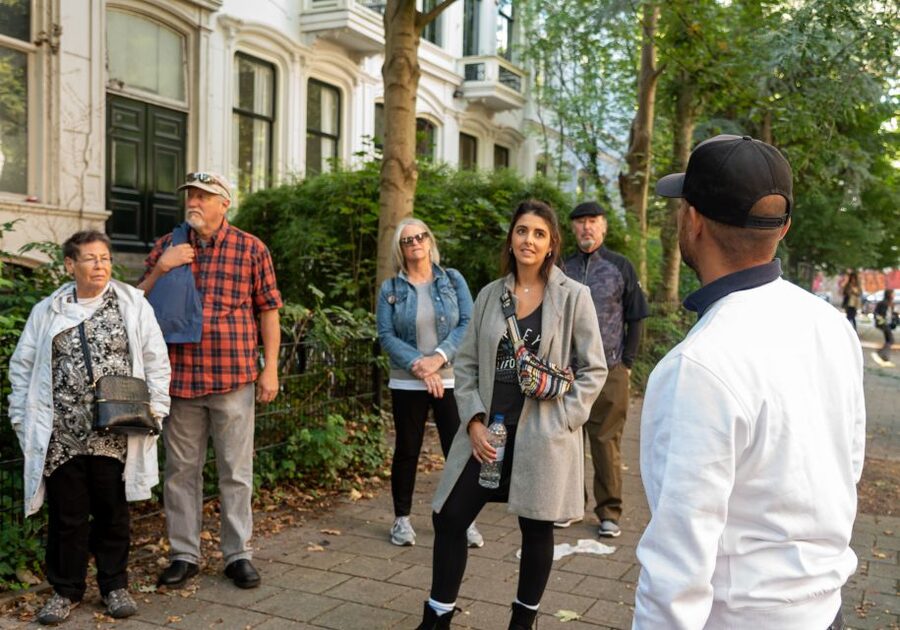
The Jewish Historical Museum is another key landmark. The walk may not include museum admission, but the building and its place in the quarter give the guide a clear way to discuss Jewish traditions and institutions.
I value this part of the route because it can prevent the history from narrowing too quickly to the Holocaust. You hear about the community that occupied these streets, not only the catastrophe that later overtook it.
The guide can also show how museums and memorials preserve details that are easy to miss from the pavement. Buildings may now serve a different role, look altered, or appear unremarkable. Without explanation, you could pass them without realizing their connection to Jewish Amsterdam.
Allow yourself time to look around during this section. One practical criticism of a tightly timed walk is that you may need to choose between taking a photograph, reading a plaque, and keeping up with the group. Stay close enough to hear, but do not feel obliged to photograph every stop.
Same country, a completely different kind of day:
- Amsterdam: Van Gogh Museum Ticket
★ 4.7 · 52,054 reviews - Amsterdam Classic Saloon Boat Cruise with Drinks and Cheese
★ 5.0 · 31,825 reviews - Amsterdam Luxury Canal Cruise + Unlimited Drinks & Bites option
★ 5.0 · 30,518 reviews - Amsterdam: Heineken Experience Ticket
★ 4.6 · 30,055 reviews
The Jewish Council headquarters and the machinery of occupation
The former headquarters of the Jewish Council brings the occupation into sharper focus. This is where the tour moves from general policy to the systems that controlled Jewish life.
The guide explains how Nazi orders affected the Jewish population and how the council functioned under extreme pressure. This is a difficult subject, and it needs careful treatment. The point is not to reduce complicated choices to easy judgments. It is to understand how occupation used administration, records, rules, and forced cooperation to reach people.
Several guides have been praised for answering personal and sensitive questions without becoming theatrical. That quality matters here. The best version of this stop gives you room to think about responsibility, fear, coercion, and the behavior of both Jewish and non-Jewish residents.
The route’s emphasis on day-to-day life is especially useful. You may hear about how occupation changed movement, work, family life, and access to ordinary services. These details make the period more understandable than dates alone. They also explain why a neighborhood walk can add something a general Amsterdam history tour may skip.
The Dokwerker and the meaning of public memory
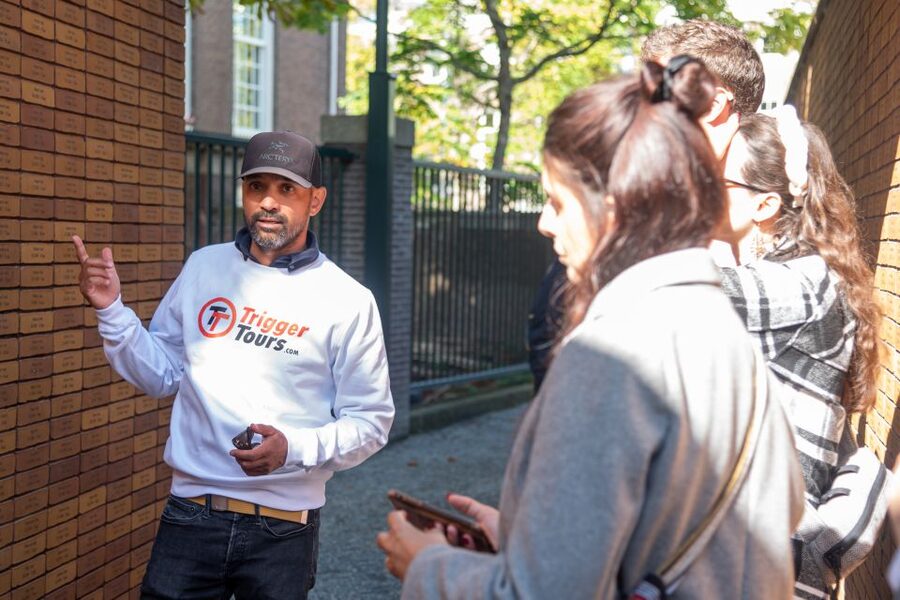
The Dokwerker is one of the most recognizable memorials on this route. The monument represents resistance to the persecution of Amsterdam’s Jewish population, and the guide gives it meaning within the wider story of the occupation.
This is a place where the guide’s explanation matters more than the object itself. You can see the sculpture in a few seconds, but understanding why it was created and what it asks you to remember takes longer.
The monument also gives the tour a chance to discuss Dutch responses to Nazi rule. The story is not presented as a simple tale of heroes and villains. You hear about resistance, compliance, fear, and the choices people faced. That balanced approach is one of the experience’s strengths.
Give yourself a quiet moment here. The route continues on a schedule, and one past participant felt the walk sometimes moved on before the group could absorb a memorial fully. If you want time for reflection or detailed photographs, a private tour may suit you better than a shared group.
The Auschwitz Monument and the darkest part of the walk

The Auschwitz Monument is a sober stop, and it carries the emotional weight of the tour. The guide explains its purpose and connects it to the Jewish people who were deported and murdered during the Holocaust.
This section is not designed to entertain you, and that is appropriate. The value lies in hearing the history in the place where Amsterdam remembers it publicly. The guide’s job is to provide facts and context without turning suffering into a performance.
The monument also shows why a walking tour can be more powerful than reading a summary in a hotel room. You are standing in the city, among ordinary streets, while considering events that transformed the lives of thousands of residents. The contrast is hard to avoid.
The tour has earned a strong overall rating of 4.7 from 210 reviews, and the most consistent praise concerns the guides’ handling of this difficult material. James, Aaron, and Jyry are repeatedly described as clear, engaging, and sensitive. That does not remove the sadness of the subject, but it helps create a respectful setting for questions.
Ending near Anne Frank House
The walk finishes in front of the Anne Frank House. This is an important distinction: the experience takes you to the area and discusses Anne Frank, but entry to the house is not included.
The guide explains how Anne’s diary was published by her father, Otto Frank, and how it later gained worldwide fame. That information places the diary within the larger history of Jewish Amsterdam instead of treating it as an isolated story.
For many people, this final stop will be the emotional focus of the route. Anne’s name is familiar around the world, but the earlier stops help you see that her experience was part of a much larger community story. The Portuguese Synagogue, Jewish institutions, council offices, and memorials all widen the frame.
If you plan to visit Anne Frank House separately, remember that this tour does not replace that visit. It gives you background and orientation. You will need a separate ticket for entry, and the tour itself does not promise access inside.
There is also a practical point about the finish. One past participant said their tour ended at the Holocaust memorial rather than Anne Frank House, so the endpoint may vary by guide or route. Check the meeting and finishing details for your chosen booking, especially if you have another reservation afterward.
Group size, guides, and the tone of the experience
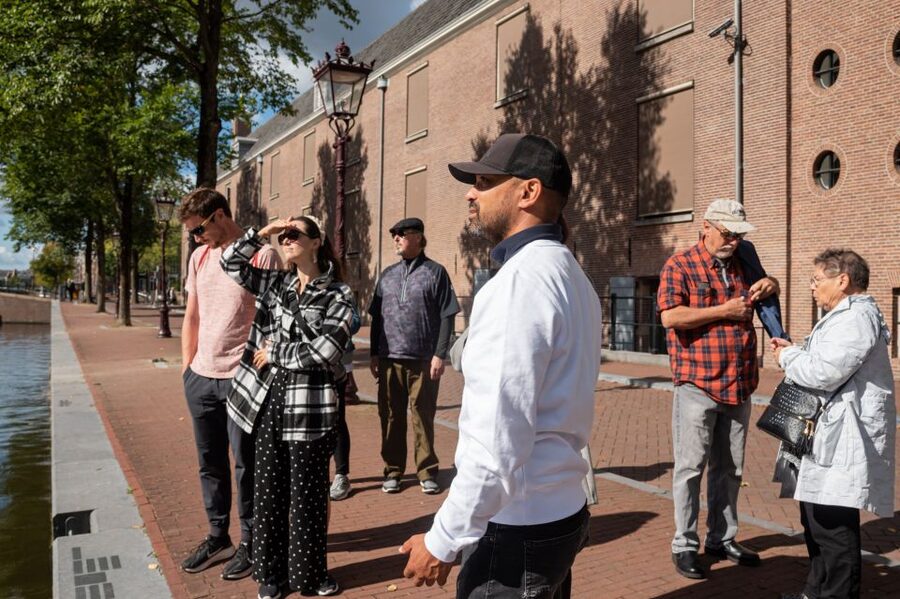
You can book a private tour or choose a small shared group. For a subject this personal, group size affects the experience more than it would on a standard city walk.
A shared group offers different viewpoints and may create a thoughtful conversation among people from several countries. The private option gives you more control over questions and can be a better fit if your family has a personal connection to Holocaust history.
The guides use English or Spanish. Past guide names include James, Aaron, Jyry, Masha, Marsha, Joshua, and Guido, but availability changes. Across the team, the strongest qualities are clear speech, patience, a steady pace, and the ability to respond to sensitive questions.
Most of the feedback is strongly positive, but two useful cautions appear. One person found the two-hour tour slightly longer than needed, while another wanted a slower pace at monuments. These are not major flaws, but they show the tradeoff: the route covers a lot in a fixed time. If you want every site examined at length, a private booking is likely the better choice.
How to prepare for two serious hours
Wear shoes you can walk in comfortably. The activity is a two-hour walking tour, and food and drinks are not included, so have water with you if needed.
I would schedule this when you can stay focused. The subject is heavy, and the tour is more rewarding when you are not trying to squeeze it between several fast-paced attractions.
You might also leave time afterward for your own reading or a museum visit. The tour introduces landmarks and stories, but it cannot give every location a full museum treatment in two hours. Its role is to connect the city’s streets and memorials, then point you toward places you may want to explore further.
The booking terms are useful for flexible plans. You can cancel up to 24 hours before the activity for a full refund, and you can reserve now and pay later. Starting times depend on availability, and the meeting point may vary according to the option you select.
Who should book this Amsterdam history tour?
I recommend it most strongly if you want to understand Amsterdam’s Jewish Quarter rather than simply pass through it. It suits history-minded visitors, families with older children, people studying the Holocaust, and anyone who wants a careful introduction before visiting Anne Frank House or the Jewish Historical Museum.
It is also a good choice if you have visited other Jewish sites in Europe. The route adds an Amsterdam-specific view of occupation, community life, memorials, and public memory.
I would think twice if you want a cheerful sightseeing walk or dislike outdoor tours that focus on difficult history. The experience is educational and serious, with little room for casual city sightseeing.
For the best fit, choose a small group or private option if you expect many questions. A Sunday morning may be appealing if you prefer a quieter period, as one participant found that time less crowded. Still, start times and group conditions can change.
Should you book it?
At $23, this is a sensible purchase for a focused, guide-led introduction to Amsterdam’s Jewish history. You see major landmarks, hear about daily life during Nazi occupation, and finish with context for Anne Frank’s story. The tour’s real value is the explanation between the stops.
Book it if you want a serious, human account of the quarter and appreciate a guide who can handle difficult questions with care. Choose a private or small-group format if you want time to pause and talk. Skip it only if you already have a detailed plan for these sites and prefer to explore at your own speed.
FAQ
How long is the Amsterdam Jewish Quarter tour?
The walking tour lasts two hours.
How much does the tour cost?
The listed price is $23 per person.
Which languages are available?
The live tour guide is available in English or Spanish.
Is the tour private or shared?
You can choose a private tour or a small shared group, depending on the option booked.
Does the tour include entry to Anne Frank House?
No. The tour finishes in front of Anne Frank House and provides information about Anne Frank and Otto Frank, but admission is not included.
Can I cancel or pay later?
You can cancel up to 24 hours in advance for a full refund. You can also reserve your place and pay later, with no payment required at the time of booking.
Just added around Amsterdam
- Amsterdam: Giethoorn Tour with Canal Cruise and Windmills★ 5.0 · 3 reviews
- Full-day excursion to Edam, Volendam, and Marken★ 3.7 · 3 reviews
- Amsterdam: Chocolate Fondue in the Dark★ 5.0 · 3 reviews
- Amsterdam Old-West Vegan Food Tour with Local Guide★ 4.7 · 3 reviews
- Amsterdam Private Walking Tour of Famous Painters★ 5.0 · 3 reviews
- Amsterdam Family Friendly Historical Walking Tour★ 5.0 · 3 reviews
- From Amsterdam: visit Zaanse Schans, Muiderslot and more!★ 5.0 · 3 reviews
- Amsterdam Walking Tour with Dutch Pancake Lunch★ 5.0 · 3 reviews
Amsterdam Tours, compared.


Amsterdam Classic Saloon Boat Cruise with Drinks and Cheese
Read our review →
Amsterdam Luxury Canal Cruise + Unlimited Drinks & Bites option
Read our review →


Classic Boat Cruise with Optional Cheese & Wine
Read our review →
Evening Cruise with Optional Wine and Snacks
Read our review →
75 Minute City Canal Cruise with Audio Guide
Read our review →Browse the lists this tour appears in