
Reviewed · AMSTERDAM TOURS
Amsterdam: Exclusive Tulip Tour Canal Cruise
Amsterdam’s Tulip Tour canal cruise adds a cheerful twist to the city’s classic waterways. You ride in a small boat dressed with lifelike tulips, passing houseboats, leaning canal homes, the Amstel, Seven Bridges, and the grand mansions of the Golden Bend. It is a fine way to see a lot of Amsterdam without wearing out your shoes.
I like the maximum group size of 10, which keeps the ride more personal than a large sightseeing boat. I also like the photo value: the flowers give you a colorful foreground, especially on the evening departure near sunset. The main catch is important: the tulip boat may not operate in winter because of wind and poor weather, even though the flowers are artificial.
Key points to know before booking
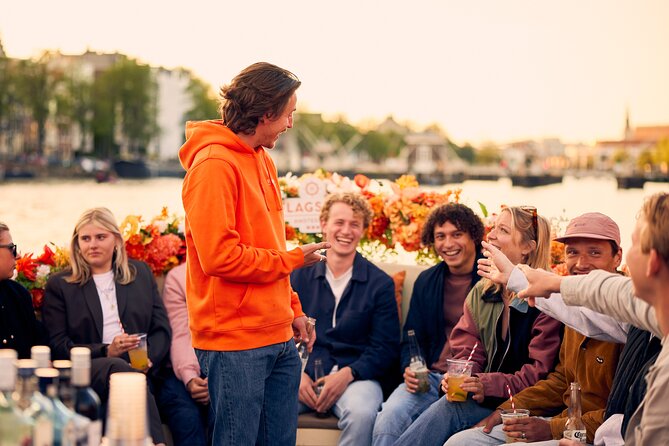
- Small boat, maximum 10 people: You get a more intimate ride and a better chance to hear the English-speaking skipper.
- Tulips are decorative, not seasonal: The boat uses lifelike artificial flowers, making this a photo-focused experience rather than a trip to the Dutch bulb fields.
- About one hour on the canals: The route covers many central sights quickly, but it does not give you time to stop and explore on foot.
- Evening departures can be special: The 8 p.m. cruise has been praised for its sunset timing, depending on the season and schedule.
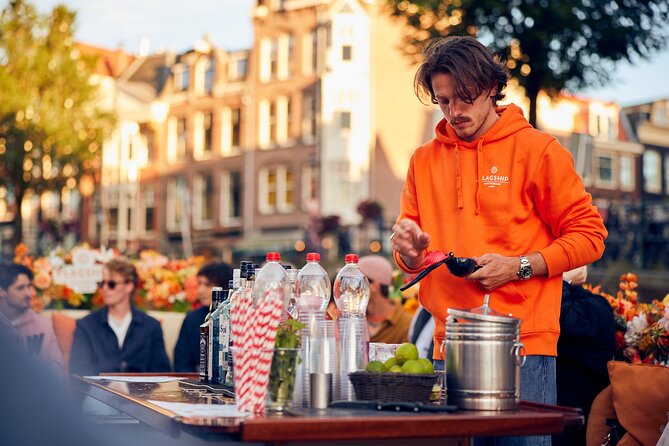
- Drinks cost extra: An onboard bar is available, but beverages are not included in the $37.80 price.
- Winter weather matters: Strong wind and bad weather can lead to the tulip boat being unavailable or the cruise being canceled.
What the $37.80 price buys you
At $37.80 per person, this is not the cheapest way to get on an Amsterdam canal. It is priced above some basic sightseeing rides because you are paying for a small group, a themed boat, an onboard skipper, and a more social setting.
I think the price is fair if you care about atmosphere and photographs. The tulips turn an ordinary canal ride into a distinct experience, and a boat carrying no more than 10 people feels less impersonal than a large covered vessel. You also see a wide slice of central Amsterdam in one hour, which is useful on a short visit.
The value is weaker if your only goal is transportation or a detailed history lesson. The cruise is brief, and the flowers are a decoration rather than a seasonal display. Drinks are extra, so the final cost rises if you order from the bar.
The strongest case for booking comes when you want a compact introduction to Amsterdam’s waterways, a pleasant setting for photographs, and a small boat rather than a crowded one. For a serious canal-history experience, you may prefer a longer specialist tour. For a first look at the city, this ride covers plenty of ground.
More Boat Tours in Amsterdam
- Amsterdam Classic Saloon Boat Cruise with Drinks and Cheese
★ 5.0 · 31,825 reviews - Amsterdam Luxury Canal Cruise + Unlimited Drinks & Bites option
★ 5.0 · 30,518 reviews - Amsterdam: Classic Boat Cruise with Optional Cheese & Wine
★ 4.6 · 22,925 reviews
Starting at Oosterdok near the maritime museums
The meeting point is at Prins Hendrikkade 33A, near Amsterdam’s Oosterdok area. This former harbor district links the old port with modern city buildings and waterfront attractions, including the NEMO Science Museum and the National Maritime Museum.
That location gives you a useful sense of Amsterdam’s relationship with water before the boat even reaches the central canals. The city grew through shipping, trade, and canal building, and Oosterdok still makes that connection easy to see.
You should arrive with enough time to find the departure point. The ticket is mobile, and the tour ends back at the same meeting point, which makes planning the rest of your day simpler. The area is near public transportation, so it can work well before dinner or after a visit to the museums.
The opening section may feel less postcard-perfect than the narrow canal belt. That is part of its value. You begin with Amsterdam as a working waterfront city, then move toward the historic center and its carefully lined canals.
Houseboat Alley and life on the water
One of the early sights is Houseboat Alley, where homes sit directly on the canals. These are not just floating curiosities for photographs. They show how Amsterdam has adapted residential life to its waterways.
From the boat, you get a view of a very different kind of home. Houseboats combine maritime character with modern comforts, and their presence helps explain why the canals still feel like part of daily life rather than a museum display.
This section is best appreciated from the water. A person walking along the canal sees the boats from the outside, but a low cruise gives you a closer sense of how tightly the homes, boats, bridges, and water fit together. Keep your camera ready, since the flowers around you and the houseboats make a natural pairing for pictures.
The limitation is that this is a passing view. You do not get a scheduled stop or time to investigate the neighborhood on foot. Think of it as a quick look at Amsterdam’s residential water culture.
Following the Amstel, the river that gave Amsterdam its name
The route reaches the Amstel, the waterway at the heart of the city’s origin story. Amsterdam began around this river, where people built a dam and developed the settlement that became Amsterdam, or Amstel’s dam.
The Amstel gives the cruise a little breathing room after the tighter canals. You can see the city from a wider stretch of water and understand why this location worked so well for trade and settlement.
This is also where a live skipper adds real value. The basic story is easy to remember, but it becomes more meaningful when you hear it while looking at the water itself. Past guides named in the tour feedback include Tim, Wes, Bart, and Abel. The praise for these skippers focuses on friendly delivery, clear explanations, and a relaxed atmosphere, though your assigned guide will depend on the departure.
The Amstel section is not a long river expedition. It is one part of a compact central route, so you should expect a glimpse of the waterway rather than a full survey of the city’s riverfront.
More canal cruises in Amsterdam:
- Amsterdam: 75 Minute City Canal Cruise with Audio Guide
★ 4.4 · 17,501 reviews - Amsterdam: City Centre Canal Cruise
★ 4.2 · 12,827 reviews - Amsterdam: City Canal Cruise and Heineken Experience Ticket
★ 4.5 · 5,367 reviews - Amsterdam Canal Cruise in Open Boat with Unlimited Drinks Option
★ 5.0 · 4,976 reviews
Why Amsterdam’s houses lean over the canals
Amsterdam’s tilted houses are among the city’s most recognizable sights. The explanation is practical rather than mysterious: the city was built on marshy ground, heavy buildings could sink, and builders used wooden poles to reach a firmer layer below.
That engineering problem shaped the look of the city. Many canal homes appear to lean forward, and their narrow facades often seem to angle toward the water. The tilt is not simply an artistic choice. It reflects centuries of construction on soft soil.
I like this part of the ride because it turns a familiar photograph into something you can understand. You are not just seeing pretty old buildings. You are seeing the result of a long struggle to build a dense city on unstable ground.
Do not expect a technical engineering lecture. The cruise is designed as a broad sightseeing ride, with short explanations woven into the route. If you enjoy small details that make Amsterdam’s buildings easier to read, this is one of the more useful facts you will hear.
The Stopera and Amsterdam’s civic center
The boat passes the area known as the Stopera, a name formed from stadhuis, or city hall, and opera. The complex combines municipal government and the opera house in one major riverside building.
This stop gives the route a change of mood. Instead of focusing only on old canal homes, you see a large public complex tied to present-day city life. It helps keep the cruise from becoming a parade of historic facades with no sense of how Amsterdam functions now.
You will likely appreciate the contrast if you are interested in architecture. The old canal belt is marked by narrow houses and traditional bridges, while the Stopera has a larger civic scale. The boat lets you compare those two sides of Amsterdam without changing neighborhoods on foot.
Again, the view is brief. The cruise does not include entry to the opera or city hall, and you should not treat this as a building tour. It is a passing architectural and civic landmark on the water.
Seven Bridges after the Thorbecke Bridge
After the Thorbecke Bridge, the skipper points out the famous Seven Bridges. From the right angle, and if other boats do not block the view, you can see seven similar stone bridges lined up one behind another.
This is one of the route’s best visual moments. The effect depends on your position, the boat traffic, and the timing, so it cannot be guaranteed. That uncertainty is part of the fun, but it also means you should not judge the whole cruise by getting one perfect photograph.
Have your camera ready before the boat reaches the area. A small boat helps here because the group is limited and the skipper can point out the sight as you approach. If the canals are busy, you may see only part of the alignment.
Seven Bridges shows why a canal cruise can be more rewarding than a walk along one canal. From street level, the bridges appear one at a time. From the water, the sight line brings them together in a single view.
The Golden Bend and the grand Herengracht homes
The final major highlight is the Golden Bend of the Herengracht. This section is famous for its broad canal and large mansions, built by wealthy residents during Amsterdam’s prosperous canal-building era.
The houses here have a different feel from the smaller, narrower buildings elsewhere. Their size, symmetry, and decorative details reveal how much money was concentrated along this stretch. Seen from the water, the row of facades makes sense as a grand urban plan rather than a collection of separate buildings.
This is a strong part of the cruise for architecture lovers. You can compare the Golden Bend with the more modest canal homes and the houseboats seen earlier in the hour. Amsterdam’s canals were never all the same, and the route gives you several versions of city life in a short time.
The downside is the limited viewing time. You may want to keep looking after the boat moves on. If a particular mansion catches your eye, make a note of the area and return later on foot.
What the tulip boat adds to the experience
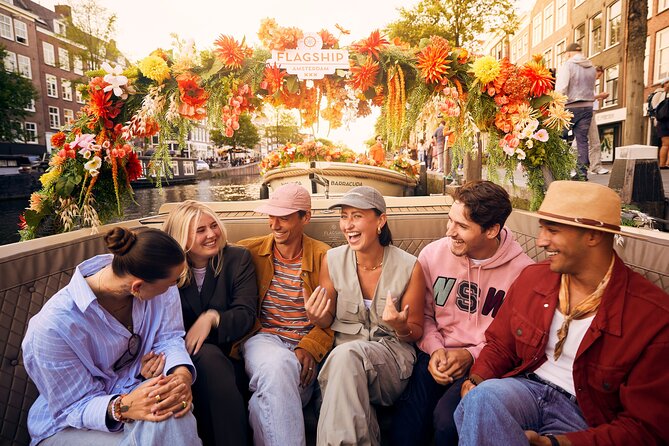
The artificial tulips are the central theme, and they are deliberately photogenic. They create a bright setting for portraits and canal pictures, especially when you sit among the flowers with the old buildings behind you.
I would book this because you enjoy visual details, not because you expect a botanical tour. There are no fields of blooming tulips on this route, and the flowers do not change with the season. They are part of the boat’s design.
That distinction matters in winter. One particularly serious complaint came from a booking made during the cold season, when the tulip boat was not operating. The operator explained that strong winds and poor weather can make the themed boat unavailable. Since the flowers are artificial, the seasonal restriction may seem confusing, but it relates to boat conditions, not flower growth.
Check the operating date and weather terms carefully before you pay. If the tulip boat is canceled for poor weather, you should be offered another date or a full refund. Still, the winter situation shows why you should not assume that every departure uses the flower-decorated boat.
The small-group atmosphere and onboard bar
A maximum of 10 people is one of the clearest advantages here. You can usually hear the skipper more easily, and the ride feels closer to a shared outing than a large sightseeing operation.
The skipper is included in the price, and the tour is offered in English. The tone appears to depend heavily on the guide. Named skippers such as Tim, Wes, Bart, Abel, and others have been praised for being friendly, entertaining, and well informed about the city.
The onboard bar gives you the option of buying a drink during the ride. That can suit an evening cruise or a relaxed afternoon, but remember that beverages are not included. If you are watching your budget, enjoy the boat and buy something afterward near the meeting point.
The boat’s small size can also bring a tradeoff. Fewer seats mean a more intimate setting, but you may have less freedom to move around than on a large vessel. Your best view can depend on where you sit, so arrive ready to settle in rather than expecting a full open-air walking platform.
Choosing the best departure time
The cruise lasts about one hour, so timing makes a real difference. An afternoon departure gives you clear daylight for reading the buildings and spotting details such as the leaning facades and bridge lines.
An evening trip can create a softer mood. The 8 p.m. sailing received special praise for lining up with sunset, though the exact light depends on the time of year and the day’s weather. If photographs matter most, check the sunset time rather than assuming every 8 p.m. departure will have golden light.
The hour-long format fits neatly into a larger day. You can place it between museum visits, before dinner, or after walking the canal belt. Since the boat returns to Prins Hendrikkade 33A, you do not have to arrange a second meeting point at the end.
Who should book this Amsterdam canal cruise
I would recommend it to you if you want:
- A short introduction to Amsterdam’s canals
- A small group rather than a large sightseeing boat
- Colorful photographs with tulip decorations
- A relaxed English-language outing
- A route covering both historic canals and modern city landmarks
- The option to buy a drink while you ride
It suits couples, friends, and families who want an easy activity with little walking. It also works well on a first visit because you see several areas quickly, then can return to the ones that interest you most.
I would be more cautious if you want a long, detailed history tour, a trip to real tulip fields, or a guaranteed open-air experience in winter. The artificial flowers are attractive, but they are not the same as seeing tulips in bloom at Keukenhof or in the countryside. This is a city canal cruise with a flower theme, not a horticultural excursion.
Booking, cancellations, and practical details
The tour costs $37.80 per person, accepts a mobile ticket, and is offered in English. Most people can take part, and the departure point is near public transportation.
You can cancel for a full refund up to 24 hours before the start time. Cancellations or changes made within 24 hours are not accepted for a refund under the stated policy. If poor weather cancels the activity, you should receive a choice of another date or a full refund.
The tour is generally booked well ahead, with an average booking lead time of 38 days. That is a useful warning for peak dates, sunset departures, and popular travel seasons. I would reserve early if the tulip decoration is the main reason you want this particular cruise, then check the weather and operating details again close to the date.
Should you book the Tulip Tour?
Book it if you want a compact, photo-friendly canal ride with no more than 10 people, a friendly English-speaking skipper, and a route that includes the Amstel, Houseboat Alley, Seven Bridges, and the Golden Bend.
Skip it if you are paying mainly for real tulips, need a winter sailing that is guaranteed to use the decorated boat, or want a long and highly detailed history lesson. At $37.80, the value rests on the small group and the atmosphere, not on the length.
For most first-time visitors, I see it as a pleasant one-hour introduction with a memorable visual theme. Just confirm that the tulip boat is operating for your date. That one check can make the difference between a charming Amsterdam outing and a very disappointing arrival at the dock.
FAQ
How long is the Amsterdam Tulip Tour canal cruise?
The cruise lasts approximately one hour and returns to the original meeting point at Prins Hendrikkade 33A.
How many people can join the boat?
The activity has a maximum group size of 10 travelers.
What sights does the cruise pass?
The route includes Amsterdam Oosterdok, Houseboat Alley, the Amstel, the Stopera, Seven Bridges after the Thorbecke Bridge, and the Golden Bend of the Herengracht.
Are drinks included in the ticket price?
No. An onboard bar is available, but drinks must be purchased separately.
Is the boat available during winter?
The tulip boat may not operate during winter because of strong winds and poor weather. Check that the themed boat is available for your chosen date.
What is the cancellation policy?
You can cancel up to 24 hours before the start time for a full refund. Cancellations or changes made less than 24 hours before the experience are not accepted for a refund. If poor weather causes the operator to cancel, you will be offered another date or a full refund.
More Keukenhof and Tulip Field Trips
- Amsterdam: Keukenhof Ticket and Roundtrip Shuttle Transfer
★ 4.7 · 11,799 reviews - From Amsterdam: Keukenhof Gardens Ticket and Transfer
★ 4.5 · 2,741 reviews - Amsterdam: Day Tour Keukenhof and Zaanse Schans Windmills
★ 4.5 · 1,549 reviews - Amsterdam: Keukenhof and Zaanse Schans Windmills Guided Day Trip
★ 4.5 · 1,063 reviews
Just added around Amsterdam
- Amsterdam: Giethoorn Tour with Canal Cruise and Windmills★ 5.0 · 3 reviews
- Full-day excursion to Edam, Volendam, and Marken★ 3.7 · 3 reviews
- Amsterdam: Chocolate Fondue in the Dark★ 5.0 · 3 reviews
- Amsterdam Private Walking Tour of Famous Painters★ 5.0 · 3 reviews
- Amsterdam Family Friendly Historical Walking Tour★ 5.0 · 3 reviews
- Amsterdam Old-West Vegan Food Tour with Local Guide★ 4.7 · 3 reviews
- From Amsterdam: visit Zaanse Schans, Muiderslot and more!★ 5.0 · 3 reviews
- Amsterdam: Beer Tasting with Paired Bites at Eighty-Four★ 5.0 · 3 reviews
Amsterdam Tours, compared.


Amsterdam Classic Saloon Boat Cruise with Drinks and Cheese
Read our review →
Amsterdam Luxury Canal Cruise + Unlimited Drinks & Bites option
Read our review →


Classic Boat Cruise with Optional Cheese & Wine
Read our review →
Evening Cruise with Optional Wine and Snacks
Read our review →
75 Minute City Canal Cruise with Audio Guide
Read our review →Browse the lists this tour appears in