

Reviewed · AMSTERDAM TOURS
Amsterdam: Cultural Highlights in English/German/Italian
Amsterdam reveals itself best on foot, where grand squares, narrow canals, old churches, and reminders of difficult history sit close together. This two-hour walk links major sights from the National Monument to Spui, giving you a useful first look at the city without entrance fees or transport hassles.
I like the small group of no more than 15 people, which makes it easier to hear the guide and ask questions. I also like the broad subject range, from Amsterdam’s Golden Age and colonial past to Jewish heritage and LGBTQ+ history, plus practical advice for the rest of your stay.
The main drawback is that the tour moves at a steady pace over 3 to 4 kilometers, and it does not enter the Anne Frank House, coffee shops, or the heart of the red-light district. If you want museum interiors, this is not that tour.
Key points to know before you book
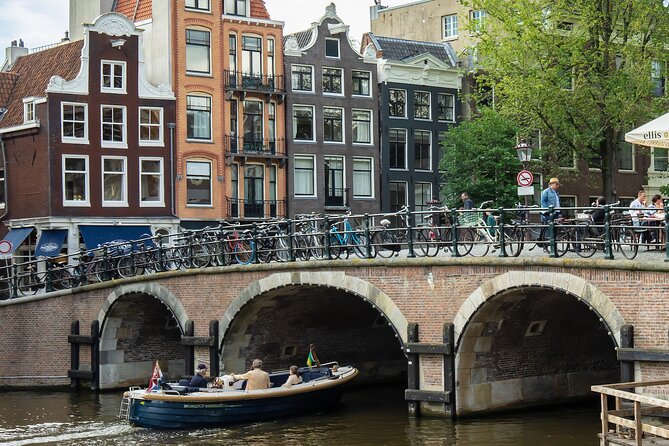
- A compact history walk: Cover central Amsterdam in two hours, from Dam Square and the Royal Palace area to the Nine Streets and Begijnhof.
- Several language choices: The experience is offered in German, English, or Italian, though the booking details specifically identify German as the scheduled language, so check your departure carefully.
- Strong coverage of modern Amsterdam: The route includes the Multatuli statue, Anne Frank’s statue, and the Gay Monument, not just old buildings.
- Useful end-of-tour advice: Expect shopping suggestions for the Nine Streets, food ideas, and pointers toward lesser-known places to visit afterward.
- No admission fees during the walk: Every stop is viewed from public space, keeping the $33.88 price focused on the guide and small-group format.
- A gentle but real walking commitment: Wear comfortable shoes, carry water, and bring a hat on hot days.
Starting at the National Monument on Dam Square
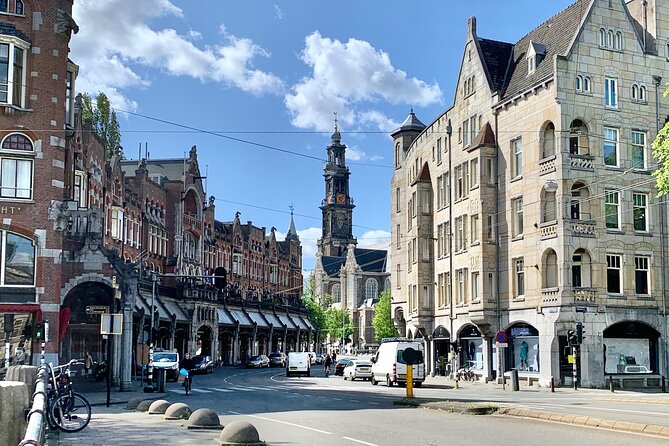
The meeting point is the National Monument on Dam Square, a very central place to begin. You will not need to pay an entrance fee, and the area is close to public transportation, making it practical if you are arriving from elsewhere in Amsterdam.
The opening stop helps the guide gather the group and set the shape of the walk. From there, the route moves through the old center rather than sending you across the wider city. That matters because two hours passes quickly, and you spend your time seeing connected places instead of waiting for trams or crossing long distances.
Dam Square gives the tour its first major history lesson. You learn how Amsterdam began, how the settlement developed, and how the old town hall later became the Royal Palace. The square is busy and visually mixed, with monumental buildings beside heavy city traffic and crowds, so do not expect a quiet first stop.
This is a good place to listen for the difference between Amsterdam as a medieval settlement and Amsterdam as a powerful trading city. The guide uses the buildings around you to explain how the city grew, rather than treating each sight as an isolated photo stop.
A few more Amsterdam trips worth a look
- Amsterdam: Van Gogh Museum Ticket
★ 4.7 · 52,054 reviews - Amsterdam Classic Saloon Boat Cruise with Drinks and Cheese
★ 5.0 · 31,825 reviews - Amsterdam Luxury Canal Cruise + Unlimited Drinks & Bites option
★ 5.0 · 30,518 reviews
From Beurs van Berlage to the Golden Age
The walk continues to Beurs van Berlage, where the focus shifts to Amsterdam’s Golden Age. This section explains how the city became one of the wealthiest places in the world through trade, finance, shipping, and commercial organization.
You are looking at a later building, but the subject reaches back to the period when Amsterdam’s merchants and institutions gained extraordinary power. The stop helps connect the city’s handsome center with the economic forces that paid for it.
I find this part especially useful because Amsterdam can look like a postcard of canals and gabled houses unless someone explains the money behind the architecture. The guide can also answer questions about how commerce shaped the old town, which is more useful than memorizing dates.
The Nieuwe Kerk follows with a short look at the church’s role in Amsterdam’s development. The stop lasts only about five minutes, so you should treat it as an outdoor introduction rather than a full church visit. You will hear why the building matters, but the walk does not include a paid interior visit.
Multatuli and the harder side of Amsterdam’s past
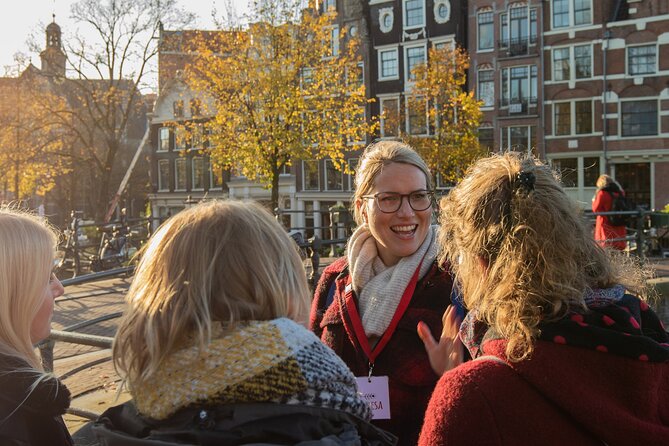
At the statue of Multatuli, the tour takes a sharper turn. Here you learn about Amsterdam’s colonial era and its connection to one of the Netherlands’ most important books.
This stop adds needed balance. Amsterdam’s prosperity did not come from trade alone in some harmless, polished sense. It was tied to colonial power and exploitation, and the Multatuli connection gives the guide a way to address that past through a writer and a public monument.
You might appreciate this stop most if you want a tour that goes beyond canals, merchants, and royal buildings. It also gives you a chance to ask questions about how the Netherlands remembers its colonial role today.
Magna Plaza comes next. The former post office is now associated with shopping, but the guide explains why the building mattered in its original civic role. It is a short stop, yet it shows how Amsterdam keeps adapting old buildings for modern use.
The route does not pause for shopping here. That is useful to know. You see the building and learn its place in the city, while the longer shopping advice comes later at the Nine Streets.
Westerkerk, Jordaan, and the Anne Frank statue
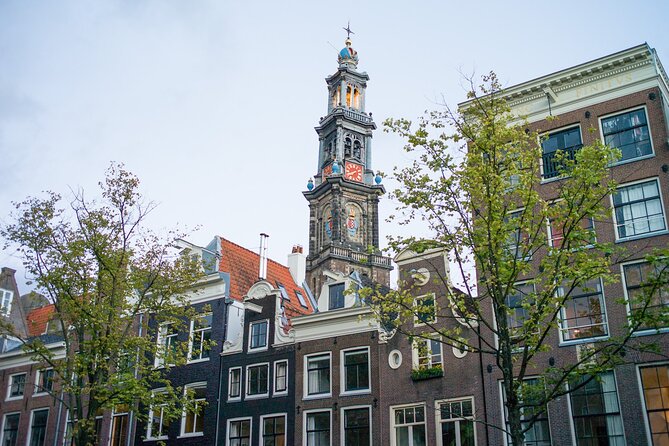
Westerkerk is described as Amsterdam’s biggest church, and the stop links it with the Jordaan area. This is one of the route’s more atmospheric sections, since the church and surrounding neighborhood help you understand how religious and residential parts of the old city fit together.
The guide also explains the church’s historical connection with Jordaan. You get context for the area instead of simply passing through attractive streets. The walk remains outdoors, so the value comes from the explanation and the setting rather than a church interior visit.
The Anne Frank stop is at the statue, not at the Anne Frank House. That distinction is important when you plan your Amsterdam days. You will hear about Jewish life in Amsterdam and how Anne Frank and her family experienced their time in the city, but this tour does not provide entry to the house.
One piece of practical advice: do not book this walk expecting an Anne Frank House visit. A previous departure was affected when a planned house visit did not happen, and there was no replacement or refund. The safest reading of the current details is simple: the statue and surrounding history are included, the museum is not.
This section may feel brief for such a serious subject. The schedule gives the statue about ten minutes, so you receive an introduction rather than a full study of wartime Amsterdam. If Jewish history is your main reason for visiting, plan a separate museum or memorial visit.
Same country, a completely different kind of day:
- Amsterdam: Heineken Experience Ticket
★ 4.6 · 30,055 reviews - Amsterdam: Rijksmuseum Entry Ticket
★ 4.7 · 25,535 reviews - Amsterdam: Classic Boat Cruise with Optional Cheese & Wine
★ 4.6 · 22,925 reviews - Amsterdam: Evening Cruise with Optional Wine and Snacks
★ 4.4 · 19,696 reviews
Amsterdam’s LGBTQ+ story at the Gay Monument
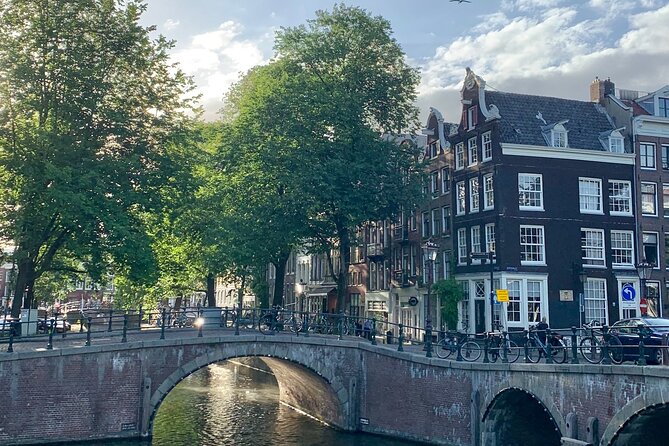
The Gay Monument adds another layer to the city’s social history. The guide explains Amsterdam’s LGBTQ+ scene and the significance of the monument.
This is a valuable inclusion because the tour does not present Amsterdam only through royal buildings and old wealth. You also learn about people who shaped the city’s identity and public life in more recent times.
The stop lasts about ten minutes. That is enough for a clear explanation and questions, but not for a full account of Dutch LGBTQ+ history. Still, its position on a general city walk makes it easy for you to place the subject within the central streets you are already exploring.
If you are traveling with children, the tour is listed as suitable for children. The themes include colonialism, war, religion, and LGBTQ+ history, so parents can decide how much discussion suits their family. The guide can respond to questions, and the walking format avoids the pressure of sitting quietly in a museum for two hours.
The Nine Streets and advice you can use later

The Nine Streets, or Negen Straatjes, is where the tour turns from history toward daily Amsterdam. Your guide offers shopping advice and points out how to make better use of the area after the walk.
This is more useful than a quick stop for photographs. The Nine Streets is the kind of district where you can spend an hour wandering without a plan, so a few suggestions can help you return with purpose. The stop itself is short, about five minutes, but you can continue exploring independently afterward.
You may want to note down recommendations as you walk. The tour’s practical value rises when you ask direct questions about food, shopping, and places to visit later. One guide, Marina, was praised for helpful food tips, while Noeme was noted for advice on the city’s history, economy, and details that are easy to miss.
The guide names associated with this experience include Deborah, Josh, Stephanie, Marina, Justus, and Noeme. Your guide will depend on the departure, but the range of names gives you a sense that this is not a one-person scripted performance. Justus has been described as offering detailed historical background, while Josh was willing to follow questions toward less familiar places.
Spui, Begijnhof, and the hidden church
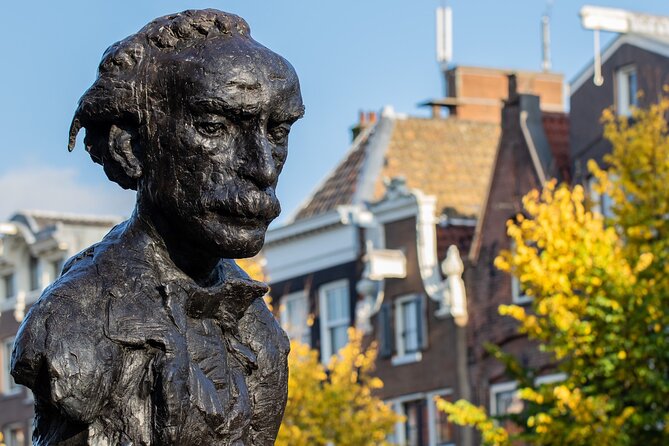
The final major stop is Spui, a historic square near the Begijnhof. This is one of the best places to finish a central Amsterdam walk because it combines religion, domestic life, and the city’s Reformation story.
You learn about the Begijnhof and the changes brought by the Reformation. The guide also points out the hidden church inside the courtyard, a detail you could easily miss if you simply walked through the area on your own.
The stop lasts about fifteen minutes, making it one of the longer pauses on the route. That gives you time to understand why the Begijnhof is different from an ordinary old-town courtyard and to ask about other quiet places to see after the tour.
The walk ends back at the meeting point, according to the activity details. Since the route passes through the Nine Streets and Spui, you will also be well placed to continue sightseeing in central Amsterdam, though you should confirm the exact end point with the guide on the day.
What the $33.88 price really buys you
At $33.88 per person, this is not a bargain-priced orientation if you only want a quick stroll. It is a reasonable buy if you use the guide for context, questions, and planning help for the rest of your visit.
The tour runs for about two hours, which works out to roughly $16.94 per hour before a tip. You pay no admission fees during the walk because the stops are viewed from public areas. Your money mainly covers the guide, the small-group setting, and the organization of a route that connects eleven places without requiring you to navigate Amsterdam yourself.
I would compare this with the cost of losing half a day to guesswork. A guide who explains the city’s origins, Golden Age, colonial past, Jewish heritage, LGBTQ+ history, shopping streets, and Begijnhof can give your later sightseeing more meaning.
Tips are not included. Bring extra cash or use the method your guide accepts if you feel the walk was useful. The cancellation policy allows a full refund when you cancel at least 24 hours before the start time. Poor weather can also lead to a new date or full refund, since this is an outdoor walk.
Pace, group size, and what to bring
The maximum group size is 15. That is small enough for questions without making the experience feel like a private tour, though the actual pace will still depend on the group.
You will walk about 3 to 4 kilometers over two hours. The route is not presented as strenuous, and one account describes the group moving at the pace of the slowest person, but comfortable shoes remain essential. Amsterdam’s streets can be uneven, and stopping often does not remove the need to walk between places.
Bring water and a hat in hot weather. The tour requires good weather, and there is no promise of indoor shelter during the route. A light rain plan is wise, even though the stated policy addresses cancellation for poor weather.
The tour is near public transportation and most people can participate. It is suitable for children, and bringing a dog was reported as acceptable on at least one departure. Since pet rules are not formally detailed, ask before booking if your dog is an essential part of the plan.
The walk does not visit a coffee shop. It also does not enter the red-light district, passing only along its southern side. That makes the experience more focused on culture and history than on Amsterdam’s more famous adult-oriented attractions.
Who will get the most from this walk
I would choose this tour for a first or second day in Amsterdam. You get a city map in your head, a framework for later museum visits, and practical ideas for food and shopping.
It suits you if you like history explained in plain language and prefer a guide who can respond to questions. It also suits families, couples, solo visitors, and people who want a small group rather than a large procession.
German-speaking visitors should pay close attention to the language offered on their selected departure. The tour title refers to English, German, and Italian, while the additional details identify the tour as German. English and Italian availability should be confirmed before you pay if language is important.
I would not choose it as your only Amsterdam experience if you want museum entry, a canal cruise, the Anne Frank House, or a detailed visit to the red-light district. This is an outdoor introduction, not a collection of tickets.
Should you book Amsterdam Cultural Highlights?
Book it if you want a well-paced introduction to central Amsterdam with serious subjects included alongside familiar sights. The strongest parts are the range of topics, the limited group size, and the useful advice for what to do after the walk.
Skip it if you already know the old center well or need interior visits. Also think twice if 3 to 4 kilometers sounds tiring or if your main goal is the Anne Frank House.
For most first-time visitors, the $33.88 cost is fair when you treat the walk as both a history lesson and a planning session. Ask questions, take notes at the Nine Streets and Begijnhof, and use the tour to decide where you want to spend the rest of your Amsterdam stay.
FAQ
How long does the Amsterdam Cultural Highlights tour last?
The walking tour lasts approximately two hours.
How far does the tour walk?
The route covers about 3 to 4 kilometers on foot.
What languages are available?
The tour is described as being offered in German, English, or Italian. The additional details specifically identify the tour as German, so confirm the language of your chosen departure before booking.
Where does the tour start?
The meeting point is the National Monument on Dam Square in Amsterdam, at Dam, 1012 JS Amsterdam, Netherlands.
Where does the tour end?
The activity details state that the tour ends back at the meeting point.
Does the tour enter the Anne Frank House?
No. The tour visits the Statue of Anne Frank and discusses Jewish history and Anne Frank’s experience, but it does not include admission to the Anne Frank House.
Does the tour visit the red-light district or a coffee shop?
The red-light district is not visited. The route only passes along its southern side, and the tour does not visit a coffee shop.
Are entrance fees included?
There are no admission fees during the tour. All listed sights can be visited for free from the route.
Can I cancel for a full refund?
Yes. You can cancel at least 24 hours before the experience start time for a full refund. Cancellations or changes made less than 24 hours before the start are not refunded or accepted. If poor weather causes the operator to cancel, you will be offered another date or a full refund.
Just added around Amsterdam
- Amsterdam: Giethoorn Tour with Canal Cruise and Windmills★ 5.0 · 3 reviews
- Full-day excursion to Edam, Volendam, and Marken★ 3.7 · 3 reviews
- Amsterdam: Chocolate Fondue in the Dark★ 5.0 · 3 reviews
- Amsterdam Old-West Vegan Food Tour with Local Guide★ 4.7 · 3 reviews
- Amsterdam Private Walking Tour of Famous Painters★ 5.0 · 3 reviews
- Amsterdam Family Friendly Historical Walking Tour★ 5.0 · 3 reviews
- From Amsterdam: visit Zaanse Schans, Muiderslot and more!★ 5.0 · 3 reviews
- Amsterdam Walking Tour with Dutch Pancake Lunch★ 5.0 · 3 reviews
Amsterdam Tours, compared.


Amsterdam Classic Saloon Boat Cruise with Drinks and Cheese
Read our review →
Amsterdam Luxury Canal Cruise + Unlimited Drinks & Bites option
Read our review →


Classic Boat Cruise with Optional Cheese & Wine
Read our review →
Evening Cruise with Optional Wine and Snacks
Read our review →