
Reviewed · AMSTERDAM TOURS
Amsterdam All-Inclusive 90-Minutes Heated Cruise by Captain Jack
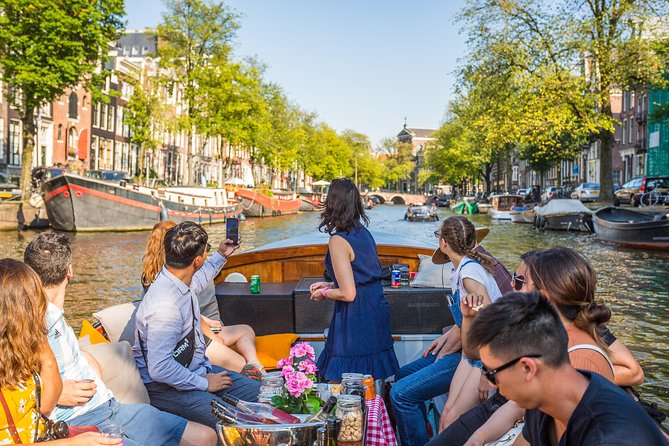
Amsterdam is best understood from the water, and this 90-minute Captain Jack cruise gives you a broad look at the canal ring, the Amstel, Central Station, Jordaan, the Red Light District, and dozens of historic buildings. The relaxed setting includes unlimited Heineken, wine, and Dutch snacks, but the tour remains a narrated history cruise rather than a party boat.
I like the choice of two departure points, near the Rijksmuseum or Amsterdam Central Station, and I like the generous length for the price. The main consideration is weather: boats are open, or only partly enclosed in colder months, and there is no toilet onboard. Heating can also be limited when windows are open.
Key points at a glance
- Two useful departure points: Choose the Rijksmuseum for Museumplein access or Central Station for an easy start near the Old Centre.
- A wide city route: Expect canals near the Anne Frank House, Jordaan, Negen Straatjes, Amstel, Red Light District, and Museumplein.
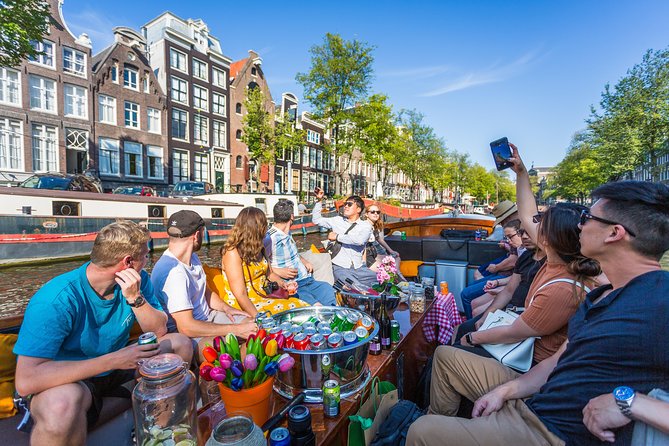
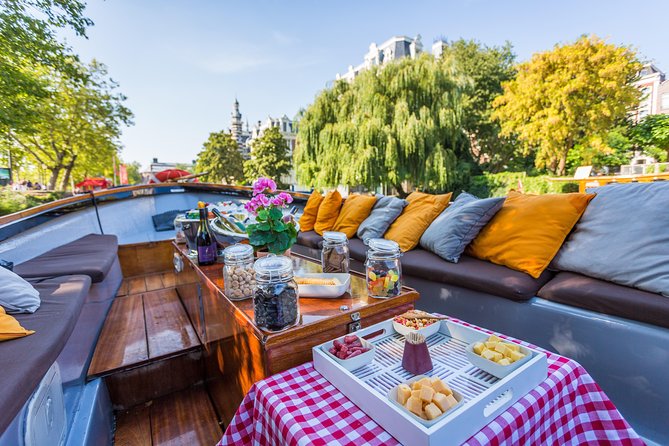
- Drinks and snacks included: Heineken, wine, cheese, crackers, candies, and other typical Dutch nibbles are available throughout the cruise.
- A history-focused outing: Captains such as Roland, Oliver, Joe, David, and J-P mix facts with humor and local suggestions.
- Weather matters: Blankets may be supplied, but you should dress warmly. Rain cancellations allow a new date or full refund.
- Small-group feel: The boat holds a maximum of 24 passengers, though sound can be an issue without a microphone.
Why Amsterdam’s canals are worth 90 minutes
Amsterdam has more than 100 kilometers of canals, about 90 islands, and roughly 1,500 bridges. From street level, you see handsome canal houses one block at a time. From a boat, the city’s plan makes sense.
The main canals, Herengracht, Keizersgracht, and Prinsengracht, form broad curves around the historic center. This canal ring was built during the Dutch Golden Age and is now a UNESCO World Heritage area. The view is not just pretty. It explains how Amsterdam grew, traded, defended itself, and made room for wealthy merchants.
A boat also gives you a clear look at the narrow canal houses. Their tall facades, steep stairs, gables, and large windows were shaped by old taxes and the need to move goods upward. You will not stop to tour these buildings, but the captain’s commentary helps turn a passing row of houses into a readable part of the city.
This is a good first-day activity. You can mark major sights from the water, then return later on foot. It is also useful near the end of a stay, when your feet need a rest but you still want to see more of Amsterdam.
More Boat Tours in Amsterdam
- Amsterdam Classic Saloon Boat Cruise with Drinks and Cheese
★ 5.0 · 31,825 reviews - Amsterdam Luxury Canal Cruise + Unlimited Drinks & Bites option
★ 5.0 · 30,518 reviews - Amsterdam: Classic Boat Cruise with Optional Cheese & Wine
★ 4.6 · 22,925 reviews
Choosing the Rijksmuseum or Central Station departure
The Rijksmuseum departure point is convenient if you are already visiting Museumplein. The boat docks in front of the Rijksmuseum, one of Amsterdam’s great buildings and home to Rembrandt’s Night Watch. The museum admission is not included, and the cruise does not provide time for a museum visit, so treat the location as a meeting point rather than part of the tour.
The Central Station departure point works well if you arrive by train or are staying near Dam Square, the Old Centre, or the canal belt. Amsterdam Centraal is the city’s main railway hub, and the area is packed with landmarks, shops, hotels, and tram connections. It can also be crowded and confusing around the waterfront, so arrive early.
The operator asks you to reach the dock 10 minutes before departure. Boats cannot wait more than five minutes because of heavy dock traffic. This is not a casual suggestion. Allow extra time to find the right landing, especially at Central Station.
Boarding requires a fairly large step into the boat. Crew members assist, but this may matter if you have limited mobility. Most people can take part, and service animals are allowed. Other animals are not permitted because of food health rules.
The first stretch: Rijksmuseum, Museumplein, and the canal ring
From the Rijksmuseum departure, you are near Museumplein, Amsterdam’s museum square. The Rijksmuseum, Van Gogh Museum, Stedelijk Museum, Moco Museum, and Concertgebouw all sit around this area. You will see the district from the water, not tour its museums.
As the boat moves into the canal network, the emphasis shifts from famous collections to daily Amsterdam. You pass monumental canal houses, old bridges, and waterside residences. The small boat gives you a low view, close to the waterline, though this also means that passengers in the back may find it harder to hear the captain.
The boat route varies with traffic and canal access. That is a plus because the city’s waterways are not a fixed stage set. It also means you should not expect the exact same sequence every time or a guaranteed close pass of every landmark named in the description.
The Prinsengracht is one of the main canals and was named for the princes of the House of Orange. Construction began in 1612, with later sections added as Amsterdam expanded. Along this canal, the route can bring you near the houseboat museum and the Jordaan, a former working district now known for small shops, cafes, and handsome residential streets.
The Anne Frank House is another important sight along this part of Amsterdam. The boat gives you an exterior view and historical context, but entrance is not included. Tickets for the house are handled separately and are often difficult to obtain, so do not treat the cruise as a substitute for a visit inside.
Jordaan, Negen Straatjes, and the western canal belt
The Jordaan is one of the most appealing parts of central Amsterdam to see from a boat. Its canals are lined with narrow houses, small bridges, trees, and side streets that invite a later walk. The cruise gives you the overview, while a walking visit lets you stop for shops and cafes.
Near the Jordaan, you may pass the Negen Straatjes, or Nine Streets. This compact shopping area is filled with independent stores, galleries, cafes, and old canal views. From the boat, you get a quick look rather than a shopping break, but the captain can help you locate it for later.
Leidseplein, or Leiden Square, brings a different mood. It is one of the city’s major entertainment areas, with theaters, restaurants, nightlife, and heavy pedestrian traffic. From the canal, it is a useful contrast to the quiet residential stretches of the Jordaan.
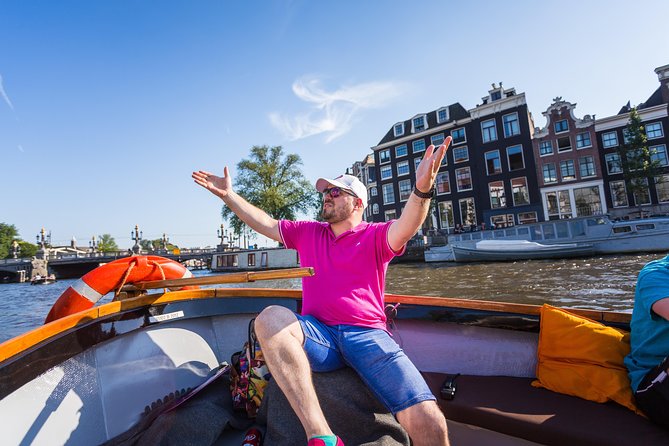
Commentary is central to the experience. Captains including Roland, Oliver, Joe, David, J-P, and Giselle have been praised for combining city facts with humor and practical suggestions. The tone depends on who is at the helm. Some captains are lively and chatty, while others provide a more straightforward narration.
There is no microphone on these small open boats. If you sit in the rear, you may need to listen carefully, especially when other passengers are talking. I would choose a seat near the captain if the city story matters most to you, and I would politely ask the crew to repeat anything you miss.
A few more Amsterdam trips worth a look
- Amsterdam: Van Gogh Museum Ticket
★ 4.7 · 52,054 reviews - Amsterdam: Heineken Experience Ticket
★ 4.6 · 30,055 reviews - Amsterdam: Rijksmuseum Entry Ticket
★ 4.7 · 25,535 reviews - Amsterdam: Evening Cruise with Optional Wine and Snacks
★ 4.4 · 19,696 reviews
The Amstel route and Amsterdam’s theatrical landmarks
The Amstel is the river from which Amsterdam takes its name. The city began around a dam built on the river, and the Amstel remains one of the most useful ways to see the relationship between the old center and the wider city.
Along the river, look for the Royal Theatre Carré, a grand Neo-Renaissance building opened in 1887. It began as a permanent circus and now hosts musicals, cabaret, and concerts. Nearby is the former Amstelhof, a classical building from 1681 that housed Hermitage Amsterdam.
The Blauwbrug, or Blue Bridge, links the Rembrandtplein and Waterlooplein areas. The Dutch National Opera and Ballet occupies the Stopera complex nearby. These buildings show a more monumental side of Amsterdam, quite different from the small canal houses.
The Magere Brug, or Skinny Bridge, is one of Amsterdam’s best-known bridges. The present wider wooden drawbridge replaced a narrower version in 1871. It is often called a love bridge, and the local romantic custom is simple: kiss on or beneath it.
The Kleine Komedie, on the Amstel, is Amsterdam’s oldest theater. It dates to 1786 and is known for cabaret and small-scale performances. The cruise will not stop for a show, but the captain’s running commentary gives these buildings a useful human story.
Old Amsterdam, the Red Light District, and historic churches
The route can pass the Oude Kerk, Amsterdam’s oldest building. It was founded around 1213 and consecrated in 1306. Today it is a Calvinist church and an art institution in the middle of De Wallen, the city’s famous Red Light District.
From the water, you see the district with some distance from its street-level intensity. The area includes red-lit windows, sex shops, cafes, historic buildings, and the old church. The cruise offers context, but it does not turn the district into a spectacle. If you explore on foot later, remember that photography of workers in the windows is not acceptable.
Nearby, the old Waag marks a former western entrance to the city and now houses a restaurant. The surrounding market area sits close to Chinatown and the Red Light District. The combination can feel crowded and visually loud, but it is one of the clearest places to see Amsterdam’s layers packed tightly together.
The Our Lord in the Attic Museum is another unusual sight. Inside a preserved 17th-century canal house, narrow stairways lead through living rooms, kitchens, and sleeping areas to a complete Catholic church hidden in the attic. You will only see the exterior from the boat, but it is worth adding to a walking day.
The Basilica of Saint Nicholas near Central Station gives the route another religious landmark. The Krijtberg, a Jesuit church dedicated to Saint Francis Xavier, adds a richly decorated Catholic interior in the central area. The Moses and Aaron Church on Waterlooplein is another notable church, dedicated to Saint Anthony of Padua.
Waterlooplein, Rembrandt, and Amsterdam’s Jewish quarter
Waterlooplein is home to the oldest flea market in the Netherlands. With hundreds of stalls and regular opening days, it is a practical place to browse vintage objects, secondhand books, clothing, jewelry, and small souvenirs. The cruise helps you locate it, but you will need a separate visit to browse the stalls.
The Rembrandt House Museum tells the story of Rembrandt as a painter, etcher, teacher, collector, entrepreneur, and Amsterdam resident. It is more personal than simply viewing his art in a gallery, because the focus is his former home and working life.
The Jewish Historical Museum sits in the old Jewish quarter and covers Jewish culture, religion, and history. It can be a useful alternative for anyone unable to visit the Anne Frank House, though the two museums serve different purposes. The Anne Frank House centers on one wartime hiding place and family story, while the Jewish Historical Museum presents a wider cultural and historical view.
The Dutch Resistance Museum, in the Plantage neighborhood, focuses on life under German occupation from 1940 to 1945. Photographs, objects, posters, film, and sound recreate the period and explain both ordinary life and resistance. Again, the cruise only points out the area, but the captain’s references can help you plan a more thoughtful museum visit.
The Hortus Botanicus is also in the Plantage district. Its 1.2 hectares contain more than 6,000 tropical and native plants and trees. It is a good stop for a quiet break after the crowded center.
Small houses, grand houses, and city details
Amsterdam’s canal belt is full of contrasts. The smallest house in Amsterdam, at Oude Hoogstraat 22, is only about 2.02 meters wide and 5 meters deep. Its tiny scale makes more sense when you compare it with the large merchant homes along the Herengracht.
The Willet-Holthuysen Museum occupies one of those canal houses. Its furnished rooms show how affluent residents lived in the 18th and 19th centuries. The Museum of the Canals offers another way to understand the city, explaining how money, art, trade, and social life shaped the canal ring.
The Singel was once Amsterdam’s medieval moat. It became the innermost canal of the semicircular canal belt after the city expanded beyond it in the late 16th century. Near Muntplein, you can see the Munttoren, or Mint Tower, which began as part of a medieval gate and later served as a place for minting coins.
The Rokin follows part of the former Amstel course between Dam Square and Muntplein. The Amstelveld, surrounded by canals and close to Utrechtsestraat, offers another quieter urban view, with the wooden Amstelkerk and rows of trees.
Near Central Station, the former headquarters of seven Amsterdam harbor companies is now a five-star hotel. Built in 1912 in the Amsterdam School style, it later housed the city transport company. This is the sort of detail that makes a canal commentary worthwhile: you see one handsome facade, then learn how its use changed over time.
Drinks, Dutch snacks, and the mood onboard
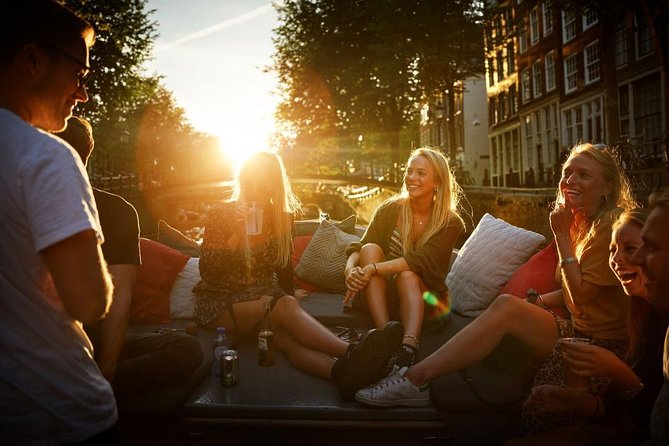
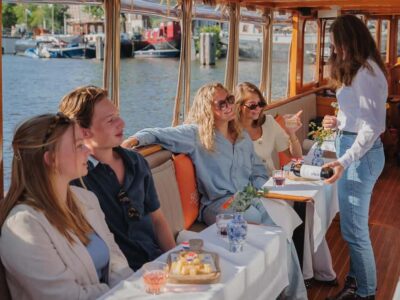
The price includes unlimited Heineken beer and wine, plus typical Dutch snacks. Snack offerings can include cheese, crackers, candies, and other small nibbles. Think casual grazing, not a meal or a hotel-style tasting.
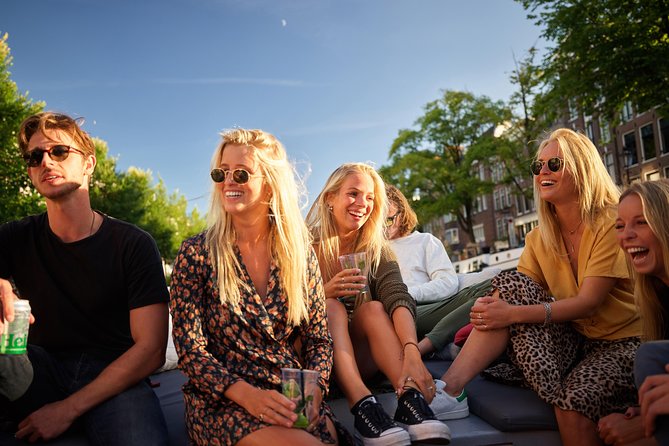
The drinks add real value at $27.21 per person, especially if you want a relaxed afternoon or evening on the water. Still, the cruise is not designed as a bachelor-party boat or loud drinking outing. The captain needs passengers to keep voices down while commentary is underway.
The best atmosphere comes when you treat the drinks as part of a social sightseeing trip. You can chat between explanations, but loud groups may make it difficult for people seated farther back to hear. The boat holds up to 24 people, so this is smaller than a large sightseeing barge but not a private cruise.
There is no toilet onboard. With unlimited drinks and a 90-minute duration, use a restroom before boarding. This simple step can prevent a major interruption.
Heating, windows, and the weather question
The word heated needs a careful explanation. Some departures use a heated, enclosed setup, while other boats remain open when the weather is pleasant. In winter, the boat may be enclosed but not fully sealed by glass, so you should still bundle up.
If windows are open, the heat may be switched off by design. On damp days, condensation can cloud the panels, and cloths or squeegees may be available to clear them. This can affect photographs and views, particularly when passengers do not regularly wipe their section.
Blankets may help, but they are not a substitute for a warm coat. I would bring layers, a waterproof outer shell, and gloves in cold weather. The 4 p.m. departure can be especially attractive in winter because you might catch daylight, sunset, and illuminated bridges during one ride, but darkness also reduces what you can see.
The tour requires good weather. If poor conditions force cancellation, you are offered another date or a full refund. You can cancel for a full refund up to 24 hours before the start time. Cancellations or changes inside that window are not refunded or accepted.
Is $27.21 a good value?
At $27.21, this is priced below many longer or more elaborate canal experiences. You get 90 minutes on the water, an English-speaking captain, unlimited Heineken and wine, and snacks. The route covers a large part of central Amsterdam, which makes the price particularly appealing for a first look at the city.
The value drops if you mainly want a quiet romantic cruise, a fully enclosed warm cabin, a gourmet food service, or polished amplified narration. The included snacks are modest, and the wine is simple. You are paying for access to the canals, the captain’s stories, and the drinks, not fine dining.
The cruise is booked about 28 days ahead on average, so it is sensible to reserve early if your Amsterdam dates are fixed. Mobile tickets make the booking side easy, but the tight dock schedule means you must handle the arrival side carefully.
Who should book this cruise?
I would recommend it to first-time Amsterdam visitors who want to cover a lot of ground without walking every canal district. It also suits couples, families with older children, and small groups who enjoy a drink while listening to local history.
You will get the most from it if you choose a dry day, dress in layers, arrive early, and sit where you can hear the captain. If you want a party, choose a different boat. If you are sensitive to cold, noise, or crowded spaces, the open design and lack of a microphone deserve serious thought.
Book this cruise for an easy, good-value introduction to Amsterdam from the water. Skip it if a warm, silent, highly polished ride is more important than broad city coverage and an informal captain-led outing.
FAQ
How long is the Captain Jack Amsterdam cruise?
The cruise lasts approximately 1 hour and 30 minutes.
Where can I board the boat?
You can choose a departure point near the Rijksmuseum or near Amsterdam Central Station.
What drinks are included?
Unlimited Heineken beer and wine are included during the cruise.
What food is included?
Typical Dutch snacks are included, such as small portions of cheese, crackers, candies, and similar nibbles.
Is there a toilet on the boat?
No. There is no toilet onboard, so use one before departure.
Is the boat heated?
Heating depends on the boat setup and weather. Some departures are heated and enclosed, while open boats may have the heat switched off. In winter, the enclosure may not be fully closed by glass.
Can I bring an animal?
Service animals are allowed. Other animals are not permitted because of food health regulations.
What happens if the weather is bad?
The experience requires good weather. If it is canceled because of poor weather, you can choose another date or receive a full refund. You can also cancel at least 24 hours before the start time for a full refund.
Just added around Amsterdam
- Amsterdam: Giethoorn Tour with Canal Cruise and Windmills★ 5.0 · 3 reviews
- Full-day excursion to Edam, Volendam, and Marken★ 3.7 · 3 reviews
- Amsterdam: Chocolate Fondue in the Dark★ 5.0 · 3 reviews
- Amsterdam Private Walking Tour of Famous Painters★ 5.0 · 3 reviews
- Amsterdam Family Friendly Historical Walking Tour★ 5.0 · 3 reviews
- Amsterdam Old-West Vegan Food Tour with Local Guide★ 4.7 · 3 reviews
- From Amsterdam: visit Zaanse Schans, Muiderslot and more!★ 5.0 · 3 reviews
- Amsterdam: Beer Tasting with Paired Bites at Eighty-Four★ 5.0 · 3 reviews
Amsterdam Tours, compared.

Amsterdam Classic Saloon Boat Cruise with Drinks and Cheese
Read our review →
Amsterdam Luxury Canal Cruise + Unlimited Drinks & Bites option
Read our review →
Classic Boat Cruise with Optional Cheese & Wine
Read our review →
Evening Cruise with Optional Wine and Snacks
Read our review →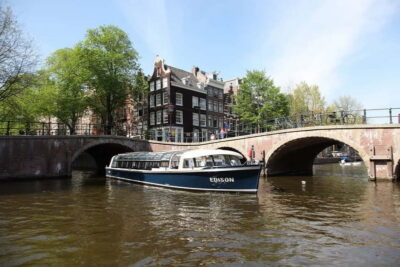
75 Minute City Canal Cruise with Audio Guide
Read our review →Browse the lists this tour appears in