
Reviewed · AMSTERDAM TOURS
Amsterdam 1-Hour Canal Cruise With Live Guide
Amsterdam makes most sense from the water. On this one-hour electric canal cruise, you glide through the old canal ring while a live guide explains the leaning houses, bridges, neighborhoods, and bits of city life that are easy to miss on foot. The quiet motor helps you hear the commentary and keeps the ride calm.
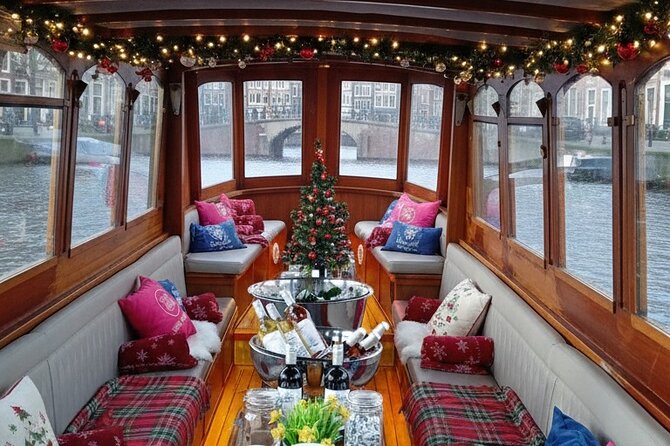
I like the small boat feel, with a maximum of 30 people, and the practical comfort of cushioned seats, blankets, umbrellas, and winter heating. I also like the mix of serious history and light local stories, from Anne Frank and wartime Amsterdam to houseboats, nightlife, cheese, and the city’s famous bridges.
The main drawback is that the long list of sights means pass-bys, not stops or museum entries. A late departure can also disrupt a tight schedule, and one poor experience involved a loud captain’s radio making the guide hard to hear.
Key points at a glance
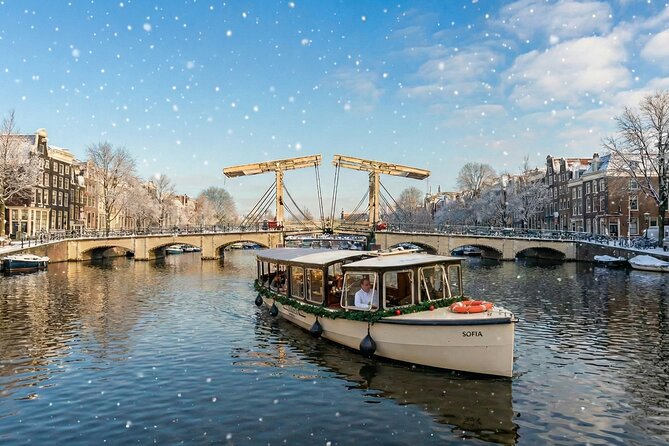
- A quiet electric boat: The motor makes conversation and live commentary easier than on a noisy tour boat.
- A useful first look at Amsterdam: The route links the Jordaan, canal ring, Amstel, Museum Quarter, and old Jewish neighborhood.
- Comfort in changeable weather: Cushions, blankets, umbrellas, and a closed heated boat in winter make the ride less exposed.
- Live storytelling: Guides explain architecture, canal engineering, culture, and local habits rather than simply naming landmarks.
- A compact group: The boat carries no more than 30 people, giving you a better chance to ask questions.
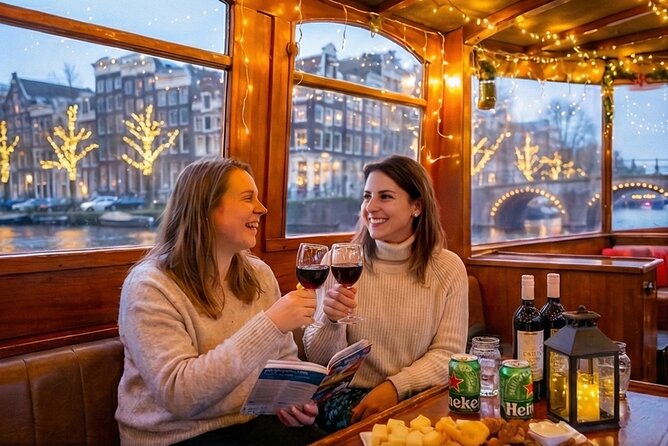
- Drinks cost extra: A bar is available, but alcohol and snacks are not part of the $26.59 price.
Why an Amsterdam canal cruise is worth one hour
You can walk beside Amsterdam’s canals all day and still miss the best view. From the water, the old merchant houses rise directly above you, bridges line up in layers, and streets that seem separate on a map begin to make sense.
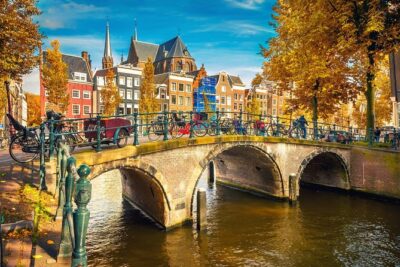
The three main canals, Herengracht, Prinsengracht, and Keizersgracht, were dug during the Dutch Golden Age. Together with the Jordaan, they form the canal ring, known as the Grachtengordel. This area became a UNESCO World Heritage Site in 2010 and contains roughly 1,550 monumental buildings.
That context matters. The canals are not just pretty water routes. They were part of an ambitious 17th-century city expansion, built to move goods, control water, and create room for Amsterdam’s growing population. A guide can point out how narrow lots, tall façades, bridges, and waterways fit together.
At $26.59 per person, the ride is not the cheapest way to see Amsterdam, but it is fair value if you want orientation, scenery, and live explanation in one hour. You are paying for a short, focused experience rather than a full city tour. The bar, when available, lets you buy a drink, but you should count that as an extra.
I would use this cruise near the start of a visit. It gives you a mental map before you tackle museums, markets, and neighborhoods on foot. It also works well near the end of a busy day, when sitting down and watching the city pass by feels better than another long walk.
More Boat Tours in Amsterdam
- Amsterdam Classic Saloon Boat Cruise with Drinks and Cheese
★ 5.0 · 31,825 reviews - Amsterdam Luxury Canal Cruise + Unlimited Drinks & Bites option
★ 5.0 · 30,518 reviews - Amsterdam: Classic Boat Cruise with Optional Cheese & Wine
★ 4.6 · 22,925 reviews
Starting in the Jordaan on Prinsengracht
The boat leaves from Prinsengracht 261a, in the Jordaan, and returns to the same meeting point. This is a useful location because the Jordaan itself deserves time before or after the cruise.
The neighborhood grew around the 17th-century canal expansion and is known for its narrow streets, small shops, cafés, and canals lined with trees and flowers. One explanation for the name Jordaan connects it with the French word jardin, meaning garden. Another links it to an old nickname for part of Prinsengracht.
You will pass the Anne Frank House area, including the building where Anne Frank and her family hid from the Nazis for more than two years. Anne died at 15 in Bergen-Belsen in 1945, but her diary continues to shape how people understand the personal cost of the occupation.
The cruise does not include admission to the Anne Frank House. If you plan to visit inside, book that separately and do not assume the boat ride replaces it. From the canal, you gain location and context, but not the interior experience.
Nearby, the Westerkerk gives the canal view one of its most recognizable landmarks. This Reformed church sits beside the Jordaan between Prinsengracht and Keizersgracht. The Homomonument, on Westermarkt near the church, adds another important part of Amsterdam’s social history.
Houseboats, boutiques, and the Prinsengracht
Prinsengracht is one of Amsterdam’s three main canals. Construction began in 1612, and later sections were added as the city expanded. Its long, elegant run makes it one of the most rewarding waterways for a first cruise.
The boat passes the Houseboat Museum, where you get a glimpse of how people live on Amsterdam’s water. A canal cruise cannot explain every practical detail of houseboat life, but seeing these homes at close range makes the city feel lived in rather than preserved for sightseeing.
You may also pass the Amsterdam Tulip Museum opposite the Anne Frank House and the Amsterdam Cheese Museum farther along Prinsengracht. The cheese museum covers Dutch cheesemaking and offers tastings, but admission and any tasting are separate from the cruise. The same is true of the many small boutiques, vintage shops, local restaurants, and designer stores around the Jordaan.
The route can also include the Noordermarkt and Noorderkerk. The market has roots going back to the 17th century and operates on Mondays and Saturdays below Noorderkerk. The church was built from 1620 to 1623 for the northern Jordaan, serving ordinary residents while Westerkerk became more associated with wealthier people.
This is where the guide’s local commentary helps. You are not just looking at attractive façades. You are hearing how neighborhoods developed, how markets worked, and how Amsterdam’s canals still function as part of everyday life.
Leidseplein and the city’s evening side
The cruise passes the Leidseplein area, one of Amsterdam’s main entertainment districts. Bars, restaurants, clubs, and concert halls fill the streets around the square, including the Melkweg and DeLaMar Theater.
The Melkweg occupies a former sugar refinery and milk factory and now hosts live music, club nights, films, photography, and festivals. The DeLaMar has two halls and is known for Dutch theater. Nearby Stadsschouwburg, a neo-Renaissance theater dating from 1894, is another landmark in this arts-heavy part of town.
You will not attend a show during the cruise, of course. The value is seeing how Amsterdam shifts from residential canal streets to a nightlife and performance center within a short distance.
The open-air boat is especially pleasant in good weather here, when you can look up at the buildings and bridges without glass between you and the view. On a cold or windy day, the same openness can be a weakness. Blankets and umbrellas help, and in winter the operator uses a closed, heated boat.
More canal cruises in Amsterdam:
- Amsterdam: 75 Minute City Canal Cruise with Audio Guide
★ 4.4 · 17,501 reviews - Amsterdam: City Centre Canal Cruise
★ 4.2 · 12,827 reviews - Amsterdam: City Canal Cruise and Heineken Experience Ticket
★ 4.5 · 5,367 reviews - Amsterdam Canal Cruise in Open Boat with Unlimited Drinks Option
★ 5.0 · 4,976 reviews
Spiegelgracht and the Rijksmuseum view
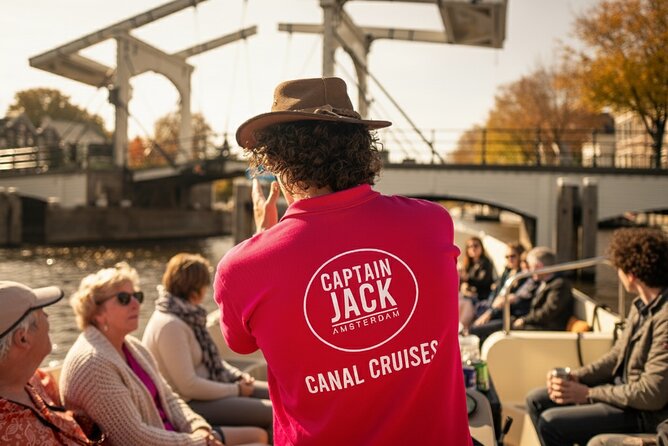
The Spiegelgracht connects Prinsengracht with Lijnbaansgracht and leads toward Nieuwe Spiegelstraat. This area is part of the Spiegelkwartier, known for galleries, antiques, and art shops.
The route gives you a view toward the Rijksmuseum, one of Amsterdam’s essential museums. The building itself is impressive from the water, and the collection includes Rembrandt’s Night Watch. The boat docks right in front of the Rijksmuseum according to the route description, but you should treat that as a viewing point rather than included museum time.
The wider Museum Quarter includes the Rijksmuseum, Van Gogh Museum, Stedelijk Museum, Moco Museum, Concertgebouw, and Vondelpark. The Moco focuses on modern, contemporary, and street art, including Banksy. Vondelpark provides a large green break from the canal district.
I like this section because it connects Amsterdam’s canal architecture with its art life. You can see the museum district from the water, then return later with a clearer sense of where each place sits. If art is your priority, schedule museum visits separately. One hour is enough for views, not galleries.
The Amstel, Magere Brug, and old Amsterdam
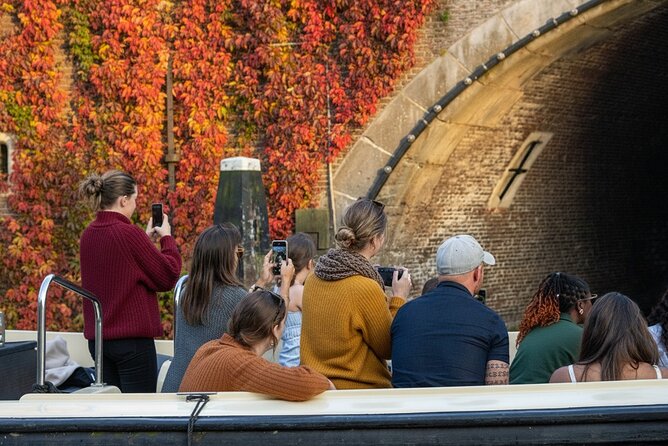
The cruise eventually reaches the Amstel, the river that gave Amsterdam its name. The city grew around a dam built on the river, producing Amsterdam from Amstel and dam. The same river also lends its name to the well-known Dutch beer.
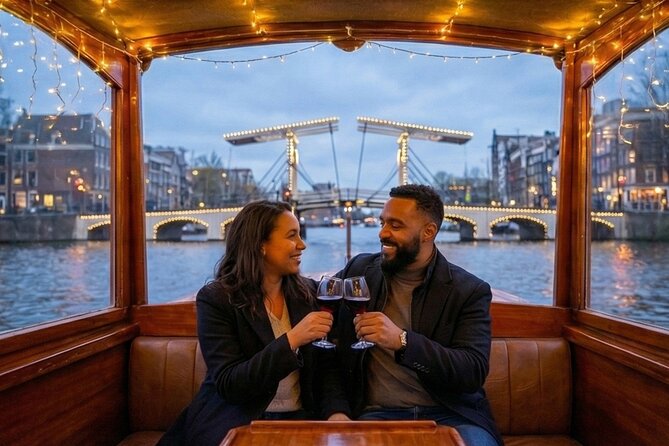
The Magere Brug, or Skinny Bridge, is one of the most photogenic points on the route. The original wooden bridge was so narrow that two pedestrians had trouble passing. A wider replacement was built in 1871 as traffic on the Amstel increased. It is also known as a love bridge, with a local romantic tradition involving a kiss above or below it.
Other landmarks along the Amstel include the Royal Theatre Carré, built in 1887 as a permanent circus building and now used for musicals, cabaret, and concerts. Hermitage Amsterdam occupies the former Amstelhof, a classical building from 1681. The Kleine Komedie, built in 1786, is Amsterdam’s oldest theater and is associated with cabaret.
Blauwbrug links the Rembrandtplein area with Waterlooplein. Nearby, the Dutch National Opera and Ballet occupies the Stopera, a modern building that opened in 1986. The cruise gives you a quick architectural tour of old and modern Amsterdam without asking you to cross the city on foot.
Waterlooplein, Jewish Amsterdam, and De Waag
The route can pass Waterlooplein, home to the Netherlands’ oldest flea market. It operates six days a week with around 300 stalls, selling items such as vintage cameras, second-hand books, jewelry, and clothing.
Waterlooplein also brings you close to the old Jewish neighborhood. The Jewish Historical Museum explores Jewish culture, religion, and history, while the Hollandsche Schouwburg recalls a much darker period. The former theater became a gathering place in 1942 and 1943 for Jews being deported to Nazi camps.
The Dutch Resistance Museum, in the Plantage neighborhood, focuses on life under German occupation from 1940 to 1945. Its displays use photographs, posters, objects, film, and sound to show daily life during the war.
Near Nieuwmarkt, De Waag is a 15th-century building that began as a city gate. It later served as a guild house, museum, fire station, and anatomical theater. It is now a restaurant, but its earlier uses give the square an unusual weight.
These sights are important, but the one-hour format limits the time given to each. If wartime history or Jewish Amsterdam matters greatly to you, plan a separate museum visit. The cruise offers an introduction and a useful geographic connection, not a full treatment.
Singel, the flower market, and central landmarks
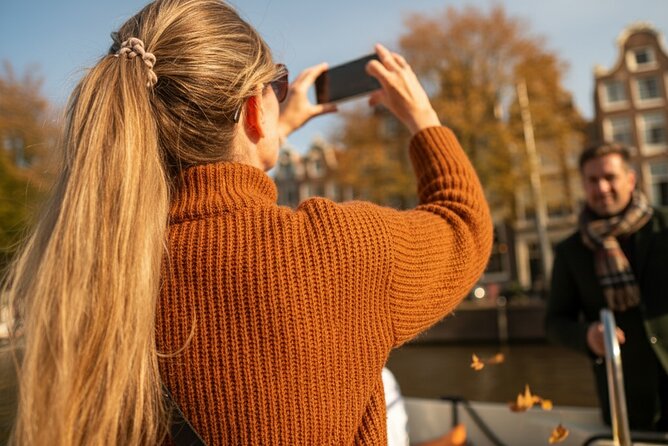
The Singel once served as Amsterdam’s medieval moat. It runs from the IJ near Central Station to Muntplein, where it meets the Amstel, and now forms the innermost canal of the main ring.
Near Muntplein, the Munttoren recalls Amsterdam’s medieval defenses and later role in coin production. The tower formed part of the Regulierspoort and was built between 1480 and 1487. The Bloemenmarkt nearby is known for tulip bulbs, flowers, and Dutch souvenirs.
You may also see the Nieuwe Kerk on Dam Square, beside the Royal Palace. The Amsterdam Museum, the Museum of the Canals, the Bijbels Museum, and the Huis Marseille photography museum add more ways to follow the city’s story after the ride.
The route can include the Cat Cabinet, Museum Van Loon, Foam photography museum, and Willet-Holthuysen Museum. These smaller museums suit specific interests: cats, photography, patrician canal-house life, and period interiors.
The point is not to check every name off a list. It is to notice how compact Amsterdam is. Art, commerce, religion, memorials, nightlife, and homes all sit along a connected water system.
De Pijp, Amstelveld, and everyday city life
The cruise may also cover the De Pijp area, with its cafés, traditional pubs, eastern eateries, and Albert Cuyp Market. The market is associated with Dutch specialties such as herring and syrup waffles.
Amstelveld is another pleasant urban pocket, bordered by Reguliersgracht, Prinsengracht, and Kerkstraat. The Amstelkerk, a mostly wooden church, sits on the square among 46 Caucasian wingnut trees.
These sights give the route a less formal side. Amsterdam is not only grand museums and 17th-century merchant houses. You also get markets, modest local streets, food, music, and neighborhood squares.
Some seasonal sights may not be visible at every departure. Amsterdam’s winter festival, for instance, adds light installations to streets and waterways each year. Ask about seasonal conditions if the festival is a main reason for booking.
Boat comfort, group size, and the live guide
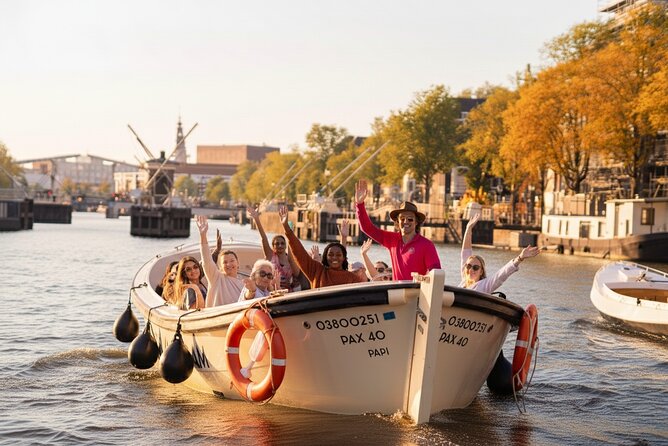
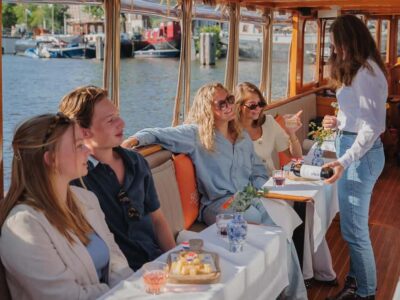
The boat uses electric power and has an open-air deck with cushioned seats. Blankets and umbrellas are included, and cold-weather departures use a closed heated boat.
That combination makes a real difference. Canal winds can feel sharp even on a sunny day, so bring a layer rather than trusting the forecast. The open deck gives better views, but a closed winter boat may offer a warmer and more comfortable ride.
The maximum group size is 30. That is not a private tour, but it is small enough for a more personal feel than a large sightseeing vessel. Several strong experiences came from guides who mixed history, humor, and local gossip, while keeping the tone easygoing. Guides were also described as open to questions.
There is one practical sound issue to keep in mind. A captain’s radio may need to remain loud for communication with other boats, and this has made the guide difficult to hear on at least one departure. Sit close to the guide when possible and ask for clarification if engine, radio, or canal traffic gets in the way.
Boarding may be a little hard for some older people. Service animals are allowed, public transportation is nearby, and the activity states that most people can participate, but the boat is not presented as fully step-free or specially adapted.
Timing, meeting point, and cancellation terms
The ride lasts about one hour and starts and ends at Prinsengracht 261a, 1016 GV Amsterdam. A mobile ticket is accepted, and confirmation arrives when you book.
Allow a little flexibility around the departure. One departure began more than 10 minutes late, while another person who arrived late was cheerfully moved to a later cruise. That kindness is useful, but I would not build a close museum reservation or cross-city walking tour around the advertised start time.
The activity depends on good weather. If poor weather causes cancellation, you can take another date or receive a full refund. The same applies if the minimum number of participants is not reached.
You can cancel for a full refund up to 24 hours before the start time. Changes or cancellations inside 24 hours are not accepted and are not refunded.
Who should book this Amsterdam canal cruise?
I would recommend it for a first visit, couples looking for a relaxed hour, families who want sightseeing without another long museum visit, and anyone who prefers stories to recorded audio. Teenagers may especially enjoy the blend of architecture, houseboats, markets, nightlife, and odd local facts.
It also suits people who want a quick overview before choosing which neighborhoods and museums deserve more time. The electric boat, cushions, blankets, and small group are useful advantages at a reasonable midrange price.
I would hesitate if you expect a detailed stop-by-stop history lesson, guaranteed open-air seating in winter, or entry to any attraction. The route covers many landmarks, but most are viewed from the boat. If hearing every word is essential, the radio issue is worth keeping in mind.
Should you book it?
Book this cruise if you want Amsterdam to feel connected, lived-in, and easy to understand in one hour. The best parts are the calm electric boat, the close views of the canal ring, and guides who can make architecture and history feel like part of daily life.
Skip it if your schedule is so tight that a possible delay would cause trouble, or if you want in-depth visits to the Anne Frank House, Rijksmuseum, Jewish Historical Museum, or another attraction. For most visitors, though, $26.59 buys a pleasant introduction and a comfortable break from walking, with enough useful context to improve the rest of your time in Amsterdam.
FAQ
How long is the Amsterdam canal cruise?
The cruise lasts approximately one hour.
Where does the cruise start?
It starts at Prinsengracht 261a, 1016 GV Amsterdam, Netherlands.
Where does the cruise end?
The cruise returns to the same meeting point where it began.
Is a mobile ticket available?
Yes. The experience includes a mobile ticket, and confirmation is provided at booking.
Is the boat electric?
Yes. The cruise uses an electric-powered boat.
Is the boat open-air?
The boat normally has a spacious open-air deck. During winter, a closed and heated boat is used.
Are blankets and umbrellas included?
Yes. Blankets and umbrellas are included, along with cushioned seating.
Are drinks and snacks included?
No. Alcoholic and nonalcoholic drinks can be bought at the onboard bar, and nuts are available for purchase.
How many people can join the boat?
The activity has a maximum of 30 participants.
Can I cancel for a full refund?
Yes, if you cancel at least 24 hours before the experience begins. Cancellations or changes made less than 24 hours before the start time are not refunded.
More 1-Hour Experiences in Amsterdam
- Guided Amsterdam Canal Cruise – Snacks & Drinks on board(1 Hour)
★ 5.0 · 1,049 reviews - Combo Ticket: Van Gogh Museum Ticket and 1-Hour Canal Cruise
★ 4.0 · 676 reviews - Combo Ticket: Xtracold Icebar Amsterdam and 1-Hour Canal Cruise
★ 4.0 · 400 reviews - Amsterdam: Red Light Secrets Museum and 1-Hour Canal Cruise
★ 4.0 · 224 reviews
Just added around Amsterdam
- Amsterdam: Giethoorn Tour with Canal Cruise and Windmills★ 5.0 · 3 reviews
- Full-day excursion to Edam, Volendam, and Marken★ 3.7 · 3 reviews
- Amsterdam: Chocolate Fondue in the Dark★ 5.0 · 3 reviews
- Amsterdam Old-West Vegan Food Tour with Local Guide★ 4.7 · 3 reviews
- Amsterdam Family Friendly Historical Walking Tour★ 5.0 · 3 reviews
- Amsterdam Private Walking Tour of Famous Painters★ 5.0 · 3 reviews
- From Amsterdam: visit Zaanse Schans, Muiderslot and more!★ 5.0 · 3 reviews
- Amsterdam Walking Tour with Dutch Pancake Lunch★ 5.0 · 3 reviews
Amsterdam Tours, compared.
Amsterdam Classic Saloon Boat Cruise with Drinks and Cheese
Read our review →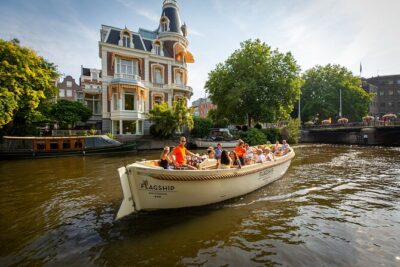
Amsterdam Luxury Canal Cruise + Unlimited Drinks & Bites option
Read our review →
Classic Boat Cruise with Optional Cheese & Wine
Read our review →
Evening Cruise with Optional Wine and Snacks
Read our review →
75 Minute City Canal Cruise with Audio Guide
Read our review →Browse the lists this tour appears in