
Reviewed · AMSTERDAM TOURS
Amsterdam Red Light District tour with a local guide
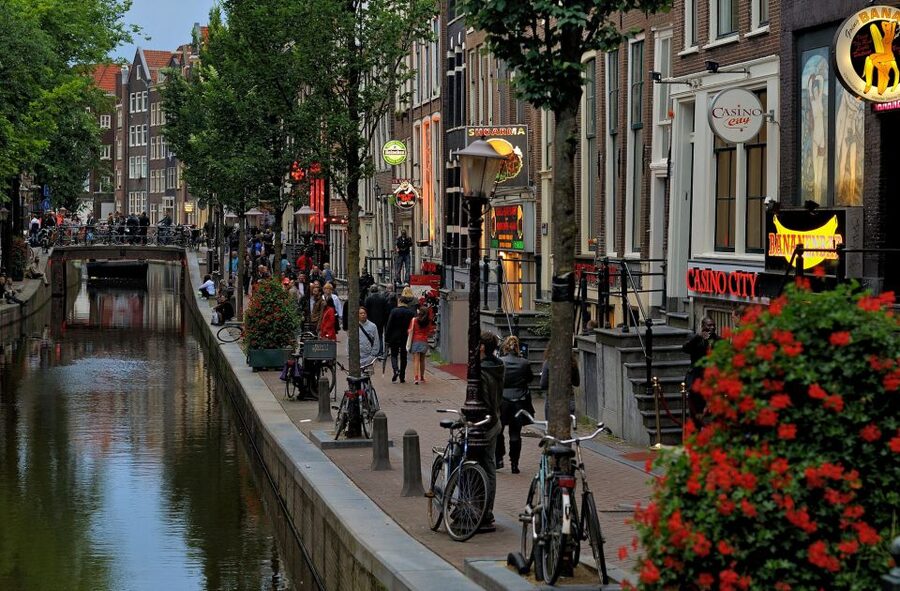
Amsterdam’s Red Light District is more than a row of red-tinted windows. This two-hour walk links the area to Zeedijk’s old sailor quarter, medieval Amsterdam, Napoleon’s era, the Old Church, Chinatown, and the city’s changing approach to sex work. It gives you a useful frame for a place that is easy to misread on your own.
I like the way the tour combines history and present-day issues, rather than treating the district as a quick photo stop. I also like the local guide’s personal view and the chance to pause for pictures and visit a few shops. The main drawback is practical: one person found the guide difficult to hear, so stay close to the group, especially on busy streets.
Key points to know before you book
- The route connects Amsterdam’s oldest areas to the modern Red Light District, including Zeedijk, the Old Church, and the narrowest street in the city.
- The tour discusses prostitution, coffeeshops, smartshops, and political questions, so it suits adults looking for context rather than shock value.
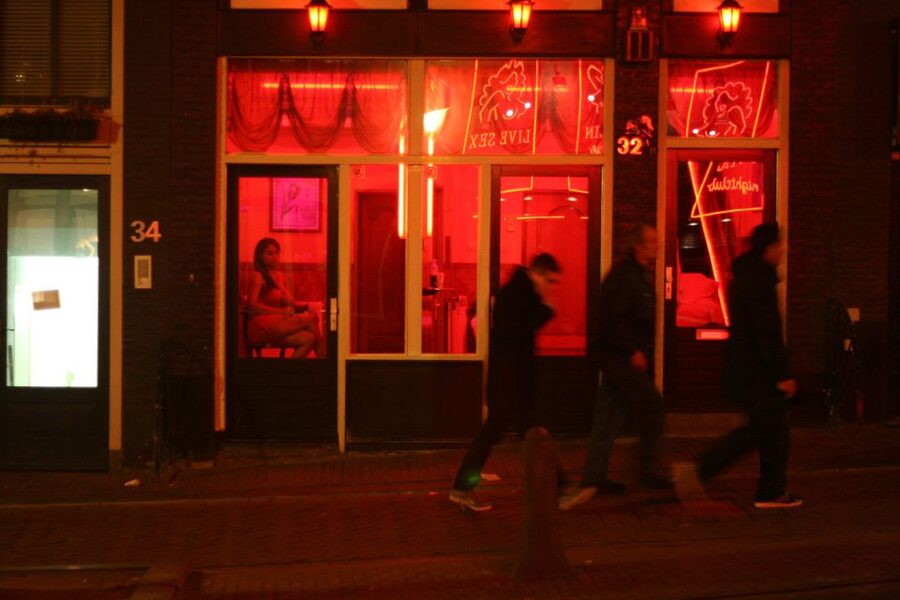
- You walk through the center of the district, including the red-tinted windows, pubs, and an indoor prostitute street.
- The English-speaking local guide adds personal perspective, with historical side trips involving the harbor and Chinatown.
- The two-hour length works well early in your stay, giving you background before you explore the area on your own.
- Sound can be an issue, so stand near the guide and avoid drifting to the back of the group.
Why this two-hour walk is worth your time
Amsterdam’s Red Light District can feel confusing if you simply wander through it. You see windows, pubs, coffeeshops, narrow lanes, and curious crowds, but the meaning of the area is not always clear.
This walk gives those sights a timeline. You learn how prostitution developed in a port city, how the district looked in medieval times and under Napoleon, and how sex work and coffeeshop culture fit into wider political debates.
That makes the experience more useful than a quick circuit of the most famous streets. You are not just shown where things are. You are given reasons for why the neighborhood developed as it did.
The tour is led in English and lasts two hours. That is long enough to cover the main places without turning the walk into an exhausting lecture. I would treat it as an introduction, not a complete study of Amsterdam’s social history.
The route also appears to leave room for photographs and short stops at shops. One particularly useful detail is that you may have time to visit a few shops along the way, rather than being hurried from one point to the next. Exact timing can depend on the pace of the group and the meeting point selected when you book.
More Red Light District walks:
- Amsterdam: Red Light Secrets Museum Entry Ticket
★ 4.2 · 5,722 reviews - Amsterdam: Red Light District Tour in German/English/Italian
★ 4.9 · 5,623 reviews - Amsterdam Red Light District & Coffee Shop Tour
★ 4.6 · 4,134 reviews
Starting in Zeedijk, Amsterdam’s old sailor quarter
The walk explores Zeedijk Street, an old sailor neighborhood that helps explain why prostitution took root in this part of Amsterdam. The area’s connection with sailors, the harbor, and passing workers is an important piece of the story.
I like this beginning because it moves the subject away from simple spectacle. Amsterdam’s sex trade did not appear in isolation. The guide connects it to the city’s role as a port and to the daily movement of people through its older quarters.
The route may also include historical side comments about the harbor and Chinatown. These detours add welcome breadth. They show you that the Red Light District sits inside a larger urban neighborhood, not in a separate entertainment zone disconnected from the rest of Amsterdam.
You should expect a walking tour through central city streets, not a private visit inside working premises. The emphasis is on the public setting, the streets, the buildings, and the guide’s explanation of how the district developed.
Medieval Amsterdam and the era of Napoleon
The guide places the neighborhood in two very different periods: medieval Amsterdam and the time of Napoleon. Those references help you picture the district before the modern red lights became its main symbol.
The medieval connection matters because the Old Church and the surrounding streets are among the oldest parts of the city. The modern district is built into an old urban core, where religious, commercial, maritime, and sexual activity have long existed close together.
The Napoleon-era discussion offers another useful comparison. It shows that the district has not remained fixed. Rules, public attitudes, and city control have changed over time, and the area you see today is the result of many such changes.
I would pay attention here if you want to understand Amsterdam beyond its liberal reputation. The city’s policies are not simply a story of anything goes. The tour addresses political issues and the current situation, giving you a more careful picture of how prostitution is viewed and managed.
Since the guide’s exact historical detail may vary with the group, ask a question if a particular period interests you. The route is designed for explanation and conversation, not a formal museum-style presentation.
The Old Church and the heart of the district
The walk continues to the Old Church, described as Amsterdam’s oldest building. Here, you are at the center of the Red Light District, where the contrast between a major historic church and the surrounding sex-work businesses is especially striking.
This is one of the route’s strongest stops because it brings several parts of Amsterdam together in one place. You have an old religious building, former civic power, narrow medieval streets, pubs, red-tinted windows, and modern businesses all within a compact area.
The former town hall is another important landmark mentioned along the route. It helps broaden the story from private behavior to public authority. Amsterdam’s Red Light District has always involved questions about regulation, tolerance, commerce, and city power.
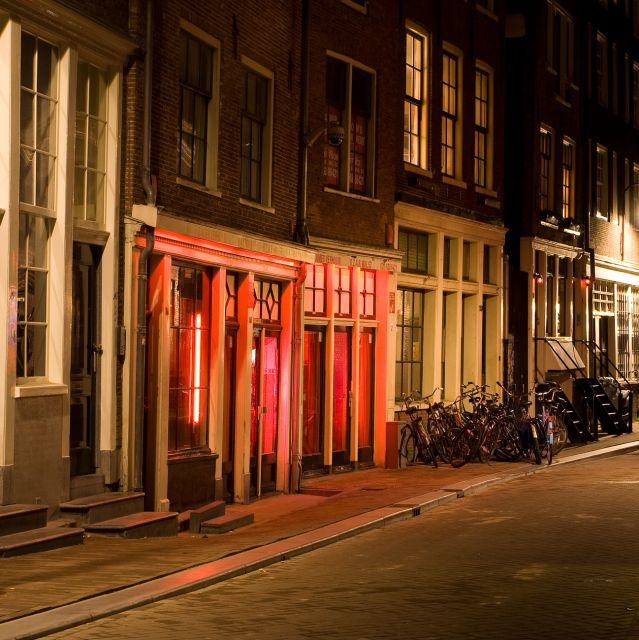
You will also see the narrowest street in Amsterdam. The stop sounds small, but it suits the route well. Tight lanes are part of the district’s character, and they make the walk feel like a trip through layers of the city rather than a straight march between tourist sights.
The area can be crowded, and the streets are narrow. That is where the sound concern matters most. If you want to catch the guide’s explanations, stay close and avoid taking photographs while standing at the rear of the group.
A few more Amsterdam trips worth a look
- Amsterdam: Van Gogh Museum Ticket
★ 4.7 · 52,054 reviews - Amsterdam Classic Saloon Boat Cruise with Drinks and Cheese
★ 5.0 · 31,825 reviews - Amsterdam Luxury Canal Cruise + Unlimited Drinks & Bites option
★ 5.0 · 30,518 reviews - Amsterdam: Heineken Experience Ticket
★ 4.6 · 30,055 reviews
Red-tinted windows, pubs, and working streets
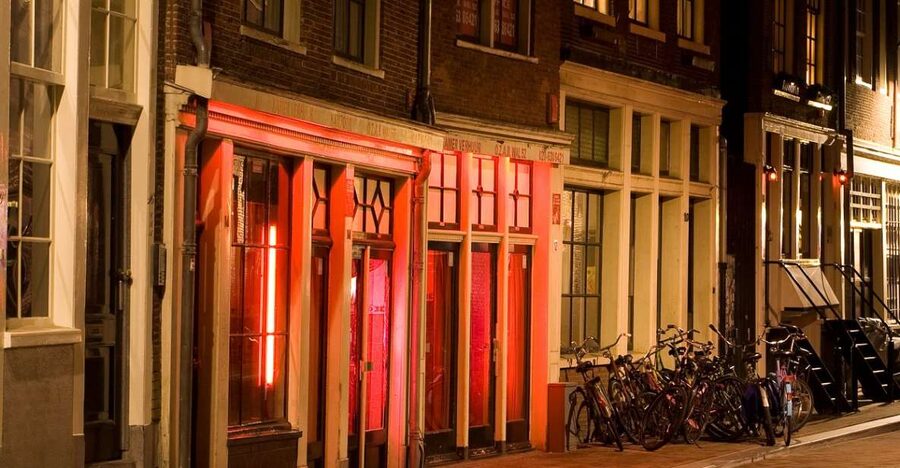
The tour shows you the famous red-tinted windows, brothels, and pubs while explaining their place in the district. This is the part most people picture when they hear the name Red Light District, but the guide’s role is to add context to what you are seeing.
You should approach this section respectfully. The windows are part of a working environment, not a stage set for tourist entertainment. The most useful takeaway is likely to be how the area functions and how public attitudes toward sex work have changed, rather than simply collecting photographs.
The route also includes an indoor prostitute street. That gives you another way to understand the district’s layout and current situation. The supplied details do not promise entry into private businesses or access to any particular room, so expect an explanatory walk through the public visitor areas.
Pubs form part of the neighborhood’s everyday character. Their presence helps explain why the district draws both local activity and visitors, though the tour is not described as a pub crawl. You should not book it expecting drinks, nightlife admission, or entertainment. The included activity is a guided walking tour.
The guide also discusses prostitution as a political issue. That is valuable because the subject has legal, social, and practical sides. A short walk cannot answer every question, but it can help you see why the district remains a subject of debate rather than a simple symbol of Amsterdam’s liberal image.
Coffeeshops, smartshops, and local culture
Coffeeshop culture is another major topic. You will see one of the first coffeeshops and learn how this part of Amsterdam’s culture relates to the district.
The tour also points out smartshops. These businesses are often unfamiliar to first-time visitors, and a guide can explain the difference between the various types of shops without leaving you to guess from storefronts.
The experience does not include purchases, tastings, or a promise of entry into every shop. It is better understood as a cultural and historical walk. If you want to shop, the guide may help you recognize what you are seeing, but the main value lies in the explanation.
I like this balance. Amsterdam’s coffeeshop culture is often treated as a novelty, yet it is tied to questions about public policy and the city’s identity. Hearing the subject discussed alongside prostitution and political issues gives you a more complete sense of how Amsterdam handles activities that are restricted, tolerated, or regulated in different ways.
Keep in mind that the tour is in English only. That works well for English-speaking visitors, but it will not suit you if you need another language.
What the local guide adds
The guide is described as local and professional, with the route presented from his own perspective. No individual guide’s name is provided, so you should not book this expecting a named host.
The personal angle is still important. A local guide can point out the difference between the area’s public reputation and the way it fits into Amsterdam’s older neighborhoods. Historical comments about the harbor, Chinatown, and the city’s past make the route feel broader than a standard window-shopping walk.
The strongest praise centers on the guide’s humor, clear delivery, and ability to explain the subject. One particularly positive account highlights the historical side trips and the surprising extra context they provided. That suggests the best part of the experience is not just the route, but the way the guide connects one place to another.
There is one clear warning. A person had trouble hearing the guide. Amsterdam’s central streets can be noisy, and a group can spread out quickly. I recommend arriving ready to stay near the guide, especially during the busiest parts of the route. If you have hearing concerns, a small-group option would be worth considering when available.
Small group or standard group?
A small-group option is available. The information does not give a fixed maximum group size, so check the specific option before booking.
A smaller group can make a real difference on this particular walk. The streets are narrow, the subject invites questions, and staying close helps with hearing. You may also find it easier to pause for pictures without losing the guide.
The standard option may still suit you if price is your main concern or if you simply want a broad introduction. The listed price is $40 per person, which is fair for two hours with a local guide in one of Amsterdam’s most talked-about areas.
I would see the price as paying for interpretation, not admission. The tour does not list entry tickets, food, drinks, or shopping as included. If you already know the district well, you may not feel the cost is worthwhile. For a first visit, the historical links and political background make the fee easier to justify.
Planning the route into your Amsterdam visit
The tour takes place in North Holland, in central Amsterdam’s Red Light District. The meeting point can vary according to the option booked, so check your confirmation carefully rather than assuming every departure leaves from the same place.
The activity ends back at the meeting point. That makes it easy to continue exploring the area afterward, provided you still have the energy and interest. It also means you can use the walk to get your bearings before returning later on your own.
Starting times vary. I would consider taking the tour near the beginning of your Amsterdam stay because the guide can explain places you may pass again. You can then return with a better sense of the district’s history and current role.
The duration is two hours, so wear comfortable shoes and allow enough time to reach the meeting point. The supplied details do not state accessibility arrangements, so contact the provider if you need specific support.
Cancellation is free up to 24 hours before the activity for a full refund. You can also reserve now and pay later, which helps if you are still adjusting your Amsterdam schedule.
Who will appreciate this tour most?
I would recommend this walk to adults who want context before exploring the Red Light District independently. It suits first-time visitors, history-minded visitors, and anyone curious about how Amsterdam’s reputation for tolerance developed.
It is also a good choice if you prefer a guide who discusses awkward subjects plainly. Prostitution, coffeeshop culture, and political questions are central to the route, so you should be comfortable hearing about those topics in a public walking-tour setting.
The experience may be less suitable if you want a quiet architectural walk or a nightlife activity. It is not a pub crawl, not a private brothel visit, and not a shopping tour. It also may not work well for you if you need a language other than English.
Families should consider the subject matter and decide for themselves if it fits their group. The supplied information does not set a minimum age, so check the booking details if age is important for your plans.
My booking advice
At $40 for two hours, this is a sensible purchase if you want the Red Light District explained rather than merely displayed. The route covers Zeedijk, the Old Church, the narrowest street, the former town hall, coffeeshops, smartshops, pubs, windows, and an indoor prostitute street, while also placing the district in medieval and Napoleon-era Amsterdam.
I especially like the combination of local perspective and historical context. The harbor and Chinatown references add useful background, and the guide’s humor and clear explanations can make a sensitive subject easier to understand.
Book it if you value a guided introduction, want to ask questions, or are concerned about missing the meaning behind the sights. Consider skipping it if you already know the district well, want nightlife rather than history, or dislike walking tours where street noise may affect what you hear.
If you do book, choose the small-group option when available, stay near the guide, and treat the neighborhood with respect. That approach gives you the best chance of hearing the explanations and getting real value from the two hours.
FAQ
Where does the Amsterdam Red Light District tour take place?
The tour takes place in Amsterdam’s Red Light District in North Holland, Netherlands. The route includes areas such as Zeedijk Street and the Old Church.
How long does the walking tour last?
The tour lasts two hours. Starting times vary, so check availability for the date you want.
What language is the tour conducted in?
The live tour guide speaks English. English is the only language listed for this activity.
How much does the tour cost?
The listed price is $40 per person.
What is included in the price?
The price includes a guided walking tour with a local, professional guide.
Where does the tour start?
The meeting point may vary depending on the option you book. Check the selected option and booking details for the exact starting location.
Where does the tour end?
The activity ends back at the meeting point.
Is a small-group option available?
Yes. A small-group option is available, although a fixed maximum group size is not provided.
Can I cancel the tour or pay later?
You can cancel up to 24 hours in advance for a full refund. You can also reserve your place and pay later.
Just added around Amsterdam
- Amsterdam: Giethoorn Tour with Canal Cruise and Windmills★ 5.0 · 3 reviews
- Amsterdam: Chocolate Fondue in the Dark★ 5.0 · 3 reviews
- Full-day excursion to Edam, Volendam, and Marken★ 3.7 · 3 reviews
- Amsterdam Old-West Vegan Food Tour with Local Guide★ 4.7 · 3 reviews
- Amsterdam Private Walking Tour of Famous Painters★ 5.0 · 3 reviews
- Amsterdam Family Friendly Historical Walking Tour★ 5.0 · 3 reviews
- From Amsterdam: visit Zaanse Schans, Muiderslot and more!★ 5.0 · 3 reviews
- Amsterdam Walking Tour with Dutch Pancake Lunch★ 5.0 · 3 reviews
Amsterdam Tours, compared.


Amsterdam Classic Saloon Boat Cruise with Drinks and Cheese
Read our review →
Amsterdam Luxury Canal Cruise + Unlimited Drinks & Bites option
Read our review →


Classic Boat Cruise with Optional Cheese & Wine
Read our review →
Evening Cruise with Optional Wine and Snacks
Read our review →
75 Minute City Canal Cruise with Audio Guide
Read our review →Browse the lists this tour appears in