
Reviewed · AMSTERDAM
Zeeland Zeehonden strand safari NL/DE
The best part of this Zeeland beach safari is that you do not simply look at the sea. You work it gently, using binoculars to spot seals, a large trawl net to inspect shallow water in summer, or crab rods to hunt for the biggest crab in spring and autumn. Guide Mark is known for keeping children and adults involved while explaining what you find.
I like the hands-on format, and I like that every animal is returned to its home after a close look. At $19 per person, the two-hour outing is a fair buy for families and nature fans, though the same price for toddlers may feel steep, especially if very young children cannot take part for the full time.
The beach can feel colder than expected, and the activity is not suitable for wheelchair users. Still, with warm layers, a towel, and the right seasonal expectations, this is an easygoing way to see a more active side of Zeeland’s North Sea coast.
Key things to know before you go
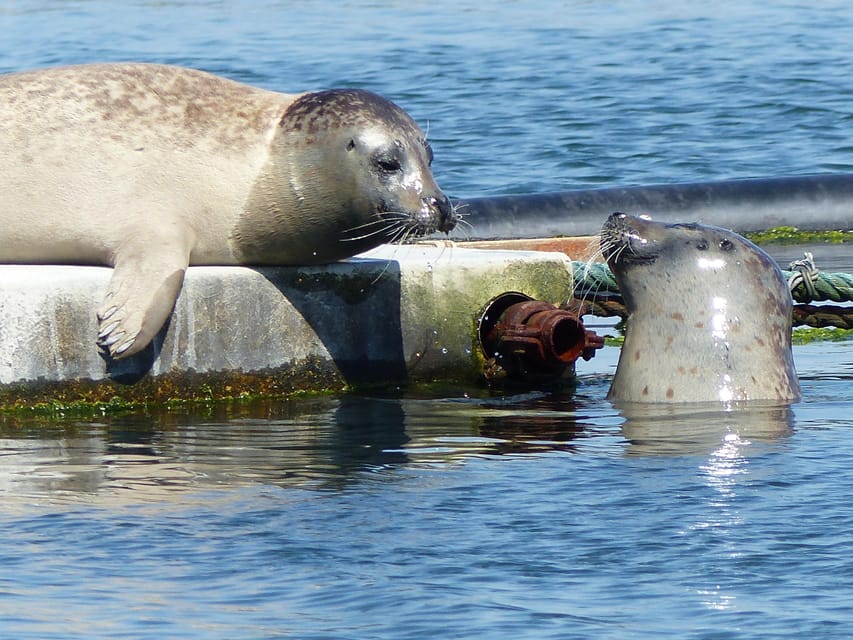
- Seals are part of the search: Use binoculars to watch for seals and learn the difference between common seals and grey seals.
- The activity changes by season: Summer brings shallow-water trawling, while spring and autumn use crab rods.
- Children can take part: Jars, search cards, and simple beach discoveries keep the outing active for young and old.
- The meeting point takes a little walking: Park free at Parking Beach Neeltje Jans 6, then walk about 10 minutes to Beachbar Atlantis.
- Weather affects the plan: Bad weather can cancel the outing or move it to a forest and dune safari.
- Dutch and German are offered: The live guide speaks Dutch or German.
A hands-on look at Zeeland’s North Sea shore
This is not a beach walk where you listen to a short talk and then head home. You search, catch, compare, and ask questions as you move along the shore near Beachbar Atlantis.
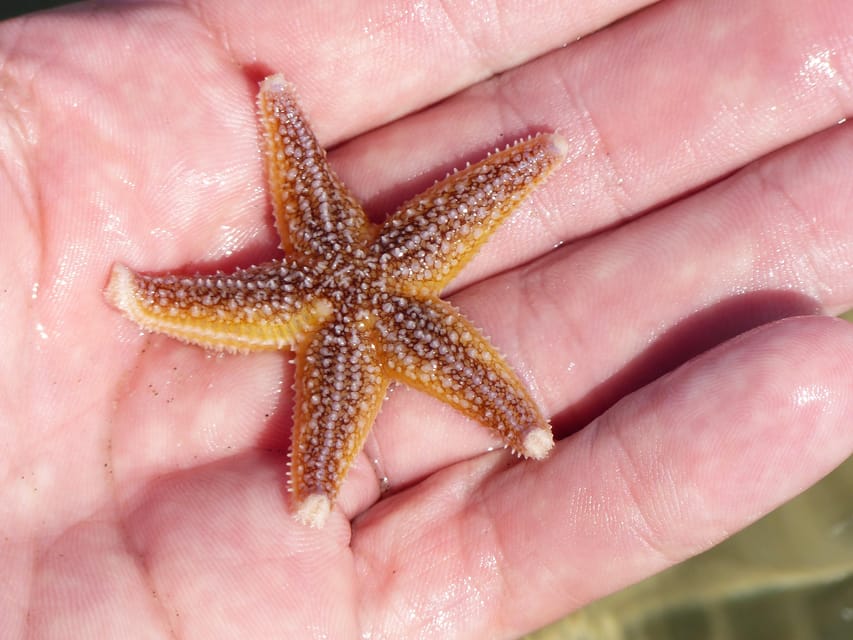
The focus is the strip of coast where land and sea meet. That shallow edge can hold small fish, shrimp, crabs, starfish, shells, and other marine life. You may also find less common creatures such as seahorses, cuttlefish, or jellyfish, though these are possibilities rather than promises.
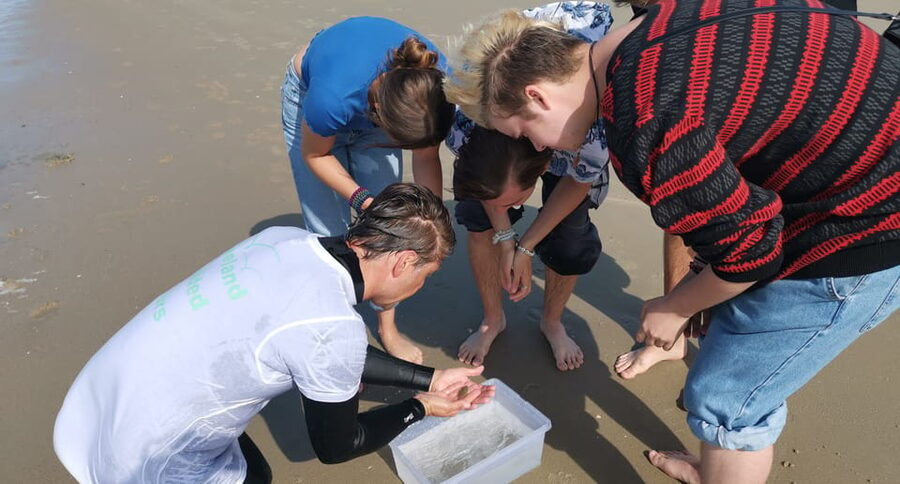
The guide supplies the tools that make the search work. You may use binoculars for seal watching, magnifying jars for small finds, identification cards for sorting species, and either a large trawl net or crab rods depending on the season.
I like this setup because it gives you a reason to pay attention. A plain shell becomes more interesting when you can identify it. A crab becomes more than a quick glimpse when you can look at its legs, shape, and behavior before returning it to the water.
A few more Netherlands trips worth a look
- Seal Safari at UNESCO Site Waddensea from Amsterdam
★ 5.0 · 38 reviews - Amsterdam: Half-Day Seal Safari at Waddensea UNESCO Site
★ 4.8 · 19 reviews - Zeeland Strand safari met visnet NL/DE
★ 4.9 · 12 reviews
Watching seals from the beach
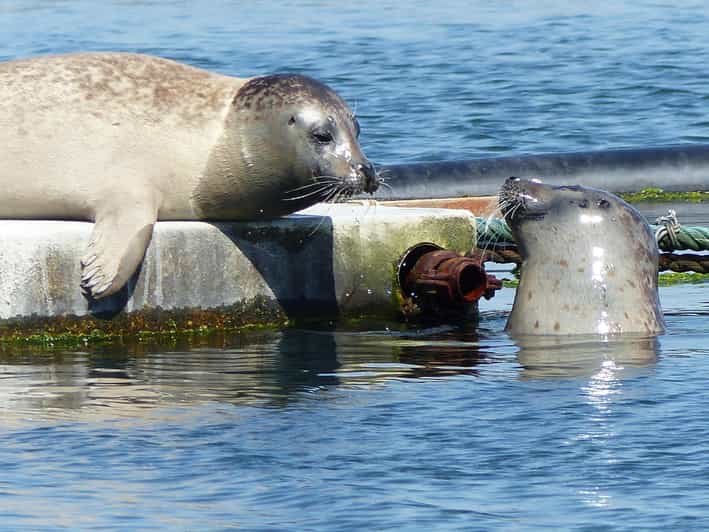
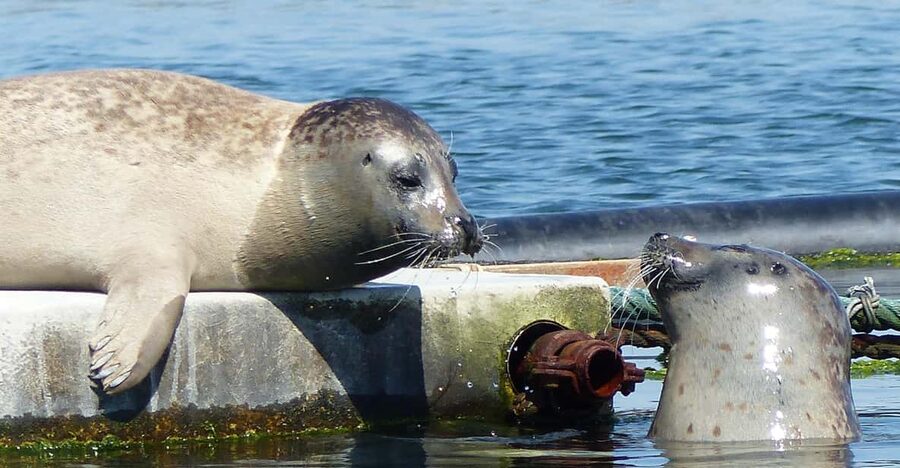
Seals are the headline attraction, but they are wild animals, not a guaranteed performance. The guide uses binoculars to help you look for them in the North Sea and explains the difference between a common seal and a grey seal.
That distinction adds useful context. You are not simply told that a dark shape far away is a seal. You get help understanding what you are seeing and why different seals may look or behave differently.
Bring your own binoculars if you have them, though binoculars are included. A camera is also listed among the recommended items, but you should keep expectations sensible. Seals may be too distant for a sharp phone photograph, and the real reward is seeing them in their own setting.
The seal watch works best for people who enjoy patient observation. If you need constant action, the beach searching and crab activity will probably be more satisfying than the seal portion alone.
Summer trawling in shallow water
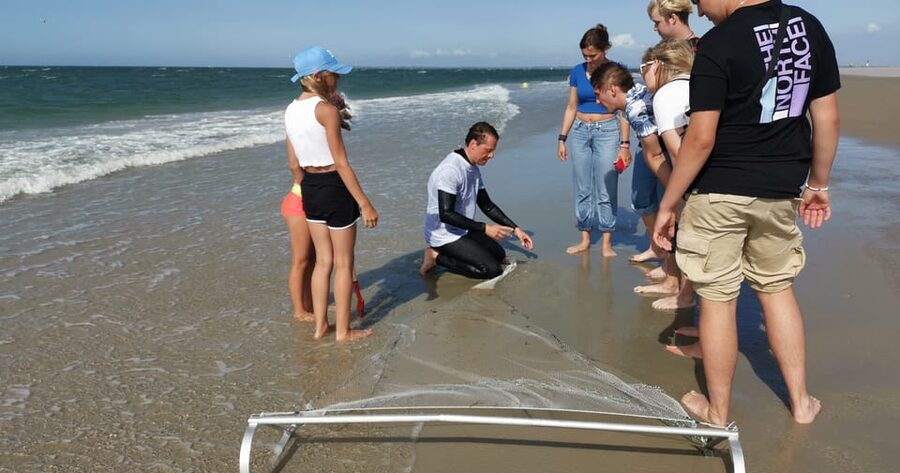
In July and August, the safari follows the summer format. The group uses a large trawl net through shallow water along the coast, bringing up a sample of the small life close to shore.
This is the most active version of the outing. You may get into the water with the guide, so swimwear, a towel, beachwear, and a complete change of clothes make sense. The supplied advice to bring extra warm clothing matters too, since a sunny day at the beach can still feel cool once you are wet.
The net offers a quick look at how much life is packed into a small section of shallow sea. You might see small fish such as sand eels, shrimp, crabs, starfish, or other creatures living among sand and rocks. The catch is examined briefly with magnifying jars and identification cards, then returned to the water.
This approach is educational without making the experience feel like a classroom. Children can help with the search and identification, while adults often find themselves drawn into the same questions.
The drawback is that the summer edition depends on weather and comfort. Going into the water is optional in spirit, but you should be ready for wet feet and changing conditions if you want the full experience.
Spring and autumn crab fishing
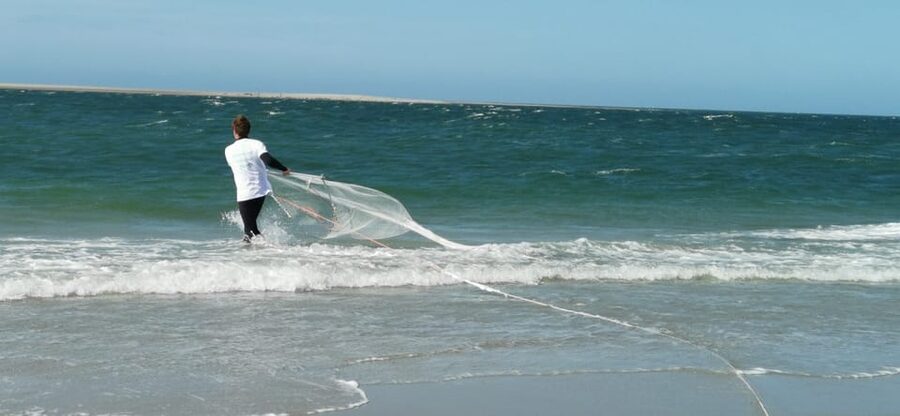
Outside July and August, the activity changes to crab rods. The goal is simple: search for the biggest crab.
Crab fishing gives the safari a clear challenge, which is useful for families with children. Instead of wondering what to do next, you have a small goal and a reason to watch the water closely.
The guide can help you identify different types of crabs, from the small shore crab to a larger North Sea crab. You may also learn how to identify a male crab and why crabs move sideways, based on the structure of their legs.
This is a gentle activity, not a catch-and-keep outing. The animals are handled with care and returned to their natural environment. That point matters if you want your children to learn that wildlife encounters are about observation, not collecting.
Spring and autumn can also bring cooler weather. Pack warm clothing, even if the forecast looks pleasant, and bring a change of clothes in case the shoreline is damp.
Same country, a completely different kind of day:
- Amsterdam: Van Gogh Museum Ticket
★ 4.7 · 52,054 reviews - Amsterdam Classic Saloon Boat Cruise with Drinks and Cheese
★ 5.0 · 31,825 reviews - Amsterdam Luxury Canal Cruise + Unlimited Drinks & Bites option
★ 5.0 · 30,518 reviews - Amsterdam: Heineken Experience Ticket
★ 4.6 · 30,055 reviews
The small creatures make the tour worthwhile
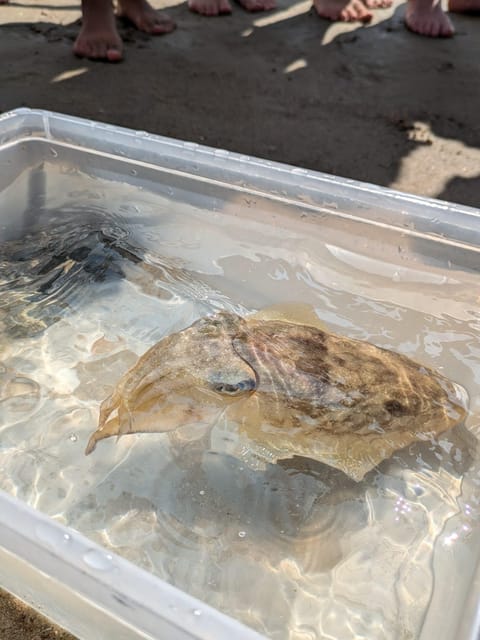
Seals may attract you to the booking page, but the smaller finds often give the safari its character. The shore can produce a mix of shells, crabs, shrimp, small fish, and starfish.
Magnifying jars let you inspect small catches up close without needing to handle them constantly. Identification cards give you a way to match what you see with a name, which is especially useful if you do not already know your shore life.
The guide adds short facts and stories as the activity unfolds. You might learn that a starfish can regenerate a lost arm, or that a crab’s sideways movement relates to the way its legs are built.
These details are simple, but they stick. I prefer this kind of learning to a long lecture because you connect each fact to something in front of you.
Shells are also part of the search. You will find various species washed onto the beach, and sorting them gives quieter participants something to do while others work with the net or crab rods.
Why the guide matters
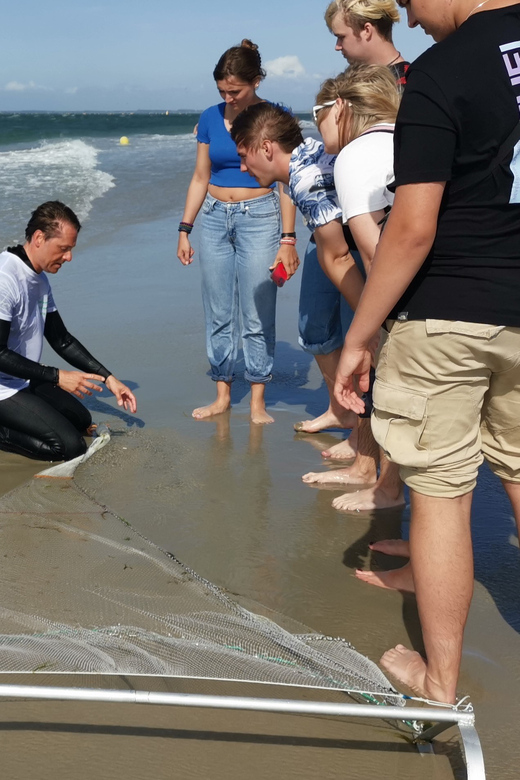
A beach safari depends heavily on the guide. Without someone to explain the finds, the activity can become a wet hunt for small animals with little meaning attached.
Mark has received particular praise for making the outing fun and interesting for children and adults. The guide’s job is not only to name what you find, but to keep everyone involved, explain the animals in clear terms, and make room for questions.
The tour is offered in Dutch and German. That makes it a practical choice for visitors who are comfortable in either language, but you should select the language that lets you follow instructions easily, especially when using equipment near the water.
The format appears suited to mixed-age groups. Children can search and handle the simple tools under supervision, while adults can focus on seals, species identification, and the coastal setting.
A realistic look at the two-hour pace
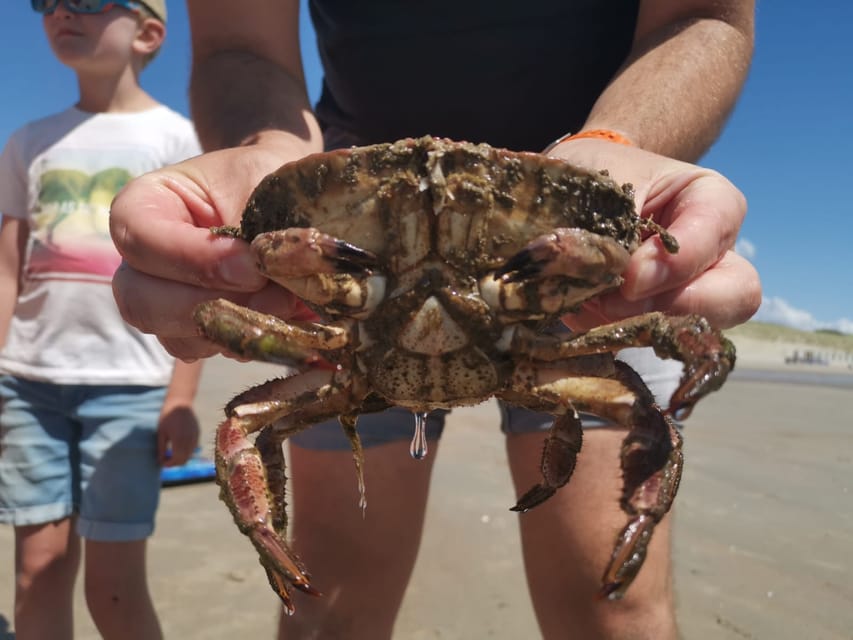
Two hours is long enough to give the activity substance without turning it into an all-day commitment. You meet in front of Beachbar Atlantis, then spend the session along the shore with the guide and equipment.
The exact order can change with the season and conditions. Seal watching may happen alongside the beach search, while the trawl net or crab rods provide the central activity.
You should expect to be outdoors for the full time. This is not a quick stop where you spend most of the outing inside a visitor center. Wear clothing that can handle sand, wind, and water, and avoid treating the beach as a warm-weather-only place.
Bring sunscreen, preferably biodegradable sunscreen, as well as a towel and spare clothes. Cash is also listed among the items to bring, though no specific extra charge is given.
The tour can be canceled in bad weather or transferred to a forest and dune safari. That alternative keeps the day focused on nature, but it means the beach and seal experience may not be available in poor conditions.
Getting to Beachbar Atlantis
The meeting point is in front of Beachbar Atlantis on Hoogh Pleatweg. The clearest way to find it is to enter Beachbar Atlantis into Google Maps.
Free parking is available at Parking Beach Neeltje Jans 6. From there, allow about 10 minutes to walk to the beach bar.
That short walk is easy to overlook when planning your arrival. Give yourself enough time to park, gather your clothing and camera, and reach the meeting point before the activity begins.
Because the meeting point is outdoors and the tour starts on the coast, arrive dressed for the beach rather than for a café. A warm layer is useful even in summer, and anyone joining the water activity should carry swimwear and a towel from the start.
Is $19 a fair price?
At $19 per person, this is reasonably priced for a guided two-hour activity that includes equipment, seal watching, and hands-on shore exploration. You are paying for a guide who supplies the trawl net or crab rods, binoculars, magnifying jars, and identification cards.
The value is strongest for families and small groups who will actively use the equipment. If your children enjoy searching, catching, and asking questions, the safari offers more than a basic walk along the beach.
The price is less attractive for toddlers who may not take part for the whole session. Every participant, including very young children, is charged the same amount, so families should consider how much activity each child is likely to handle.
The tour also has flexible booking terms. You can reserve now and pay later, and cancellation is free up to 24 hours before the start for a full refund. Those terms help if your Zeeland plans depend on weather.
Who should book this beach safari?
I would choose this for families with curious children, school groups, and adults who enjoy coastal nature without needing a strenuous outing. The activity is social, practical, and easy to understand, with enough variety to keep the two hours moving.
It also suits visitors staying near Neeltje Jans who want an experience tied to the North Sea rather than another general sightseeing stop. You see the shore at close range and learn how much life exists in the shallow water and sand.
This may not suit you if you dislike getting wet, need a fully accessible route, or want a guaranteed close-up seal sighting. It is also not the best pick for someone seeking a quiet, private walk, since the group works together with shared equipment.
For children, the spring and autumn crab format offers a clear activity, while the summer trawl-net edition gives a more varied look at shallow-water life. Adults should be ready to participate too. The experience works best when the whole group searches, listens, and handles the finds carefully.
Practical tips for a better outing
- Wear warm layers, even in summer. The beach can feel colder than inland areas.
- Bring swimwear, a towel, and a change of clothes for the July and August water activity.
- Use biodegradable sunscreen to reduce harm to the marine environment.
- Pack a camera, but rely on binoculars rather than phone zoom for seal watching.
- Allow 10 minutes to walk from the free parking at Neeltje Jans 6.
- Treat every catch as temporary. Look closely, use the identification cards, and return animals to the water.
- Check the weather before leaving, since poor conditions can cancel the beach safari or shift it to a forest and dune safari.
FAQ
Where does the Zeeland Beach Safari meet?
The meeting point is in front of Beachbar Atlantis on Hoogh Pleatweg. Enter Beachbar Atlantis into Google Maps to find it.
Where can I park?
You can park for free at Parking Beach Neeltje Jans 6. The walk from the parking area to Beachbar Atlantis takes about 10 minutes.
How long does the activity last?
The beach safari lasts two hours.
Which languages does the guide speak?
The live guide speaks Dutch or German.
What happens during the summer edition?
In July and August, the group uses a large trawl net in shallow water to find marine life along the shore. Participants may enter the water with the guide, so swimming clothes are recommended.
What happens during the spring and autumn edition?
In spring and autumn, you use crab rods to search for crabs, including the chance to look for the biggest crab.
What should I bring?
Bring warm clothing, swimwear, a change of clothes, a towel, a camera, sunscreen, biodegradable sunscreen, beachwear, cash, and binoculars. Binoculars, magnifying jars, identification cards, the trawl net, and crab rods are included as part of the activity.
Should you book it?
Book this safari if you want a low-cost, active way to meet Zeeland’s North Sea shore. You will get the most from it if you enjoy using simple tools, learning the names of small creatures, and accepting that seals and marine finds are part of a search rather than a guaranteed show.
Families should weigh the flat per-person price against the age of their children. For older children, the crab rods and trawl net give the outing real purpose. For very young children, the cost may feel high if they lose interest early.
With warm clothes and sensible weather planning, this is a friendly, useful two-hour experience. It gives you a closer look at the coast, keeps nature at the center, and sends every animal back where it belongs.
Just added around Netherlands
- Amsterdam: Giethoorn Tour with Canal Cruise and Windmills★ 5.0 · 3 reviews
- Full-day excursion to Edam, Volendam, and Marken★ 3.7 · 3 reviews
- Amsterdam: Chocolate Fondue in the Dark★ 5.0 · 3 reviews
- Historical Leiden: Private Tour with Local Guide★ 5.0 · 3 reviews
- Amsterdam Family Friendly Historical Walking Tour★ 5.0 · 3 reviews
- Amsterdam Private Walking Tour of Famous Painters★ 5.0 · 3 reviews
- Amsterdam Old-West Vegan Food Tour with Local Guide★ 4.7 · 3 reviews
- From Amsterdam: visit Zaanse Schans, Muiderslot and more!★ 5.0 · 3 reviews