
Reviewed · AMSTERDAM TOURS
Van Gogh Museum Skip the Queue with Audio Guide
The best part of this Amsterdam experience is simple: you get a reserved museum entry time and can follow Van Gogh’s life in order, from his dark early Dutch paintings to the bright, restless work he made in France. The official audio guide adds useful context without forcing you to keep up with a group.
I especially like the freedom to stay until closing and the fact that you explore with only your own party. It works well for families, too. Kids can focus on the bold colors and famous paintings, while adults follow the stories behind them. The main drawback is the price, $111.74 per person, which is a lot for a museum visit and may feel steep if you can find a museum ticket directly.
Key points to know before booking
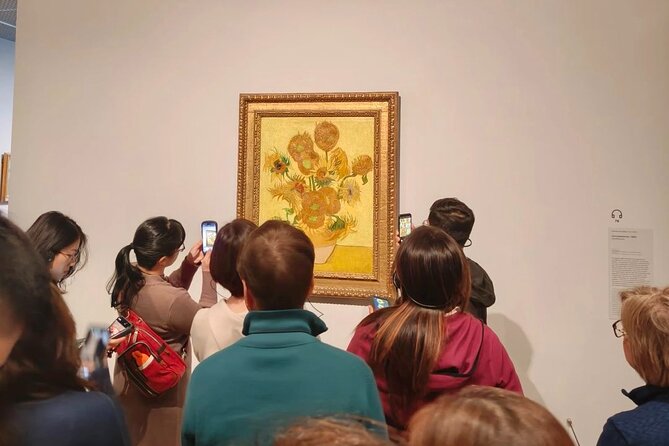
- Sunflowers is the star attraction: You will see Van Gogh’s famous flower paintings among major works such as The Bedroom and Almond Blossom.
- Timed entry saves time, not every line: You skip the line to buy tickets, but everyone still passes the required security check.
- The audio guide is official: Collect it at the museum information desk and use it at your own pace.
- Plan on 1.5 to 2 hours: You may stay longer, right up to closing time, if your ticket time allows.
- The museum follows Van Gogh’s development: The galleries move from his early Dutch period to his brighter, more expressive French work.
- Check the date carefully: Dated tickets cannot be changed or refunded, so mistakes are costly.
What this Van Gogh Museum visit actually includes
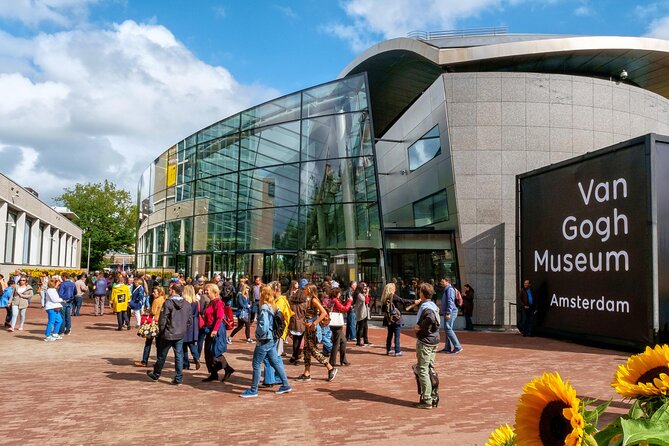
This is an independent museum visit, not a guided walking tour. You meet at the Van Gogh Museum at Museumplein 6, enter at your selected time, collect the official audio guide inside, and then explore on your own.
That distinction matters. The booking is described as a private activity because only your group takes part, but you do not have a live guide leading you through the galleries. If you want to ask a guide questions as you go, this is not that kind of experience.
You can listen to commentary about the paintings, Van Gogh’s life, and his working methods. The booking information says audio commentary is available in your language of choice, while the experience itself is offered in English. I would check the available audio languages at booking if this is important to you.
The practical advantage is control. You can stop for several minutes at a favorite painting, skip commentary that does not interest you, or pause when children need a rest. Nobody is waiting for you at the next gallery.
More Audio Tours in Amsterdam
- Amsterdam: 75 Minute City Canal Cruise with Audio Guide
★ 4.4 · 17,501 reviews - Amsterdam: Royal Palace Entry Ticket and Audio Guide
★ 4.6 · 6,475 reviews - Amsterdam: Canal Cruise with Live Commentary & Audio Guide
★ 4.4 · 1,034 reviews
Starting at Museumplein in central Amsterdam
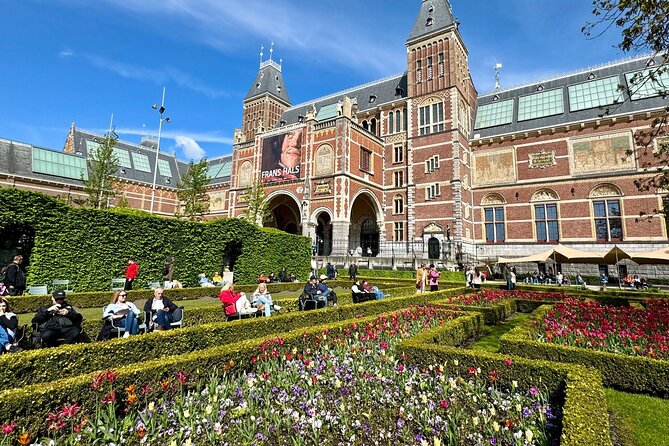
The museum sits in Museumplein, Amsterdam’s main cultural district. Your meeting point and ending point are the same, at the museum entrance.
The area is close to public transportation, so you do not need to arrange a private transfer or find a remote meeting point. Give yourself enough time to reach Museumplein, particularly if you have a strict entry slot. Arriving late can create stress with dated museum tickets, and this booking cannot be changed or refunded.
At the entrance, you show the separate entrance ticket supplied for the booking. A mobile ticket is acceptable, and you can also print it. If you book for a child or youth, bring proof of age, since the museum may ask for it.
The phrase skip the queue needs a little translation. You skip the line for buying tickets on site because your timed ticket is already arranged. You do not skip the mandatory security check, and that line can still be long during busy periods such as Christmas.
That is still useful. You are not standing around hoping that a ticket becomes available, and you know when you are expected at the museum. Just do not arrive expecting a private door with no waiting at all.
The Dutch paintings show Van Gogh before the famous colors
The visit begins with Van Gogh’s early Dutch period. These works tend to use darker colors and show rural life, workers, and ordinary people. They may look very different from the sunny paintings most people associate with him.
This opening section gives you an important lesson. Van Gogh did not begin as the painter of bright yellows and swirling skies. His early work is serious and sometimes heavy, shaped by the people and countryside around him.
I recommend listening to the introductory audio commentary here instead of rushing toward Sunflowers. The early paintings help you understand how much his technique changed later. You will see a young artist searching for a way to express the world around him.
The museum’s chronological layout makes that change easy to follow. You are not simply walking through a room of famous pictures. You are watching an artist develop, experiment, and alter his use of color and brushwork.
That structure also helps if you are not confident with art museums. You do not need a degree in art history to understand the basic story. Follow the galleries in order, use the audio guide when a painting catches your attention, and let the collection explain itself.
France brings the color and expressive brushwork
As you move through Van Gogh’s work after his move to France, the tone shifts. Colors become brighter, and the brushwork becomes more energetic and expressive.
This is where many people find the visit most exciting. Paintings that may look familiar from postcards reveal different details in person. Thick marks, strong color choices, and small changes in tone become easier to see when you are standing close to the original work.
The audio guide is useful here because it can connect a painting to Van Gogh’s artistic development. It gives you a reason to look beyond the famous image and notice how he built the picture.
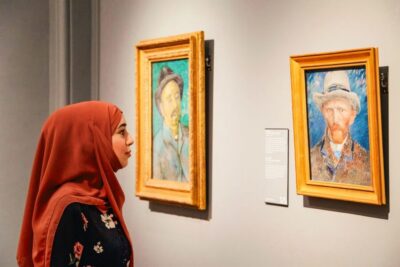
The museum displays major works including Sunflowers, The Bedroom, and Almond Blossom. You will also encounter the paintings most associated with his swirling skies and intense use of yellow, blue, and green.
Do not assume every famous work will be in exactly the same place on every visit. Temporary exhibitions can change the museum’s displays and add context to Van Gogh’s life and legacy. The permanent collection remains the main reason to come, but the temporary section may add a helpful second layer.
More Museums in Amsterdam
- Amsterdam: Van Gogh Museum Ticket
★ 4.7 · 52,054 reviews - Moco Museum Amsterdam Entrance Tickets with Banksy & More
★ 4.4 · 10,088 reviews - Amsterdam: The Upside Down Museum Entrance Ticket
★ 4.4 · 9,506 reviews - Amsterdam: Red Light Secrets Museum Entry Ticket
★ 4.2 · 5,722 reviews
Sunflowers, The Bedroom, and Almond Blossom

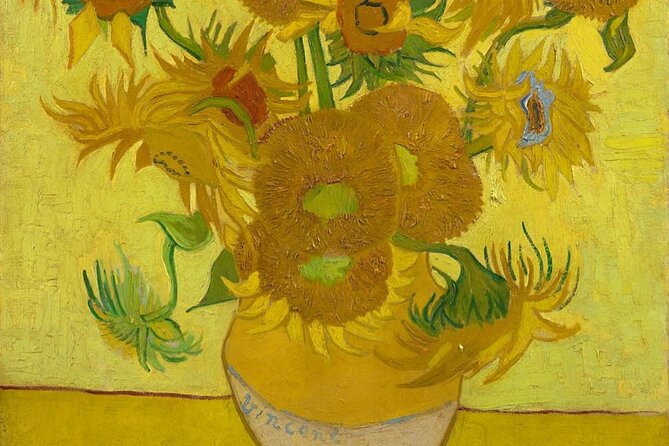
Sunflowers is the painting many people have in mind before entering. Seeing the original gives you a chance to study the brushwork and color rather than just the overall image.
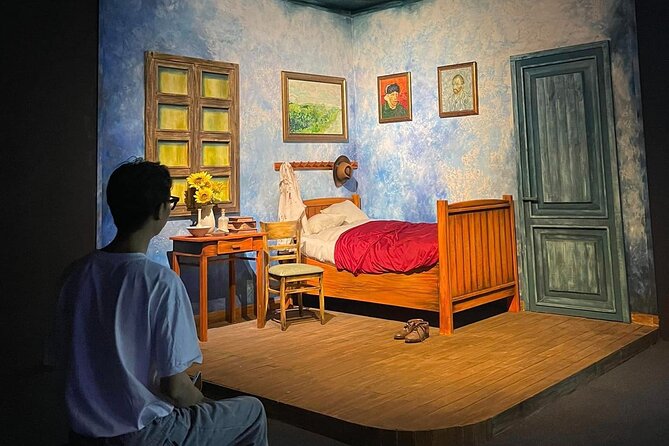
The Bedroom offers a different experience. Its simplified furniture and unusual perspective show how Van Gogh could turn an ordinary room into something personal and emotionally charged.
Almond Blossom brings a lighter mood. Its pale blossoms and clear branches show another side of his work, one that feels more delicate than the darker Dutch paintings or the most intense French scenes.
These famous works are valuable anchors for the visit, but I would not treat the museum as a checklist. Some of the less famous paintings may tell you more about his changing ideas. The letters and early paintings give the masterpieces a human setting.
The museum is also a place to slow down. You can take photographs without flash, lamps, a tripod, or a selfie stick. Check the rules on site, and remember that a camera screen is no substitute for standing quietly in front of the original.
Letters to Theo add the human story
Alongside the paintings, the museum displays personal letters, including correspondence between Vincent and his brother Theo.
These letters matter because they show Van Gogh as a working artist dealing with ideas, doubts, plans, and daily problems. They help explain the relationship between his art and his life without reducing the museum to a simple story of tragedy.
I find this section especially useful for first-time visitors. If you only see the paintings, you may admire the color and brushwork without understanding how hard Van Gogh worked to develop them. The letters add a direct connection to his artistic growth.
The story can also feel emotional. Van Gogh’s life was difficult, and the museum does not hide that fact. Families with older children and teenagers may appreciate this context, though younger children may prefer to focus on the bold paintings and short audio segments.
How much time should you allow?
The stated visit lasts about one hour and 30 minutes, but you may remain inside until closing time. Most people should plan on 1.5 to 2 hours.
An hour can cover the main route, especially if you concentrate on the best-known paintings. It may feel rushed if you want to listen to much of the audio guide, read the letters, and visit a temporary exhibition.
Two hours gives you a more comfortable pace. You can stop when a painting interests you, sit down for a break, and avoid racing through the final rooms.
The museum is large enough that children may tire after about an hour. That is normal. There are places to sit and rest, and the layout is easy to follow. A family visit works best when you accept that you may not see every detail.
An afternoon time slot can be a good choice if it fits your schedule. One booking account found the afternoon calmer, though crowd levels change by day and season. The key point is to choose a time that leaves you relaxed rather than squeezing the museum between two fixed appointments.
Is the $111.74 price worth it?
At $111.74 per person, this is an expensive way to enter a museum. The price makes the most sense if you value advance arrangements, a reserved time, official audio commentary, and help before your visit.
It is less attractive if you are comfortable buying directly from the museum and can find a standard ticket at a lower cost. One major complaint focused on the high charge for a youth ticket, especially when youth admission may be free under the museum’s own rules. Check the age category and compare the total price before paying.
The value also depends on availability. During busy periods, securing a timed entry in advance may be worth more than saving money. Some people used the service for last-minute entry and found that useful. Others felt the added cost did not provide enough extra benefit.
I would think of this as a convenience purchase, not a bargain. You are paying for a prepared timed visit and audio guide access. You are not paying for a live art expert, a private museum opening, or a guaranteed way around security.
Families, children, and the audio guide
The bold colors and recognizable subjects make this one of Amsterdam’s better museum choices for families. Children may connect with the sunflowers, portraits, bright skies, and unusual brush marks before they understand the art’s deeper meaning.
The official audio guide is generally recommended from age 13. Younger children can enter, but they may not receive an audio device. If you are visiting with small children, treat the audio guide as an adult and teenager tool rather than the main activity for everyone.
Family visits can work well when you set a modest goal. Pick a few paintings to discuss, allow time for sitting, and do not insist on listening to every audio track. A child who leaves remembering one yellow painting and one story has had a successful museum visit.
The museum is described as stroller friendly, and staff can help families who need assistance. Still, a stroller does not remove the walking involved. Plan for tired legs, particularly if you are visiting with toddlers.
Some experiences described children’s hunts, play areas, and painting activities. Those details are not part of the confirmed audio guide package described here, so do not book this activity expecting a children’s workshop or a live family guide. The safe expectation is museum admission, the official audio guide, and independent exploration.
What can go wrong, and how to avoid it
The biggest risk is misunderstanding the ticket language. Confirm the exact date and time before booking, then check that every person in your party has the correct ticket type.
Tickets are sent at least one day before the visit after attendance is confirmed. Some bookings received them several days in advance, which gave families time to organize other Amsterdam plans. If you need a paper copy, printing is allowed, but a mobile ticket also works.
Keep the ticket easy to reach on your phone. If you are using a long travel itinerary or expect limited internet access, printing it is sensible.
The other risk is expecting a completely line-free entrance. You still pass security, and that queue can build up. Arrive early enough to handle the security check without missing your entry time.
The supplier offers communication support, including WhatsApp assistance, and names such as Dany and Daniel appear in booking help. That can be useful if you need clarification before arrival, but it does not change the self-guided nature of the museum visit.
All sales are final. The museum does not permit changes or refunds for dated tickets, so this is a poor choice for an uncertain schedule.
Who should book this experience?
I would recommend it most strongly to you if Van Gogh is a priority in Amsterdam and you want the visit arranged before arrival. It also suits families, couples, and solo art lovers who prefer to move at their own pace.
It is a good match for:
- First-time visitors who want Van Gogh’s work presented in chronological order
- People who prefer an audio guide to a live group tour
- Families with teenagers who can use the official audio device
- Visitors traveling during a busy period who want a timed entry already arranged
- Anyone who wants to stay longer than a fixed guided visit allows
I would hesitate if you are very price-sensitive, visiting with only young children, or comfortable arranging museum tickets directly. I would also avoid it if your Amsterdam schedule may change, since dated tickets are non-refundable.
Final verdict: convenient, but check the price first
The Van Gogh Museum itself is the reason to go. Its chronological presentation, personal letters, and famous works give you a clear view of Van Gogh’s artistic growth. The audio guide adds useful background, and the freedom to stay until closing makes the visit feel relaxed.
The booking service is most valuable for convenience. It can spare you the ticket-buying line and give you a fixed entry time, but it does not remove security, provide a live guide, or guarantee a lower price.
At $111.74, compare the cost carefully, especially for children and youth. If the price fits your budget and you want the arrangements handled in advance, this is a practical way to visit one of Amsterdam’s essential museums. If saving money matters more than convenience, check direct museum availability before booking.
FAQ
Where does the experience start and end?
It starts at the Van Gogh Museum, Museumplein 6, 1071 DJ Amsterdam. The visit ends back at the same meeting point.
Is there a live guide inside the museum?
No. This is an independent visit using the official museum audio guide. There is no live guide accompanying you through the galleries.
Does skip the queue include the security line?
No. You skip the line to buy museum tickets, but you must still pass the mandatory security check. Security may have a line during busy periods.
How long can I stay inside the museum?
You can stay until closing time. Most people spend about 1.5 to 2 hours inside, although the listed visit length is approximately one to two hours.
Can I use a mobile ticket?
Yes. You may present the supplied ticket on a mobile device. You can also print it if you prefer.
Can I change or cancel my booking?
No. The experience is non-refundable, and dated tickets cannot be changed. Check the date, time, and ticket type carefully before booking.
More Self-Guided Tours in Amsterdam
- Amsterdam Sightseeing Canal Cruise with Audio Guide
★ 3.5 · 828 reviews - Amsterdam Van Gogh Museum with Audio or Guided Tour
★ 4.0 · 266 reviews - Amsterdam 1h Canal Cruise by Semi-Open Boat with Audio Guide
★ 3.5 · 197 reviews - Amsterdam: Museum of the Canals Ticket with Audio Guide
★ 4.7 · 150 reviews
More Van Gogh Museum Tickets
- Amsterdam: Van Gogh Museum Ticket and City Canal Cruise
★ 4.6 · 3,899 reviews - Amsterdam: Van Gogh Museum Ticket & Canal Cruise
★ 4.5 · 3,304 reviews - Van Gogh Museum Amsterdam Exclusive Tour w/ Reserved Entry
★ 5.0 · 1,760 reviews - Van Gogh Museum Tour Reserved Entry Semi Private
★ 5.0 · 1,437 reviews
Just added around Amsterdam
- Amsterdam: Giethoorn Tour with Canal Cruise and Windmills★ 5.0 · 3 reviews
- Full-day excursion to Edam, Volendam, and Marken★ 3.7 · 3 reviews
- Amsterdam: Chocolate Fondue in the Dark★ 5.0 · 3 reviews
- Amsterdam Old-West Vegan Food Tour with Local Guide★ 4.7 · 3 reviews
- Amsterdam Family Friendly Historical Walking Tour★ 5.0 · 3 reviews
- Amsterdam Private Walking Tour of Famous Painters★ 5.0 · 3 reviews
- From Amsterdam: visit Zaanse Schans, Muiderslot and more!★ 5.0 · 3 reviews
- Amsterdam Walking Tour with Dutch Pancake Lunch★ 5.0 · 3 reviews
Amsterdam Tours, compared.

Amsterdam Classic Saloon Boat Cruise with Drinks and Cheese
Read our review →
Amsterdam Luxury Canal Cruise + Unlimited Drinks & Bites option
Read our review →

Classic Boat Cruise with Optional Cheese & Wine
Read our review →
Evening Cruise with Optional Wine and Snacks
Read our review →
75 Minute City Canal Cruise with Audio Guide
Read our review →Browse the lists this tour appears in