
Reviewed · AMSTERDAM TOURS
Small Group LGBTQ+ History Tour in Amsterdam
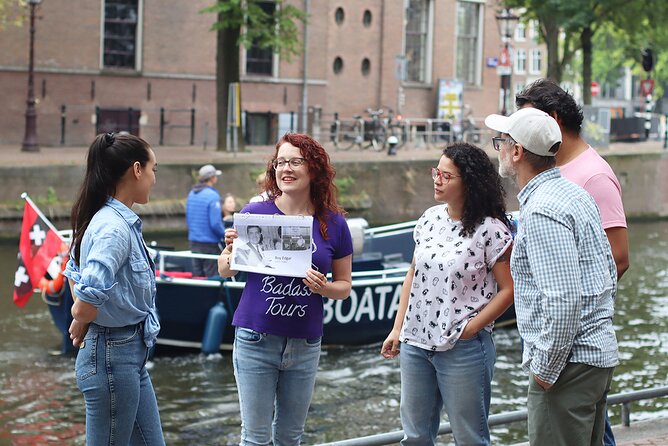
Amsterdam’s LGBTQ+ past comes alive on this two-hour walk, not in a museum but on ordinary streets, bridges, canals, and squares. You’ll hear about clubgoers, a married king with male lovers, queer Resistance fighters, and the world’s first legal gay marriage, all tied to places you can see around you.
I like the tiny group size of eight, which gives the guide room to tell stories rather than deliver a speech. I also like the route’s unusual range, from the nightlife around Rembrandtplein to a trans soldier’s story at Torensluis. The main drawback is practical: this is an outdoor walking tour, and poor weather can lead to a rescheduled tour or refund.
Key reasons to consider this Amsterdam walk
- Seven central stops connect LGBTQIA+ stories to real Amsterdam streets
- Groups are limited to eight people, keeping the tour personal and easy to follow
- Guides such as Guus and Elyzabeth bring a strong storytelling style
- The route includes overlooked figures, from queer Resistance workers to a lesbian hero
- The two-hour pace works well for fitting history into a busy Amsterdam visit
- The $47.34 price buys context and company, not entry to museums or monuments
A different way to read central Amsterdam
Many first-time walks through Amsterdam focus on canals, grand merchant houses, paintings, and coffee shops. This tour asks you to look again at familiar places and notice the people and events often left out of standard city stories.
That approach is the real point. You are not simply being shown monuments. You are being told why a square, canal, bridge, or shop mattered to LGBTQIA+ life in Amsterdam. Some stories reach back centuries, while others connect with public memory, political change, and everyday courage.
The route also avoids treating LGBTQIA+ history as one single subject. You’ll hear about nightlife, religion, literature, marriage, military service, state violence, and wartime resistance. That variety makes the walk useful even if you already know Amsterdam well.
Past tours have been led by Guus and Elyzabeth. The strongest descriptions of their style point to guides who tell stories with energy, feeling, and a clear sense of why each person matters. You should expect a history walk with personality, not a dry list of dates.
More History Tours in Amsterdam
- Amsterdam Food and Cultural Tour with Tastings
★ 5.0 · 2,442 reviews - Amsterdam: Haunted History and Ghost Walking Tour
★ 4.5 · 488 reviews - Amsterdam High-End Dutch Food & History Tour – Up to 8 guests
★ 5.0 · 482 reviews
Rembrandtplein: nightlife, marriage, and public life
The tour begins at Rembrandtplein, a lively part of central Amsterdam known for nightlife. It is a good opening because the square lets the guide move quickly from the modern city to older stories about LGBTQ+ life.
In about 20 minutes, you’ll hear about LGBTQ clubgoers and the social world around Amsterdam’s nightlife. You’ll also learn about a married king who had affairs with men and the legal milestone of the first gay marriage in the world.
That mix gives you a fast introduction to the tour’s method. One story may concern private desire at the top of society, while another concerns ordinary people finding community in public places. The guide connects those subjects to the city around you instead of presenting them as remote historical facts.
This is also where you get a brief overview of Amsterdam itself. Do not expect a full general city tour. The introduction is there to help you understand the setting before the walk narrows its attention to LGBTQIA+ stories.
Munt Tower: one shopkeeper against state violence
The walk continues to the Munt Tower, or Munttoren, for roughly 15 minutes. Here, the focus shifts from nightlife and public identity to the danger faced by people whose friendships or loyalties placed them at risk.
You’ll hear how a shopkeeper tried to protect friends in the face of state violence. The story gives the tour a sharper edge. Amsterdam’s reputation for tolerance can be too easy to accept as a simple, permanent fact. This stop reminds you that protection was not always guaranteed, and that individual choices could carry serious consequences.
The tower itself is free to view from the route, and no paid admission is part of the experience. That matters when judging the price. You are paying for the guide’s interpretation and storytelling rather than tickets to attractions.
Koningsplein: a name with a concealed LGBTQIA+ link

At Koningsplein, the guide takes about 15 minutes to explain how a familiar name connects to LGBTQIA+ history. The Catholic Church tried to keep this connection hidden, adding a layer of secrecy and conflict to the story.
This stop should appeal to you if you enjoy history that questions the official version. Instead of focusing only on famous public figures, the tour looks at how institutions shaped what could be remembered, discussed, or erased.
The subject also broadens the route beyond modern rights movements. You’ll see that LGBTQIA+ history includes religious pressure, hidden identities, and the long struggle over who gets included in public memory.
Same country, a completely different kind of day:
- Amsterdam: Van Gogh Museum Ticket
★ 4.7 · 52,054 reviews - Amsterdam Classic Saloon Boat Cruise with Drinks and Cheese
★ 5.0 · 31,825 reviews - Amsterdam Luxury Canal Cruise + Unlimited Drinks & Bites option
★ 5.0 · 30,518 reviews - Amsterdam: Heineken Experience Ticket
★ 4.6 · 30,055 reviews
Keizersgracht: literary scandal and the Pope of the Gays
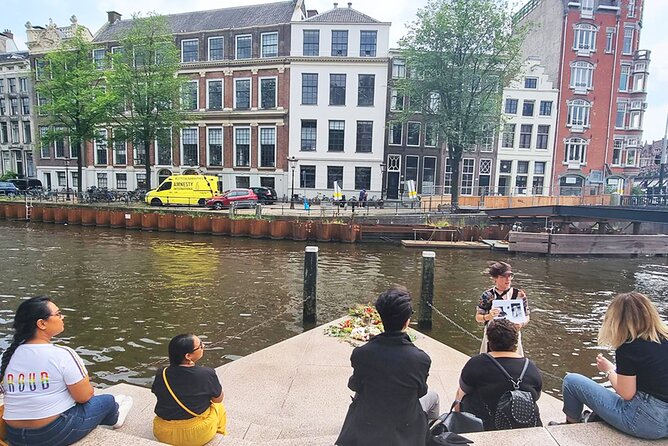
The 20-minute section at Keizersgracht is one of the tour’s most story-packed moments. The canal provides the setting for tales involving the Pope of the Gays, a 17th-century literary lesbian love triangle, and a pompous doctor whose work may have accidentally given lesbians legal cover.
These stories sound colorful, but their value is not just shock or amusement. They show how people found ways to describe love, build relationships, and protect themselves when the language and laws around them were hostile.
The literary triangle gives you a window into women’s relationships and the written record. The doctor’s story raises a more unusual question: can a person trying to control or classify sexuality end up creating space for people to defend themselves?
This is the sort of stop that can change how you see Amsterdam’s canal houses. You are looking at elegant buildings, but the stories attached to them include secrecy, gossip, literature, medical opinion, and social rules.
The Gay Monument: memory, mourning, and a lesbian hero
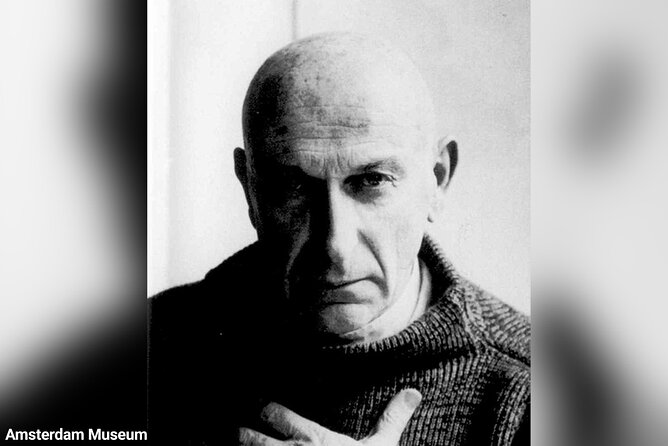
The Gay Monument is the route’s most direct place of remembrance. Since its unveiling, it has been used by Amsterdam’s LGBTQIA+ community for both celebration and mourning.
The guide spends about 15 minutes here, using the monument to tell the story of a courageous lesbian hero. That choice keeps the stop focused on a person rather than turning the monument into a simple photo opportunity.
You may find this section more reflective than the earlier stops. The monument links private lives with public memory, and it asks you to think about why some people become symbols while others remain unknown.
Because the site carries both joy and grief, your guide may set a different tone here than at Rembrandtplein or Keizersgracht. That contrast is useful. LGBTQIA+ history is not only about progress and colorful characters. It also includes loss, remembrance, and the need for visible places of recognition.
Herengracht: queer courage during the Resistance
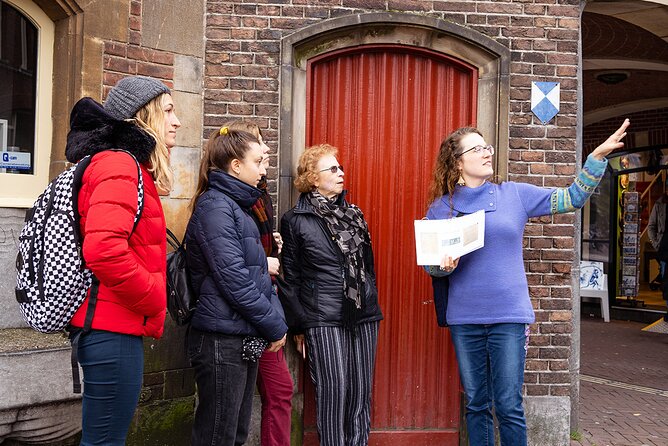
At Herengracht, the tour turns to queer Resistance fighters who worked from an inconspicuous canal house. The stop lasts about 15 minutes.
The setting matters. Amsterdam’s grand canal houses can look formal and respectable from the outside. Here, the guide points you toward the hidden work that could happen behind an unremarkable facade.
This part should connect especially well if you like wartime history or stories of people who took risks without expecting public credit. The emphasis is on action and courage, not only identity.
It also helps correct a common gap in historical storytelling. Queer people were not simply waiting for social change to arrive. They were making decisions, helping others, and resisting oppression in difficult circumstances.
Torensluis: ending with a trans soldier’s message
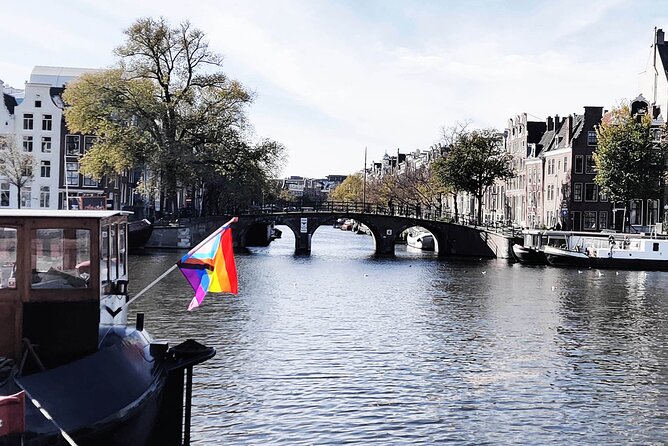
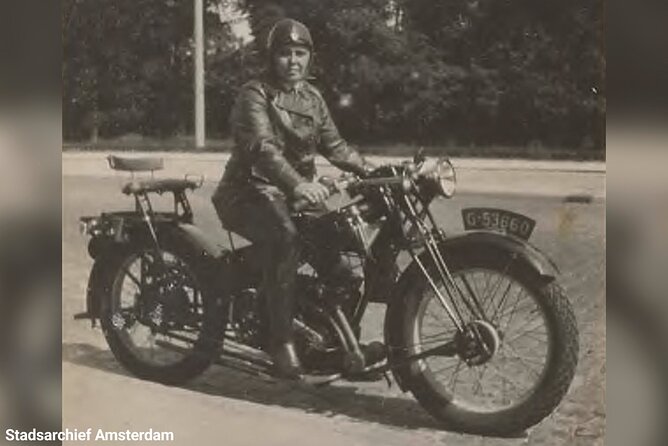
The tour ends at Torensluis, on the bridge near the Multatuli sculpture. The final 20 minutes focus on the surprising message in the story of a trans soldier who served in Amsterdam’s militia during the 18th century.
Ending here is a smart choice because it leaves you with a question rather than a neat historical conclusion. The story challenges simple assumptions about gender, military service, and how people understood themselves in earlier centuries.
The finish also places you near a useful central landmark. Since the tour ends on the bridge, you can continue exploring on foot after the guide says goodbye. The route does not return you to Utrechtsestraat, so plan your next stop from Torensluis rather than from the starting point.
Why the eight-person limit matters
A maximum of eight people changes the feel of a walking tour. You can usually hear the guide more easily, ask a question without addressing a crowd, and keep the group moving through central streets without the long pauses that come with a large party.
The small group is especially helpful here because the tour depends on stories. Guus and Elyzabeth are described as engaging guides, and that style works best when the group feels like a conversation rather than a lecture.
The limitation is that places are fewer than on a large city walk. If your dates are fixed, book early enough to secure a spot. The supplied information confirms your booking at once unless you reserve within two days of departure, in which case confirmation can take up to 48 hours and depends on availability.
Is $47.34 a fair price?
At $47.34 per person, the tour is not a bargain in the same way as a free self-guided walk. There are no admission tickets included, and the stops are public places. The value comes from access to a local guide, a carefully chosen route, and stories you would be unlikely to connect on your own.
I think the price makes the most sense if you care about LGBTQIA+ history, enjoy guided storytelling, or want a fresh way to see central Amsterdam. It is also useful for locals. One past participant had lived in Amsterdam for years and still found that the walk changed how they viewed the city.
If you only want broad orientation, canals, architecture, and major landmarks, a general city tour may give you more coverage for your money. This walk is focused. Its strength is the subject, not the number of sights.
Who will enjoy this tour most?
You do not need to identify as LGBTQIA+ to appreciate the walk. It suits history buffs, curious first-time visitors, and Amsterdam residents who want to hear about figures often left out of standard accounts.
It is a particularly good fit if you like:
- Social history tied to specific places
- Stories about overlooked people
- Amsterdam nightlife and public life
- Wartime resistance and personal courage
- LGBTQIA+ rights and changing attitudes
- Small groups with room for questions
The tour may be less suitable if you dislike walking outdoors, need a museum-based experience, or prefer a broad survey of Amsterdam. The route also requires enough comfort with roughly two hours outside in changing conditions.
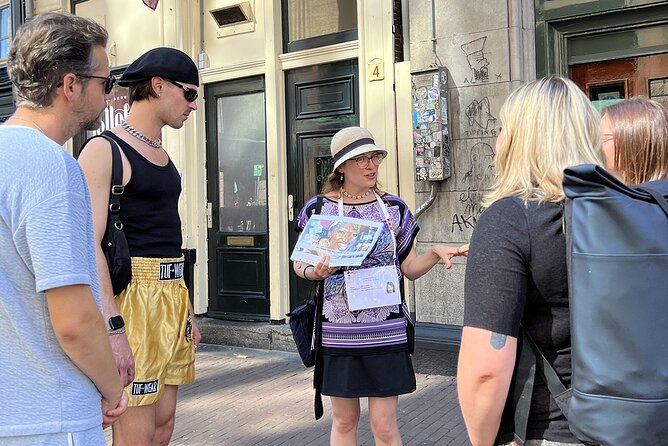
Most people can participate, and service animals are allowed. The meeting point is near public transportation, which makes the start at Utrechtsestraat 4, 1017 VN Amsterdam, fairly practical to reach. The tour is offered in English and uses a mobile ticket.
Timing, weather, and what to plan
Allow about two hours for the walk itself. Each stop lasts between 15 and 20 minutes, so the pace includes steady movement between locations as well as guided storytelling.
Wear sensible walking shoes and check the forecast before you go. The experience requires good weather. If the provider cancels because conditions are poor, you will be offered another date or a full refund.
You can cancel for a full refund up to 24 hours before the start time. Cancellations or changes made within 24 hours are not accepted for a refund, and the cut-off follows Amsterdam local time.
Because the tour ends at Torensluis rather than the starting point, take note of the final location. It is near the Multatuli sculpture on the bridge, giving you a clear place to orient yourself afterward.
Should you book this Amsterdam LGBTQ+ history tour?
Book it if you want Amsterdam to feel more personal and less like a list of famous buildings. The small group, focused route, and human stories make this a strong choice for anyone who wants to understand how LGBTQIA+ life, courage, secrecy, and public memory shaped the city.
I would especially choose it early in an Amsterdam stay. The stories can give later walks through Rembrandtplein, the canals, and central bridges a new meaning.
Skip it if you are seeking major indoor attractions, a general sightseeing tour, or guaranteed shelter from rain. For $47.34, you are buying two hours with a local storyteller, not entry to a landmark. For the right audience, that is a fair trade.
FAQ
How long does the LGBTQ+ History Tour in Amsterdam last?
The tour lasts approximately two hours.
How many people can join the tour?
The group has a maximum of eight travelers.
In what language is the tour offered?
The tour is offered in English.
Where does the tour begin?
It begins at Utrechtsestraat 4, 1017 VN Amsterdam, Netherlands.
Where does the tour end?
The tour ends at Torensluis, by the Multatuli sculpture on the bridge.
What places are included on the route?
The stops are Rembrandtplein, Munt Tower, Koningsplein, Keizersgracht, the Gay Monument, Herengracht, and Torensluis.
Are admission tickets included?
The listed stops have no admission charge, and the experience includes a local guide rather than entry to a paid attraction.
Is the tour suitable for most people?
Yes. Most people can participate, and service animals are allowed.
Is the tour near public transportation?
Yes. The meeting point is near public transportation.
Can I cancel for a full refund?
Yes. You can cancel at least 24 hours before the start time for a full refund. If poor weather causes the provider to cancel, you will be offered another date or a full refund.
More LGBTQ-Friendly in Amsterdam
- Amsterdam: Rainbow Rural Bike Tour With Local Gay Guide
★ 5.0 · 4 reviews
Just added around Amsterdam
- Amsterdam: Giethoorn Tour with Canal Cruise and Windmills★ 5.0 · 3 reviews
- Full-day excursion to Edam, Volendam, and Marken★ 3.7 · 3 reviews
- Amsterdam: Chocolate Fondue in the Dark★ 5.0 · 3 reviews
- Amsterdam Old-West Vegan Food Tour with Local Guide★ 4.7 · 3 reviews
- Amsterdam Family Friendly Historical Walking Tour★ 5.0 · 3 reviews
- Amsterdam Private Walking Tour of Famous Painters★ 5.0 · 3 reviews
- From Amsterdam: visit Zaanse Schans, Muiderslot and more!★ 5.0 · 3 reviews
- Amsterdam Walking Tour with Dutch Pancake Lunch★ 5.0 · 3 reviews
Amsterdam Tours, compared.


Amsterdam Classic Saloon Boat Cruise with Drinks and Cheese
Read our review →
Amsterdam Luxury Canal Cruise + Unlimited Drinks & Bites option
Read our review →


Classic Boat Cruise with Optional Cheese & Wine
Read our review →
Evening Cruise with Optional Wine and Snacks
Read our review →
75 Minute City Canal Cruise with Audio Guide
Read our review →Browse the lists this tour appears in