
Reviewed · AMSTERDAM TOURS
Small Group Hidden Gems Tour in Amsterdam
Amsterdam’s most revealing stories often sit beside the sights you might otherwise pass without a second glance. This two-hour walk connects an unassuming marriage site, a philosopher’s monument, historic synagogues, a workers’ union building, and the city’s main university campus.
I like the small group of up to 12, which gives a guide room to answer questions. I also like the wide subject range, from the world’s first legal same-sex marriage to Jewish heritage, women’s rights, Indonesian resistance, and the people behind Amsterdam’s art scene. The main drawback is pace: nine stops in about two hours means each story is brief, and the tour is mainly an outdoor walk.
Key points at a glance
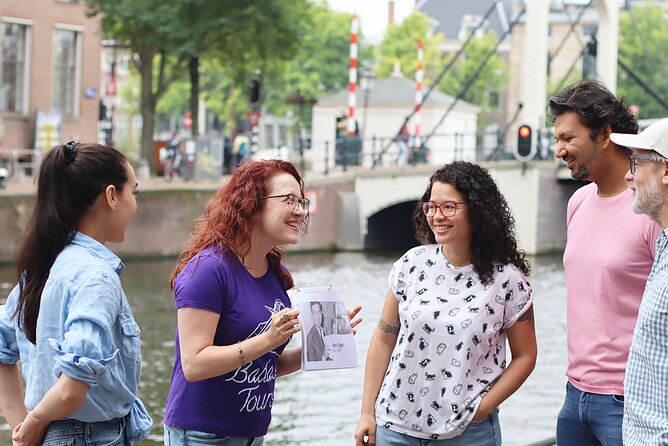
- Amsterdam beyond the postcard: The route focuses on people and events that are easy to miss while sightseeing.
- Nine stops in two hours: You cover a compact central route from Amstel 23 to H’ART Museum.
- Strong social history: Expect stories about Jewish life, workers’ rights, women’s rights, colonial-era Indonesia, and wartime resistance.
- A guide-led experience: Your guide provides the context, interpretation, and connections between the places.
- A small, English-language group: The tour is capped at 12 people and includes a mobile ticket.
- Good value for curious visitors: At $48.16, you pay for focused storytelling rather than museum admission or transport.
Why this walk shows you a different Amsterdam
I like this tour because it does not treat Amsterdam as a collection of canals, leaning houses, and famous museums. Instead, you move through the city by following lives: a philosopher cast out by his own community, a Jewish heiress who helped people escape religious persecution, workers who fought for rights, and figures whose names deserve more attention.
That approach changes how you see the streets. A building becomes the place where a major social milestone occurred. A church becomes a clue to the lives of Black Amsterdammers in the 17th century. A zoo becomes a prompt to think about artists and resistance heroes.
The walk is also a useful choice early in your visit. It gives you a framework for the city before you spend hours inside its major museums. If you already know Amsterdam’s famous sights, the tour may add the kind of context you cannot get from a quick photo stop.
The route is not designed as a full survey of Dutch history. It moves quickly and covers serious subjects, including persecution, exclusion, war, and colonial conflict. I would choose it if you want focused stories with a human angle, not a broad architectural tour or a relaxed canal-side stroll.
A few more Amsterdam trips worth a look
- Amsterdam: Van Gogh Museum Ticket
★ 4.7 · 52,054 reviews - Amsterdam Classic Saloon Boat Cruise with Drinks and Cheese
★ 5.0 · 31,825 reviews - Amsterdam Luxury Canal Cruise + Unlimited Drinks & Bites option
★ 5.0 · 30,518 reviews
Starting at the Dutch National Opera and Ballet
The meeting point is at Monument Megadlé Jethomiem on Amstel 23. The first stop is the Dutch National Opera and Ballet, where the guide introduces the city and points out the unassuming building connected with the world’s first gay marriage.
That is a smart opening. It grounds you in Amsterdam while showing that important history does not always happen in grand halls. The location also sets the tone for the rest of the walk: look closely, because the most important clue may be attached to an ordinary-looking facade.
You spend about 10 minutes here, with no admission fee. Since the tour is outside, you should be ready to listen while standing or walking. If you have mobility concerns, one useful sign is that a guide has made efforts to accommodate a wheelchair user and hearing limitations. Still, tell the operator about your needs before booking, since the route and listening conditions matter.
Spinoza Monument and the cost of dissent
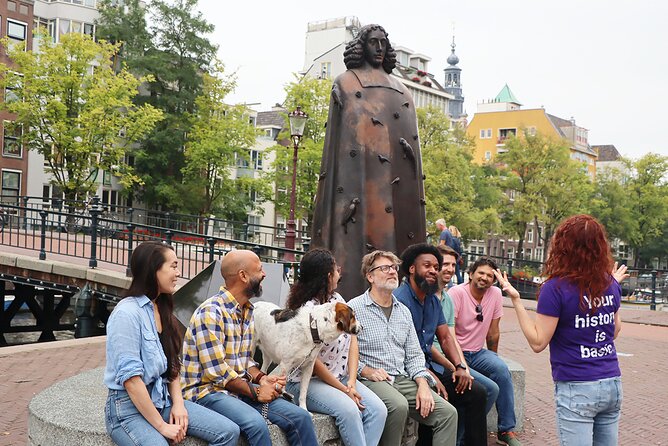
The five-minute stop at the Spinoza Monument introduces Baruch Spinoza, one of modern philosophy’s major figures. The key point is not simply that he was an important thinker. You also hear how he became an outcast in his own community.
This is a fine example of the tour’s method. Rather than presenting a monument as a piece of public art, the guide uses it to discuss belonging, religious authority, and the price a person may pay for independent thought.
The stop is short, so do not expect a lecture on Spinoza’s complete philosophy. You get a compact story that adds meaning to a place you could otherwise pass in seconds. If you enjoy social and intellectual history, this will likely be one of the more memorable early stops.
Mozes en Aaronkerk and Black Amsterdam
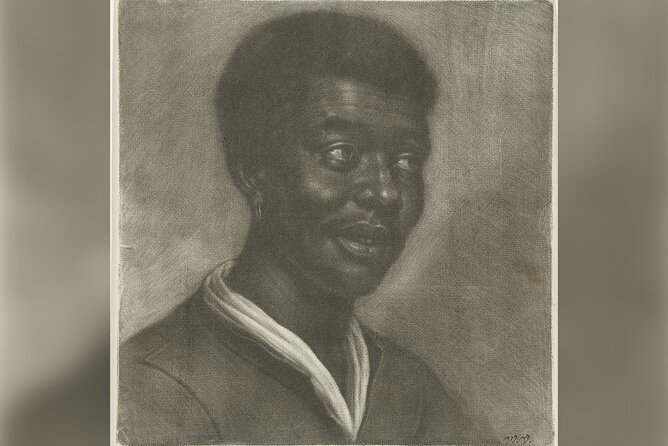
At Mozes en Aaronkerk, the guide turns to the life of a couple in Amsterdam’s free Black community during the 17th century. This is one of the route’s most useful corrections to the usual picture of the city.
Many first visits to Amsterdam focus on trade, painting, canals, and merchant wealth. This stop asks you to consider the people who lived within that society but are often missing from quick introductions. The story is personal rather than abstract, which helps make the subject easier to grasp.
You spend about five minutes here. That brevity keeps the walk moving, but it also means you should listen closely and ask questions while you can. The guide’s storytelling is central to the experience, because the building itself cannot provide all the information you need.
Same country, a completely different kind of day:
- Amsterdam: Heineken Experience Ticket
★ 4.6 · 30,055 reviews - Amsterdam: Rijksmuseum Entry Ticket
★ 4.7 · 25,535 reviews - Amsterdam: Classic Boat Cruise with Optional Cheese & Wine
★ 4.6 · 22,925 reviews - Amsterdam: Evening Cruise with Optional Wine and Snacks
★ 4.4 · 19,696 reviews
The Portuguese Synagogue and a daring escape network
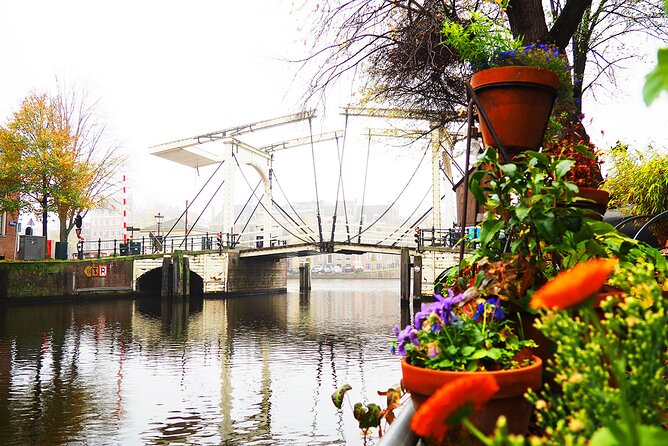
The Portuguese Synagogue stop lasts about 10 minutes and places you among Amsterdam’s historic synagogues. Here you hear about a wealthy heiress who created an underground railroad during the Spanish and Portuguese Inquisitions.
It is a powerful subject because it links Amsterdam to a wider European story of religious persecution, flight, money, and courage. The phrase underground railroad gives you a clear sense of organized escape, but the guide’s job is to explain the person and the choices behind it.
This is one of the route’s more substantial stops, yet it remains an exterior visit. Admission to the synagogue is not included because the itinerary lists free stops rather than interior entry. If you want to explore the building inside, plan a separate visit and check its opening arrangements independently.
Hortus Botanicus and two Indonesian revolutionaries
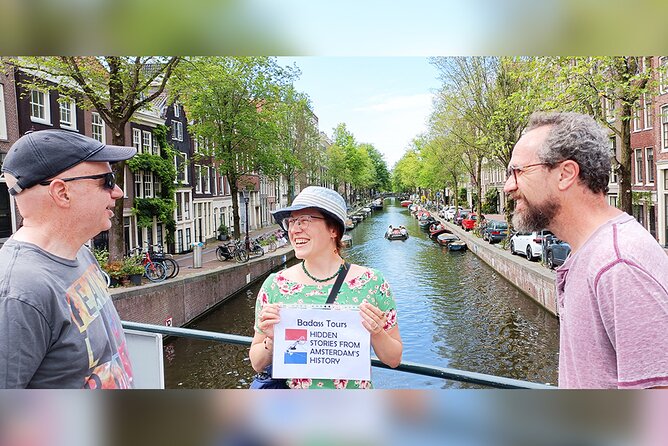
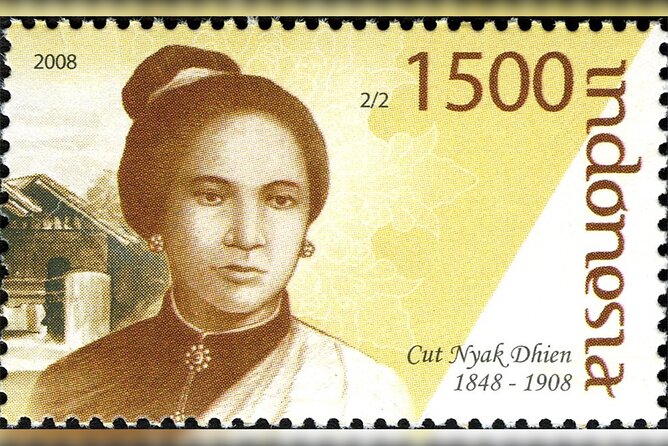
At Hortus Botanicus, the tour introduces two Indonesian rebels and revolutionaries who led very different lives. The subject adds an important colonial and international layer to the walk.
Amsterdam’s story did not end at the city limits. Its institutions, wealth, politics, and people were tied to places far beyond the Netherlands. By focusing on two individuals rather than offering only a general explanation, the guide can show how personal choices shaped larger struggles.
You spend about 10 minutes here. This is a good point to ask questions if you want more context about Indonesia, though the supplied details do not promise a full colonial-history lecture. The tour gives you a doorway into the subject, and you may want to follow up later with museum visits or reading.
De Burcht and the fight for workers’ rights
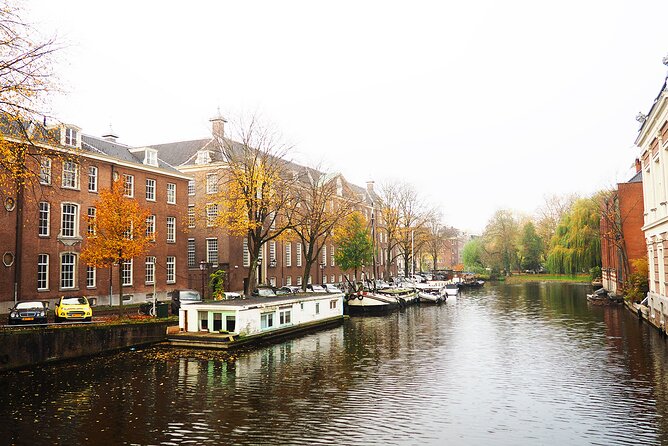
Amsterdam has long been associated with diamonds, and De Burcht brings that industrial story into view. The building was created by a workers’ union whose efforts helped lead to rights that all citizens rely on today.
I especially like this stop because it connects architecture to organized labor. De Burcht is not just a striking building to photograph. It represents workers using collective action to demand a better place in public life.
The stop takes about 10 minutes. You do not need to know anything about Amsterdam’s diamond trade in advance. The guide supplies the link between the city’s industry, its workers, and the rights that developed from that struggle.
ARTIS Amsterdam Royal Zoo and overlooked local figures
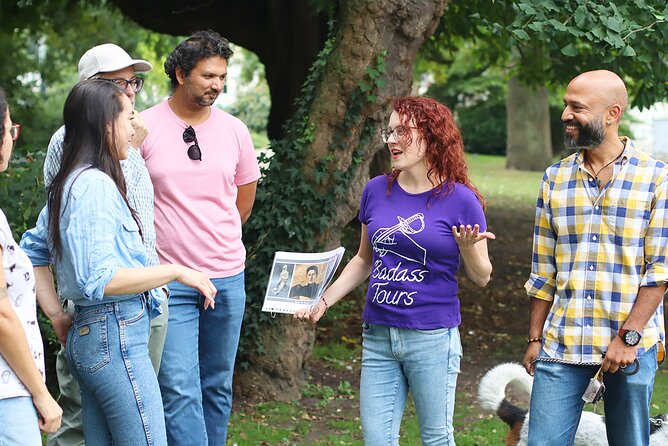
The longest stop comes at ARTIS Amsterdam Royal Zoo, where you pass the flamingos while hearing about influential Amsterdammers. The subjects range from pioneering artists to heroes of the World War II resistance.
This 30-minute section gives the guide more breathing room. Instead of rushing through one person in five minutes, you can expect a broader set of connections between local identity, creativity, courage, and public memory.
The flamingos add a light visual break, but the subject matter can turn serious. That contrast is part of the charm: Amsterdam’s everyday scenery continues around you while the guide brings forward people whose lives shaped the city.
Because this is an outdoor pass-by rather than a zoo visit, zoo admission is not listed as part of the experience. If you want to spend time with the animals, treat that as a separate plan. The tour uses the area as a setting for its stories.
University of Amsterdam and two international voices
The walk crosses the University of Amsterdam campus for about 15 minutes. Here you learn about an influential suffragist and a world-changing diplomat.
This stop broadens the tour’s focus beyond Amsterdam’s streets. The suffragist story speaks to women’s political rights and public participation. The diplomat offers an international angle, showing how one person connected local life with events on a much larger stage.
A university campus is also a fitting place for these subjects. It gives the guide a natural setting for discussing education, public debate, political change, and the people who challenged accepted limits.
The route covers a lot of ground in a short time, so you may want to note names for later research. The information provided does not identify the suffragist or diplomat in advance, which can be useful if you prefer to encounter the story without spoilers.
H’ART Museum and the rise of a household name
The tour ends at H’ART Museum, formerly the Hermitage Amsterdam, at Amstel 51. The final story concerns a major figure in the art world whose fame depended on a relative who barely knew him.
This is a fitting ending for a walk built around overlooked people and unexpected connections. It asks you to think about how reputations are made, how family links can shape public memory, and how easily a famous name might have disappeared from view.
The tour ends in front of the museum, not inside it. That makes the location useful for continuing your day. You can visit H’ART Museum afterward, or use the nearby central area as a base for your next plan.
What the $48.16 price buys you
At $48.16 per person, this is not the cheapest way to spend two hours in Amsterdam. You are paying for a guide’s preparation, storytelling, and ability to connect nine sites into a coherent experience. There are no museum admissions or transport costs included, but the stops themselves are free.
I see the value most clearly if you enjoy history and do not want a standard overview. A good guide can point out details you would miss and explain why they matter. The small maximum of 12 people also helps. You are not being moved through the city in a large crowd, and questions are more practical.
The price is harder to justify if you mainly want famous landmarks, interior visits, or plenty of free time at each stop. At two hours, the experience is compact. You should think of it as a guided introduction to overlooked stories, not a full-day cultural program.
Guides, tone, and what the reviews reveal
The strongest praise centers on the guides’ storytelling, care, and command of the subjects. Elizabeth and Elyzabeth are described as engaging and passionate, while Astrid is praised for thoughtful presentations of Jewish history. Tanja is noted for answering questions well.
The operator has also handled a solo booking with a BIPOC-focused request in a responsive way. That suggests this company takes inclusive interpretation seriously, though your specific guide is not named in the booking details provided.
The tone can be emotional. One account describes being moved to tears, especially during discussion of World War II suffering. I would not choose this walk expecting only light sightseeing. Its subjects include persecution, war, exclusion, labor struggles, and political change.
At the same time, the guides have been praised for being approachable and not rushing people. That balance matters. Serious history works best when the person presenting it can explain clearly without turning the walk into a dry classroom.
Timing, group size, and practical comfort
The tour lasts about two hours and is offered in English. It is booked, on average, 16 days ahead, so I would reserve early if your dates are fixed.
You should wear comfortable shoes and check the weather before setting out. The experience requires good weather, and poor conditions may lead to a different date or a full refund. Since this is a walking tour with outdoor stops, rain can affect both comfort and how well you hear the guide.
The route is near public transportation. Service animals are allowed, and most people can participate. The operator has shown a willingness to help with wheelchair access and hearing limitations, but you should confirm the practical details before booking if either is important for your group.
The mobile ticket is convenient. Arrive at the stated meeting point, Monument Megadlé Jethomiem, Amstel 23, rather than heading directly to H’ART Museum. The endpoint is Amstel 51, in front of H’ART Museum.
Free cancellation is available up to 24 hours before the start time. Changes or cancellations inside that window are not accepted for a refund, except when poor weather causes the operator to cancel.
Who should book this Amsterdam walk
I would choose this tour for a history-minded visitor who wants more than the standard canal-and-museum route. It suits solo visitors, couples, families with older children, and small groups who enjoy asking questions and listening carefully.
It is also a good match if you want Amsterdam presented through Black history, Jewish heritage, women’s rights, labor movements, colonial connections, art, and wartime resistance. The range is broad, but the common thread is clear: people who influenced the city and were not always given enough public attention.
I would skip it if you dislike walking, want extensive time inside buildings, or prefer a simple chronological account of Amsterdam. The nine-stop format is energetic and story-driven. You will get more from it if you accept that some subjects will be introduced rather than fully explored.
Should you book the Small Group Hidden Gems Tour?
Book it if you want an honest, people-centered look at Amsterdam and value a strong guide more than admission to a major attraction. The small group, thoughtful subjects, and convenient finish at H’ART Museum make the $48.16 reasonable for a focused two-hour experience.
Go in ready for serious material and a brisk pace. Listen for names, ask questions, and treat the tour as a starting point for the rest of your visit. If Elizabeth, Elyzabeth, Astrid, or Tanja is leading your walk, you can expect a guide with a clear interest in bringing overlooked stories into the open, though the assigned guide may differ.
FAQ
How long is the Amsterdam tour?
The tour lasts approximately two hours.
How much does the tour cost?
The listed price is $48.16 per person.
What language is the tour offered in?
The tour is offered in English.
How many people can join the group?
The group has a maximum of 12 participants.
Where does the tour start?
The tour starts at Monument Megadlé Jethomiem, Amstel 23, 1011 PT Amsterdam, Netherlands.
Where does the tour end?
The walk ends in front of H’ART Museum, formerly the Hermitage Amsterdam, at Amstel 51, 1018 EJ Amsterdam.
Are museum or attraction admission fees included?
The listed stops have free admission tickets, and the experience includes the guide. The tour does not list interior admission to ARTIS, the Portuguese Synagogue, or H’ART Museum.
Is the tour accessible to people using wheelchairs?
Most people can participate, and a guide has made efforts to accommodate a wheelchair user and hearing limitations. Contact the operator before booking to confirm your specific needs.
Can I cancel for a full refund?
Yes. You can cancel at least 24 hours before the local start time for a full refund. Cancellations or changes made less than 24 hours before the start time are not accepted for a refund.
Just added around Amsterdam
- Amsterdam: Giethoorn Tour with Canal Cruise and Windmills★ 5.0 · 3 reviews
- Amsterdam: Chocolate Fondue in the Dark★ 5.0 · 3 reviews
- Full-day excursion to Edam, Volendam, and Marken★ 3.7 · 3 reviews
- Amsterdam Old-West Vegan Food Tour with Local Guide★ 4.7 · 3 reviews
- Amsterdam Family Friendly Historical Walking Tour★ 5.0 · 3 reviews
- Amsterdam Private Walking Tour of Famous Painters★ 5.0 · 3 reviews
- From Amsterdam: visit Zaanse Schans, Muiderslot and more!★ 5.0 · 3 reviews
- Amsterdam Walking Tour with Dutch Pancake Lunch★ 5.0 · 3 reviews
Amsterdam Tours, compared.


Amsterdam Classic Saloon Boat Cruise with Drinks and Cheese
Read our review →
Amsterdam Luxury Canal Cruise + Unlimited Drinks & Bites option
Read our review →


Classic Boat Cruise with Optional Cheese & Wine
Read our review →
Evening Cruise with Optional Wine and Snacks
Read our review →