
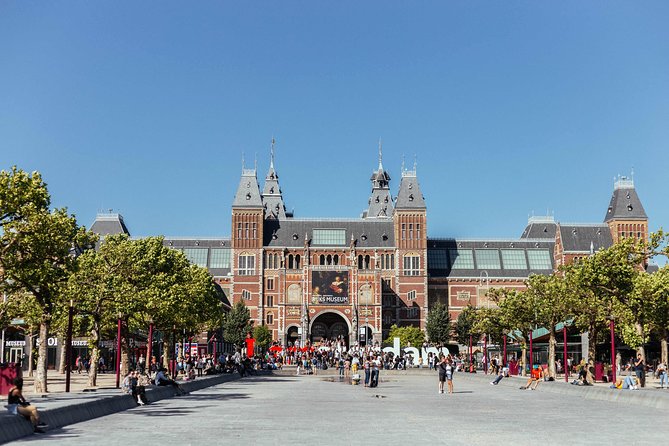
Reviewed · AMSTERDAM TOURS
Amsterdam Rijksmuseum PRIVATE TOUR with a Local Private Guide
The best thing about this Rijksmuseum tour is its private format. You get a dedicated guide rather than a fixed group, so you can ask why Rembrandt’s paintings feel so alive, stop over a detail in a Vermeer, or move on when a room does not suit you. Guides including Rolf, Anna, Martin, and Marten have led especially strong tours.
I like the focused two-hour route through centuries of Dutch art, and I like the local advice afterward. The guide can connect medieval religious painting, Dutch trade, architecture, and the Golden Age instead of treating each artwork as an isolated object.
The main caution is practical: museum admission costs extra, at €20 per person paid in cash to the host. A small number of bookings have also suffered from ticket or guide problems, so confirm the meeting details and ticket arrangements before setting out.
Key points to know before you book
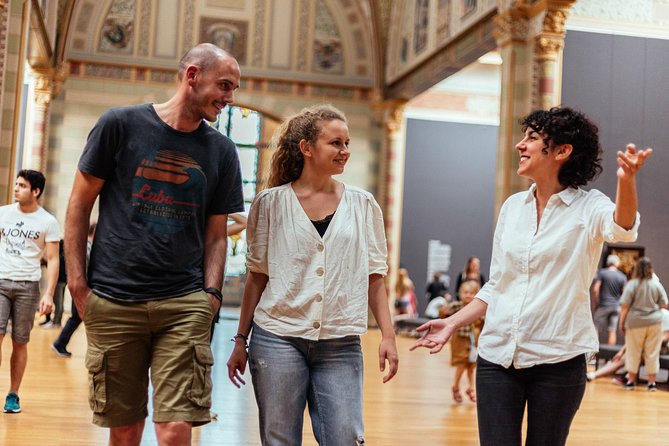
- Private attention: Only your party and the guide take part, giving you room to ask questions and set the pace.
- A fast route through Dutch art: The visit moves from medieval works and Renaissance painting to Hals, Vermeer, Rembrandt, van Gogh, and later art.
- Two hours means highlights, not every gallery: This is a guided introduction to a huge museum, not a complete visit.
- Tickets are separate: Your guide handles prebooking, but you pay €20 per person in cash for admission.
- Strong guide lineup: Rolf, Anna, Martin, and Marten are praised for clear explanations, personal attention, and links between art and Dutch history.
- Check communication: A few bookings involved unclear meeting information, late notice, no-shows, or unavailable tickets.
Why a private Rijksmuseum tour can be worth your time
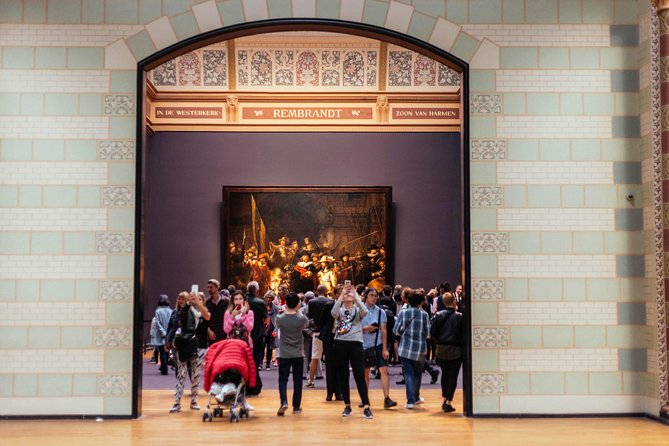
The Rijksmuseum is not a small, tidy collection that you can casually finish before lunch. Its displays cover Dutch art and design from medieval times through later centuries, with famous names competing for your attention at every turn.
That size creates the museum’s central problem. You can walk in with a short list of Rembrandt, Vermeer, and van Gogh, then lose an hour among furniture, ship models, portraits, clocks, religious art, and rooms full of paintings you did not expect to see.
A private guide gives your visit a useful shape. Instead of trying to read every label, you follow a route built around major periods and important works. You can also adjust the emphasis. If you care about technique, ask about brushwork. If you are visiting with children, ask the guide to focus on stories and visual clues. If Dutch history interests you, the connections between commerce, civic pride, religion, and art become central rather than incidental.
The format is especially useful if you have limited time in Amsterdam. Two hours is enough to get a firm grasp of the museum’s major themes, but it is not enough for a leisurely look at every floor. Think of the tour as a guided first pass. You can return afterward and spend more time with the paintings that caught your eye.
The private setup also changes the tone. You are not trying to hear a guide over a large crowd, and you do not have to follow someone else’s questions. The strongest guides, including Rolf and Anna, have been praised for adjusting the presentation to a family’s interests and background. Martin has been noted for linking art with architecture, Dutch commerce, and political history, while Marten is praised for explaining the development of painting across several periods.
More Rijksmuseum tickets:
- Amsterdam: Rijksmuseum Entry Ticket
★ 4.7 · 25,535 reviews - Amsterdam: City Canal Cruise and Rijksmuseum
★ 4.5 · 2,129 reviews - Rijksmuseum Amsterdam Small-Group Tour with Private Upgrade
★ 4.5 · 1,547 reviews
Meeting at Hobbemastraat 18 and getting started
The tour begins at Hobbemastraat 18, 1071 ZB Amsterdam, near public transportation. It ends back at the same meeting point.
That start point matters because the Rijksmuseum area can feel confusing if you are hurrying. Give yourself enough time to reach Hobbemastraat 18 and identify your guide before the scheduled start. One booking lost about ten minutes because the meeting instructions and direct contact information were not clear, so I would not arrive at the last moment.
The tour is listed at about two hours. Be aware that the clock appears to run from the agreed tour start, not from the moment you enter the museum. One person reported meeting the guide late and receiving less than two full hours inside. Clear communication at the start can prevent that kind of disappointment.
Your guide takes care of prebooking the museum admission, but the ticket is not included in the advertised price. You need to pay €20 per person in cash to the host. This is an important distinction when comparing the $141.87 per-person tour price with other Rijksmuseum options.
The private group arrangement is best for couples, families, or a small group of friends who want conversation rather than a lecture. Group discounts are available, so the per-person cost may look better when several people share the private guide.
Medieval art and Geerten tot St. Jans
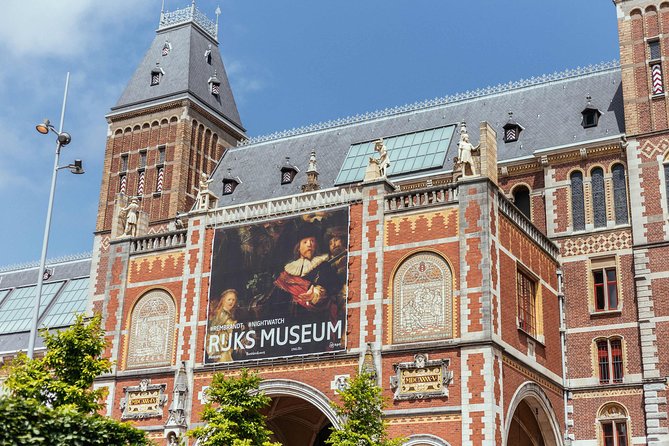
The route begins in medieval art, where religious subjects dominate. That may sound less immediately familiar than a Rembrandt portrait, but this section gives you a useful starting point for understanding how Dutch painting developed.
One highlighted work is Geerten tot St. Jans’s Tree of Jesse. The painting reflects the strongly religious purpose of much medieval art. A guide can help you read the figures, symbols, and family line instead of seeing only a crowded devotional scene.
This is one place where a private guide adds real value. Medieval paintings can feel distant if you do not know what the imagery means. With an explanation of the religious setting and visual symbols, the work becomes easier to approach. You also get a sense of how art served faith and teaching before the subjects of Dutch painting broadened.
If your main goal is the Golden Age, this opening section may feel slower than expected. Still, it gives the later rooms more context. The shift from sacred subjects to portraits, domestic scenes, and civic life did not happen in a vacuum.
Lucas van Leyden and the Renaissance turning point
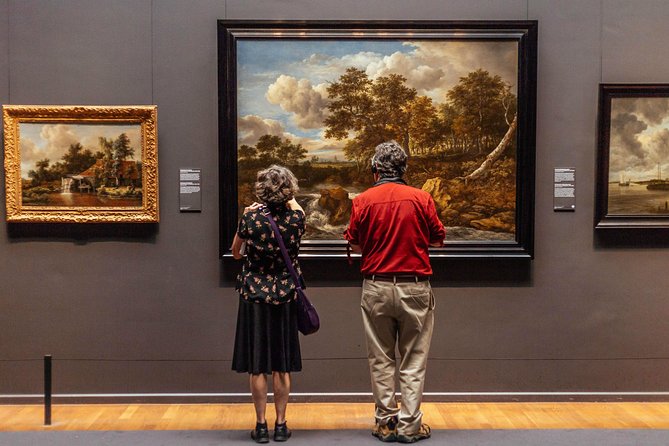
The Renaissance section follows as a bridge between medieval religious painting and the later Dutch Golden Age. The tour highlights Lucas van Leyden, described as the Rembrandt of the 16th century.
That comparison gives you a useful handle, but it should not lead you to expect a smaller version of Rembrandt. Lucas van Leyden helps show how Dutch artists developed new approaches to human figures, detail, and storytelling before the great 17th-century masters came along.
A guide can place this period within the larger change in European art. The Renaissance brought new interest in observation, proportion, classical ideas, and the human experience. In the Rijksmuseum, that makes the period feel like a turning point rather than a footnote between two more famous eras.
The route is broad, so the time spent with Lucas van Leyden and medieval art may depend on your guide and your interests. If you want more Renaissance painting, say so at the beginning. A private tour is most useful when you help shape it.
A few more Amsterdam trips worth a look
- Amsterdam: Van Gogh Museum Ticket
★ 4.7 · 52,054 reviews - Amsterdam Classic Saloon Boat Cruise with Drinks and Cheese
★ 5.0 · 31,825 reviews - Amsterdam Luxury Canal Cruise + Unlimited Drinks & Bites option
★ 5.0 · 30,518 reviews - Amsterdam: Heineken Experience Ticket
★ 4.6 · 30,055 reviews
Hals, Vermeer, and Rembrandt in the Golden Age
The Golden Age is the heart of the visit. The route focuses on Frans Hals, Johannes Vermeer, and Rembrandt, the three major names most people hope to see at the Rijksmuseum.
Hals is a good example of lively portrait painting. His work can feel immediate because of its confident handling and expressive faces. Ask your guide how he creates the impression of movement and personality, even when the subject is formally posed.
Vermeer offers a different kind of experience. His paintings reward slow looking, but two hours does not allow unlimited time in front of every masterpiece. A guide can point out the handling of light, the quiet domestic setting, and the small details that give a simple interior its tension.
Rembrandt receives the greatest attention, and rightly so. The tour can help you look beyond fame and ask why the paintings work. Pay attention to the way faces emerge from shadow, how characters are given psychological weight, and how the composition directs your eye.
This is where the best guides make the museum feel less overwhelming. Rolf has been praised for bringing paintings to life and tailoring the route to personal interests. Anna has been praised for connecting individual works with the building, artistic styles, and historical setting. Marten has been noted for explaining the evolution of painting from the medieval period through Rembrandt.
You should still set reasonable expectations. A two-hour visit cannot provide a full art-history course or a quiet study of every major painting. It gives you a clear route and a strong framework, then leaves you free to return on your own.
Eighteenth-century furniture, clocks, and porcelain
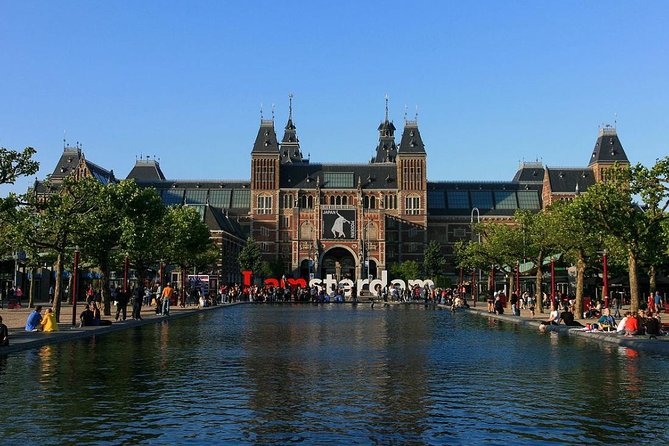
The Rijksmuseum is not only a painting museum. The 18th-century portion adds clocks, handmade furniture, marble vases, fireplaces, life-size porcelain animals, and other decorative works.
This section is useful because it shows how art appeared in daily life and domestic interiors. Paintings may get the headlines, but furniture and decorative objects reveal taste, wealth, craftsmanship, and the way people arranged their homes.
For some visitors, these rooms will be a welcome change from portraits and religious scenes. For others, they may feel like a detour from Rembrandt and Vermeer. Tell your guide what you want to see. The private format makes it possible to give this section more time or pass through it quickly.
The variety also helps families. Children who are not eager to study another portrait may respond better to large clocks, furniture, marble, or porcelain animals. You can use those objects as visual breaks while still learning about the period.
The 19th century and the Battle at Waterloo
The itinerary continues into the 19th century, including Battle at Waterloo, described as the Rijksmuseum’s largest painting. The scale alone makes this a memorable stop.
Large historical paintings can be difficult to absorb without guidance. A private guide can help you take in the composition, identify the main action, and explain how such a work presents military history and national memory. You may find yourself looking at the painting differently once you understand why the artist made it so large.
The tour also includes van Gogh among its highlights. The supplied details do not identify a specific van Gogh work, so you should ask your guide which painting is included on the day. That is a good example of why it helps to discuss your priorities before the tour begins.
Because the route covers medieval art through the 19th century and touches van Gogh, the presentation is necessarily selective. The guide’s skill matters here. A clear narrative can make the periods connect; a rushed presentation can make them feel like unrelated stops.
What the guides do best
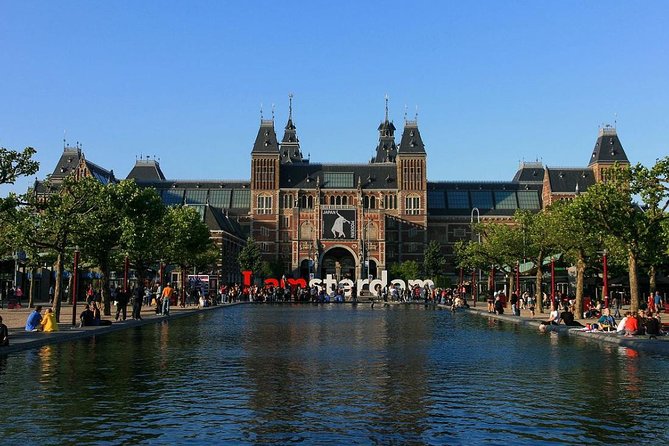
The strongest part of this experience is the guide’s ability to explain art in plain language. Rolf is repeatedly praised for his art-history background, enthusiasm, and personal approach. Anna is praised for being both informative and personable, with explanations that connect paintings, styles, the museum building, and historical events.
Martin’s strength is the broader story. His approach links art with Dutch commerce and architecture, while also comparing Dutch history with American history. Marten is praised for explaining context and the evolution of painting from the medieval period through Rembrandt.
That variety is useful, but it also means the exact tone depends on the guide assigned to you. One less successful tour felt rushed and leaned more toward personal opinion than historical explanation. If you prefer facts, symbolism, or technique, say that early. A private guide can usually adjust better when you explain what you want.
The guide is not just there to point out famous paintings. The best version of the tour helps you understand why those paintings mattered in their own time and why they still matter now. That is a better use of two hours than racing from one famous name to another.
Price, ticket costs, and overall value
The listed price is $141.87 per person. That is a serious price for a two-hour museum visit, especially because the €20 admission fee is separate and must be paid in cash.
The value depends on your group and your available time. If you are traveling alone or as a couple, a private guide costs more than joining a standard group tour. If you have several people, group discounts can improve the calculation, since the guide’s time is shared by your party.
I would consider the price reasonable only if you want a guided introduction and have limited time. The Rijksmuseum is large, and an informed route can save you from wandering past the works you came to see. If you enjoy reading labels, moving slowly, and finding your own path, buy admission and explore independently instead.
The separate ticket charge is the point most likely to surprise you. Budget for the tour price plus €20 per person, and carry the required cash. The guide handles prebooking, which is helpful, but prebooking is not the same as admission being included.
The experience is listed as carbon neutral, another modest positive for travelers who consider the environmental side of sightseeing. It does not change the museum visit itself, but it is a useful detail when comparing similar tours.
Reliability and what to confirm before the day
The overall rating is 4.8 from 159 ratings, with 94 percent recommending the experience. The high score reflects the many excellent guide experiences, but the practical problems deserve attention.
A small number of bookings involved tickets that were not available, a guide who did not appear, or late communication about cancellation. In one case, the booking was made two months ahead, yet the tour was canceled the day before because tickets were unavailable. In another, the guide reportedly could not obtain tickets and the customer was not notified.
These problems appear uncommon compared with the strong overall rating, but they matter because the tour is non-refundable and cannot be changed after booking. Before leaving for the museum, confirm:
- The exact meeting point at Hobbemastraat 18
- The tour start time
- The guide’s contact details
- That museum tickets have been arranged
- That you have €20 cash per person
This is not a reason to reject the tour outright. It is a reason to treat the confirmation details as important rather than assuming every part will take care of itself.
Who should book this Rijksmuseum visit
I would recommend it for a first visit to the Rijksmuseum, especially if you have only a short window in Amsterdam. Families can benefit from the private pace, and art lovers can ask detailed questions without holding up a larger group.
It also suits anyone who finds major museums overwhelming. The guide takes you through a sensible sequence, from medieval religious painting to Renaissance artists, the Golden Age, decorative arts, the 19th century, and van Gogh.
You may prefer a self-guided visit if you want several hours inside, have a strict budget, or already know which galleries matter most to you. You should also think twice if paying an additional €20 in cash is inconvenient or if you need a fully flexible booking, since the experience is non-refundable.
Final verdict: a strong shortcut with practical caveats
Book this private Rijksmuseum tour if you want expert direction, personal questions, and a clear look at Dutch art in about two hours. The strongest guides, particularly Rolf, Anna, Martin, and Marten, can connect famous paintings with religion, commerce, architecture, and changing artistic ideas.
Go in knowing what you are buying: a focused introduction, not a complete museum visit. Add the separate admission fee to your budget, carry cash, confirm the meeting and ticket details, and tell the guide what interests you most. With those points handled, this is a useful way to make sense of one of Amsterdam’s biggest museums without spending your whole day wandering.
FAQ
How long does the Rijksmuseum private tour last?
The tour lasts approximately two hours.
Is the Rijksmuseum admission ticket included?
No. Admission is separate and costs €20 per person, paid to the host in cash. The guide handles prebooking the tickets.
Is this a private tour?
Yes. Only your group and the private local guide participate.
Where does the tour begin?
The meeting point is Hobbemastraat 18, 1071 ZB Amsterdam, Netherlands.
Where does the tour end?
The activity ends back at the meeting point.
Which artists and periods are covered?
The route covers medieval art, the Renaissance, the Dutch Golden Age, the 18th century, the 19th century, and highlights works connected with Geerten tot St. Jans, Lucas van Leyden, Hals, Vermeer, Rembrandt, and van Gogh.
Are group discounts available?
Yes. Group discounts are listed as a feature of the experience.
Is the tour suitable for most people?
The activity is near public transportation, and most people can participate. It is a private activity for your own group.
Can I cancel or change the booking?
No. The experience is non-refundable and cannot be changed for any reason.
Just added around Amsterdam
- Amsterdam: Giethoorn Tour with Canal Cruise and Windmills★ 5.0 · 3 reviews
- Full-day excursion to Edam, Volendam, and Marken★ 3.7 · 3 reviews
- Amsterdam: Chocolate Fondue in the Dark★ 5.0 · 3 reviews
- Amsterdam Family Friendly Historical Walking Tour★ 5.0 · 3 reviews
- Amsterdam Private Walking Tour of Famous Painters★ 5.0 · 3 reviews
- Amsterdam Old-West Vegan Food Tour with Local Guide★ 4.7 · 3 reviews
- From Amsterdam: visit Zaanse Schans, Muiderslot and more!★ 5.0 · 3 reviews
- Amsterdam: Beer Tasting with Paired Bites at Eighty-Four★ 5.0 · 3 reviews
Amsterdam Tours, compared.


Amsterdam Classic Saloon Boat Cruise with Drinks and Cheese
Read our review →
Amsterdam Luxury Canal Cruise + Unlimited Drinks & Bites option
Read our review →


Classic Boat Cruise with Optional Cheese & Wine
Read our review →
Evening Cruise with Optional Wine and Snacks
Read our review →
75 Minute City Canal Cruise with Audio Guide
Read our review →Browse the lists this tour appears in