
Reviewed · AMSTERDAM TOURS
Van Gogh and Rembrandt Immersive Experience Entry Amsterdam
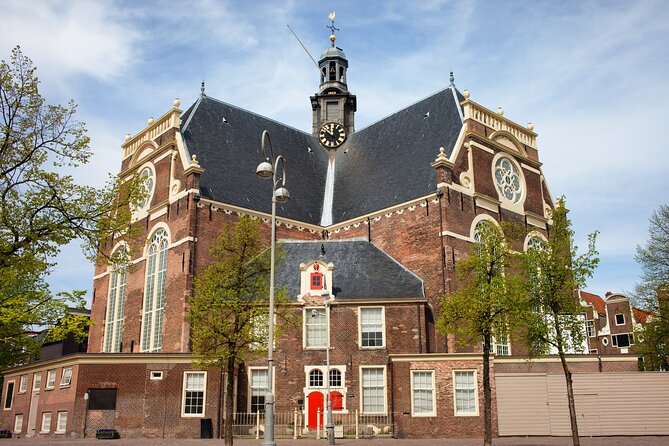
Van Gogh and Rembrandt meet inside the monumental Noorderkerk, where paintings, letters, light, and sound spread across the walls and ceiling. You can sit on a chair, stretch out on a beanbag, or walk around as the church becomes a moving canvas.
I like the clear artistic link between the two painters, told through Van Gogh’s letters to his brother. I also like the freedom to watch from different positions, plus the striking setting inside a national monument. The main caution is visibility: lighting fixtures and seating positions can block parts of the show, and the technology may feel dated if you have seen newer projection productions.
Key points
- Van Gogh’s admiration for Rembrandt: The story focuses on the older master’s influence on Van Gogh, rather than presenting two unrelated artist profiles.
- The Noorderkerk becomes the screen: Projections cover the church interior, including the walls and ceiling.
- A relaxed viewing style: Beanbags let you lie back, while regular seating and open floor space let you choose your own position.
- About 45 minutes of presentation time: The advertised visit lasts about an hour, but the main show itself may run closer to 45 minutes.
- A low-cost art stop: At about $19.74 per person, it can fit easily into an Amsterdam day, especially if you enjoy visual shows more than formal museum displays.
- Important museum distinction: This is not the official Van Gogh Museum.
Inside the Noorderkerk, art comes off the wall
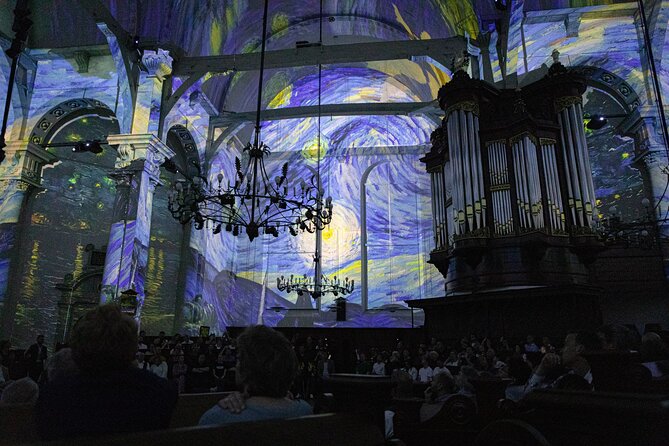
The setting does much of the early work. Instead of entering a gallery lined with framed paintings, you step into a church where images can spread from floor level to the upper walls and ceiling. The result is less like a standard exhibition and more like sitting inside a changing picture.
You can watch from a beanbag in the middle of the church, use the available seating, or take a slow walk as the images shift. That choice matters. A beanbag gives you the best chance to look up without craning your neck, while a chair may suit you better if you prefer a firm seat or want to get up easily.
The church also gives the presentation a sense of place that a plain event hall would lack. The show uses the whole interior of the Noorderkerk, not just a single projection wall. Angels, sunflowers, blossoms, paintings, and other images move around you as the presentation builds its visual story.
This is the first sound and light presentation of its scale to be shown inside a national monument, according to the experience description. That does not mean every technical detail will look brand new, but it explains why the venue is such a central part of the visit.
More Van Gogh Museum tickets and tours:
- Amsterdam: Van Gogh Museum Ticket
★ 4.7 · 52,054 reviews - Amsterdam: Van Gogh Museum Ticket and City Canal Cruise
★ 4.6 · 3,899 reviews - Amsterdam: Van Gogh Museum Ticket & Canal Cruise
★ 4.5 · 3,304 reviews
Van Gogh’s letters give the show its human thread
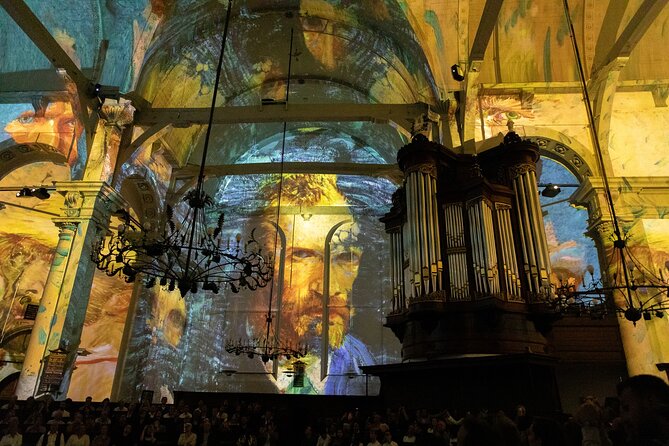
The best idea here is the connection between Van Gogh and Rembrandt. The presentation does not simply alternate between famous works by both artists. It explains how Van Gogh became fascinated by Rembrandt and how the older painter helped shape Van Gogh’s way of seeing art and faith.
Van Gogh’s letters to his brother provide the spoken and written thread. That gives the presentation something personal to hold onto. You are not only watching colors and shapes move across the church. You are also following Van Gogh’s own thoughts about Rembrandt, his paintings, his etchings, and his views as a master.
That link makes the program more useful for someone who knows Van Gogh but has less familiarity with Rembrandt. You get a basic sense of how one artist looked back at another. The show presents Rembrandt as an early kind of influencer, a painter whose work continued to guide later artists long before social media gave the word its current meaning.
Still, keep your expectations in check. This is not a full art lecture, a guided museum tour, or a close study of individual paintings. The information is presented through sound, text, music, and large moving images. If you want dates, detailed technique, or extended explanations of each work, the official museums will serve you better.
A 360-degree presentation, not a gallery visit
The main attraction is the scale. Instead of standing in front of a single canvas, you see artwork projected across several surfaces at once. The images can surround you, and the ceiling becomes part of the view.
I find this format most effective when you let it operate as a visual and musical presentation rather than trying to inspect every projected detail. Sit back and follow the broad movement of the show. The church makes it easy to notice color, shape, and mood before you start thinking about individual works.
The format also changes how you spend the hour. A traditional museum visit keeps you moving from object to object. Here, you can settle in. The beanbags encourage you to look upward and stay put, though not every seat is equally comfortable. If you arrive with a strong preference for upright seating, the available church seats may be the safer choice.
The freedom to walk around is useful, but it can work both ways. A slow stroll may help you find a clearer angle, especially if another object or fixture blocks your view. On the other hand, moving around during the presentation can distract people nearby and may cause you to miss part of the sequence.
The Noorderkerk setting is the real bonus
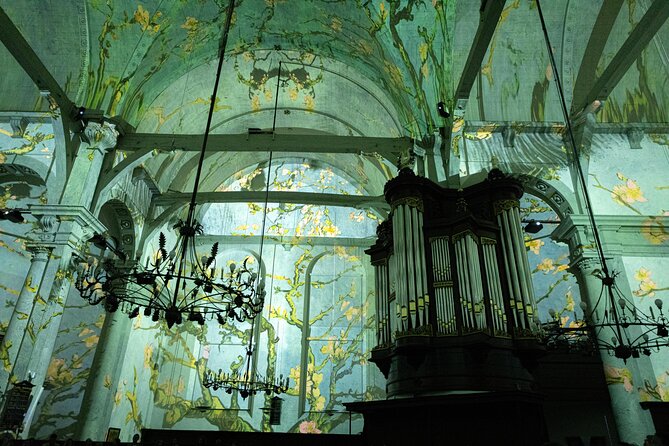
Amsterdam has no shortage of art venues, but a projection show inside a church offers a different kind of visit. The Noorderkerk supplies height, shadow, and architectural detail that become part of the presentation.
The church is not merely a backdrop. Its interior determines how the images appear. Projections climb the walls and reach toward the ceiling, so the building’s shape helps create the feeling of being surrounded by the artwork.
That setting is especially valuable if you have already seen Van Gogh’s paintings in conventional museum rooms. You will not get the quiet, close-up view of brushwork that a framed original provides. You will get scale and atmosphere instead.
The venue can also help this experience work for people who are not eager to spend several hours in museums. The visit is short, the format is easy to understand, and you do not need specialist art knowledge to follow the basic story.
At the same time, the church interior creates practical limits. Light fixtures can interrupt the view from some positions. The most attractive spot is not automatically the best viewing spot, so take a moment to look around before settling down.
A few more Amsterdam trips worth a look
- Amsterdam Classic Saloon Boat Cruise with Drinks and Cheese
★ 5.0 · 31,825 reviews - Amsterdam Luxury Canal Cruise + Unlimited Drinks & Bites option
★ 5.0 · 30,518 reviews - Amsterdam: Heineken Experience Ticket
★ 4.6 · 30,055 reviews - Amsterdam: Rijksmuseum Entry Ticket
★ 4.7 · 25,535 reviews
How the roughly one-hour visit unfolds
The itinerary has one main stop: the Noorderkerk. There is no bus ride, multi-site route, or separate guided walk built into the experience. Your time is spent inside the church watching the sound and light presentation.
The advertised duration is about one hour, though the main presentation may last around 45 minutes. That distinction is useful when planning your day. Allow enough time to enter, choose a place to sit, and get comfortable, but do not treat it as a full afternoon activity.
The presentation begins by establishing the relationship between Van Gogh and Rembrandt. It then uses Van Gogh’s letters and images from both artists to show how the younger painter responded to Rembrandt’s work and ideas.
As the show progresses, the projections fill more of your view. You may see flowers, angels, paintings, and other images moving across the church. Sound and music support the visual sequence, helping the show feel like a single presentation rather than a slideshow.
The experience is not guided by a named person, and no guide commentary is included. The story comes through the recorded material, Van Gogh’s letters, the artwork, and the changing projections. That makes it simple to follow at your own pace, but it also means you cannot ask questions during the show.
Price and value at about $19.74
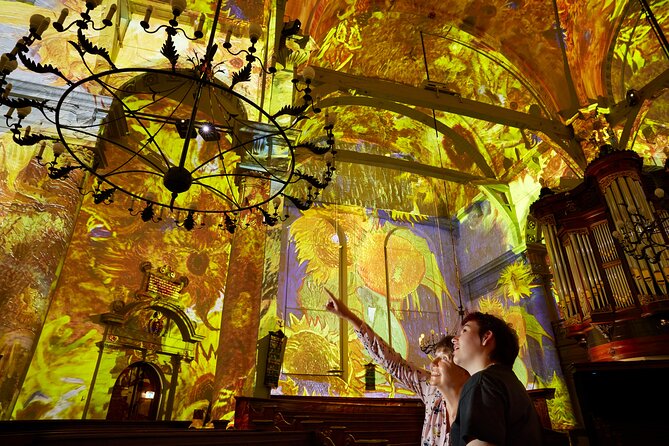
At about $19.74 per person, this is a moderate-cost Amsterdam activity. The value depends on what you want from art.
I think the price is reasonable if you want a short cultural stop with a memorable venue. You get admission to the full presentation, and the church setting adds something that a standard video screen could not. It can also be a good choice when you want a break from walking or from crowded museum rooms.
The value is weaker if you are mainly seeking original paintings. No projection experience can replace standing in front of an authentic Van Gogh or Rembrandt work. The images here are reproductions enlarged for effect, and the presentation favors mood and movement over close inspection.
Technology is another part of the calculation. Some viewers may find the graphics and video less advanced than newer sound and light productions. If you have seen several large projection shows, you may judge this one by a higher standard. The artistic subject and church location help, but the production may not feel cutting edge to everyone.
For a first visit to Amsterdam, I would treat this as an add-on rather than the main art event of your trip. Pair it with a traditional museum visit if you want both atmosphere and original works.
Seating, sightlines, and how to watch
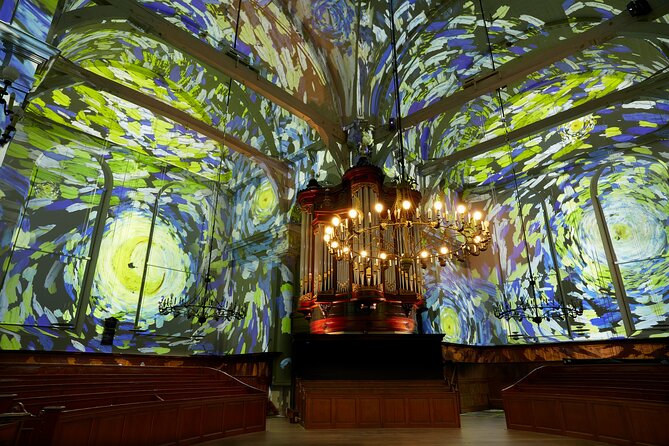
The seating arrangement deserves more attention than it might receive in a basic description. You can use beanbags or regular seating, and that flexibility is one of the pleasant features of the visit.
A beanbag lets you lie back and take in the ceiling. This is likely the most natural way to view a presentation designed to fill the church from top to bottom. It also makes the show feel relaxed, though some beanbags may not suit every body or preference.
The standard seats offer more support, but they may not provide the same broad view. Since fixtures can obscure parts of the projection, look carefully before committing to a position. If you can move around, use that option to find a clear line of sight.
You may also choose to stand or walk during part of the show. That can help you appreciate how the images change across different walls. Just remember that the presentation has a sequence, so leaving your position may mean missing part of the story.
This is one of those experiences where your viewing position shapes the quality of the visit. Arrive ready to make a small choice rather than simply taking the first available place.
Who will enjoy this experience most
I would recommend it to you if you like art presented in a relaxed, visual way. You do not need to know the full careers of Van Gogh and Rembrandt to understand the main idea. The connection between them gives the show enough structure for a first-time art visitor.
It may also suit couples, families, and anyone looking for a short indoor activity. The beanbags and open viewing style make it less formal than a museum gallery. You can sit quietly, watch the walls change, and take in the music without following a guide through a set route.
It is a particularly good fit if you are curious about Van Gogh’s own thoughts. His letters to his brother make the presentation more personal than a series of projected paintings with no explanation.
I would be more cautious if you want detailed art scholarship, museum-quality originals, or the latest projection technology. The show provides information, but it does not replace a serious museum visit. The graphics may also look modest beside newer productions.
If you have limited time in Amsterdam, consider the experience only if the Noorderkerk setting and the Van Gogh and Rembrandt connection appeal to you. It is not an essential substitute for the city’s major art museums.
Booking, timing, and practical details
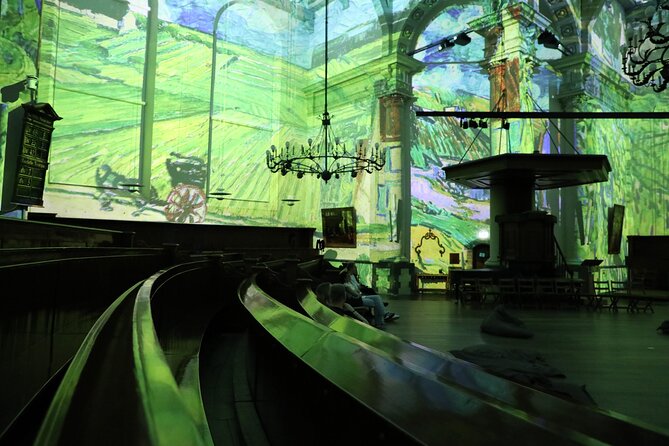
Your mobile ticket gives you a simple way to carry admission on your phone. Confirmation is provided when you book, and the experience is near public transportation, making it practical to add to a day of sightseeing.
Pay close attention to the operating time attached to your booking. The presentation can have different opening and closing hours from the time slots displayed through a booking platform. Check the actual schedule before you set out, especially if you are planning this as the final activity of the day.
The experience is about an hour, with the presentation itself sometimes closer to 45 minutes. That leaves room to combine it with other activities, but you should not assume the show will fill a large portion of your day.
Service animals are allowed, and most people can take part. No special fitness level is stated, though your comfort may depend on your choice of beanbag, chair, or standing position.
Free cancellation is available if you cancel at least 24 hours before the start time. Cancellations made inside that 24-hour window are not refunded, and changes during that period are not accepted.
Should you book Van Gogh and Rembrandt in Amsterdam?
Book it if you want a short, atmospheric art presentation in an unusual setting. The Noorderkerk, the use of Van Gogh’s letters, and the link to Rembrandt give the experience more substance than a simple collection of moving images.
At about $19.74, it is a fair extra stop for an art lover, a couple, or anyone wanting a calm indoor break. Choose a viewing position carefully, and expect a presentation of roughly 45 minutes rather than a full hour of continuous show time.
Skip it if you want original paintings, detailed art instruction, or highly advanced projection effects. For those priorities, Amsterdam’s formal museums offer more depth. For a relaxed church setting and a broad visual presentation of two important painters, this experience is worth considering.
FAQ
Is this the official Van Gogh Museum?
No. This is a separate sound and light presentation in the Noorderkerk, not the official Van Gogh Museum.
How long does the experience last?
The visit is advertised as approximately one hour. The main presentation may last about 45 minutes.
Where does the experience take place?
It takes place inside the Noorderkerk in Amsterdam. The church interior is used as the setting and projection surface.
What does the presentation focus on?
It explains the connection between Van Gogh and Rembrandt, including Van Gogh’s admiration for Rembrandt and the inspiration he found in the older artist’s paintings, etchings, and views. Van Gogh’s letters to his brother help tell the story.
Can I sit or lie down during the show?
Yes. You can use beanbags or regular seating, and you can also walk around inside the church. Some seating positions may have less comfortable support or a poorer view.
Can I cancel for a full refund?
Yes, if you cancel at least 24 hours before the experience start time. Cancellations or changes made less than 24 hours before the start time are not refunded.
Just added around Amsterdam
- Amsterdam: Giethoorn Tour with Canal Cruise and Windmills★ 5.0 · 3 reviews
- Full-day excursion to Edam, Volendam, and Marken★ 3.7 · 3 reviews
- Amsterdam: Chocolate Fondue in the Dark★ 5.0 · 3 reviews
- Amsterdam Old-West Vegan Food Tour with Local Guide★ 4.7 · 3 reviews
- Amsterdam Family Friendly Historical Walking Tour★ 5.0 · 3 reviews
- Amsterdam Private Walking Tour of Famous Painters★ 5.0 · 3 reviews
- From Amsterdam: visit Zaanse Schans, Muiderslot and more!★ 5.0 · 3 reviews
- Amsterdam Walking Tour with Dutch Pancake Lunch★ 5.0 · 3 reviews
Amsterdam Tours, compared.


Amsterdam Classic Saloon Boat Cruise with Drinks and Cheese
Read our review →
Amsterdam Luxury Canal Cruise + Unlimited Drinks & Bites option
Read our review →


Classic Boat Cruise with Optional Cheese & Wine
Read our review →
Evening Cruise with Optional Wine and Snacks
Read our review →
75 Minute City Canal Cruise with Audio Guide
Read our review →Browse the lists this tour appears in