
Reviewed · AMSTERDAM TOURS
Hidden Gems Tour: visit 5 unforgettable places from Amsterdam
The most unusual part of this day trip is its range. In one long sweep through North Holland and Friesland, you’ll see a 17th-century village, climb through a working windmill, look up at a moving solar system built in a wool comber’s living room, meet a centuries-old mystery, and finish beside one of the Netherlands’ great waterworks. This is not a standard Amsterdam countryside outing.
I like the small group of no more than seven and the way the day mixes famous Dutch engineering with quiet places most visitors miss. I also like the practical touches: an air-conditioned vehicle, a snack pack, water, and admission fees for the mill, planetarium, and crypt. The tradeoff is clear: you’ll spend a good part of the 8 hours 30 minutes in the vehicle, and lunch is not included.
Key points to know before booking
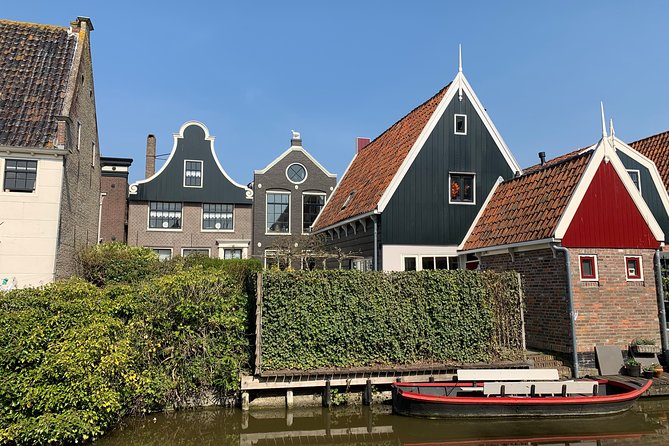
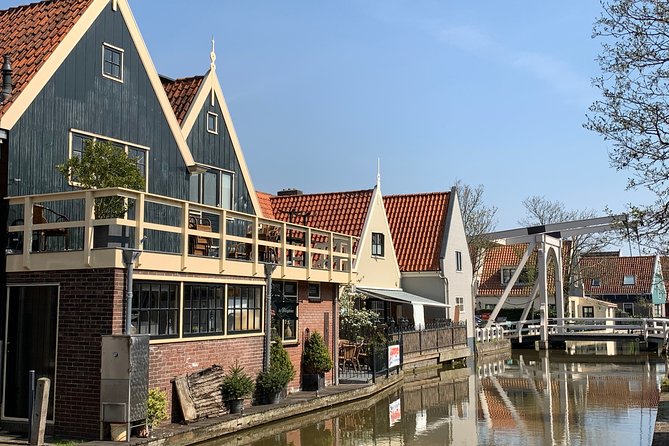
- De Rijp feels like a real open-air museum: Walk among wooden houses, red roofs, canals, a white bridge, and a remarkable Golden Age town hall.
- The Schermerhorn windmill is hands-on: You can explore it from top to bottom and see how land was reclaimed.
- Franeker’s planetarium is the day’s intellectual surprise: A working model of the solar system moves above the ceiling of a canal house.
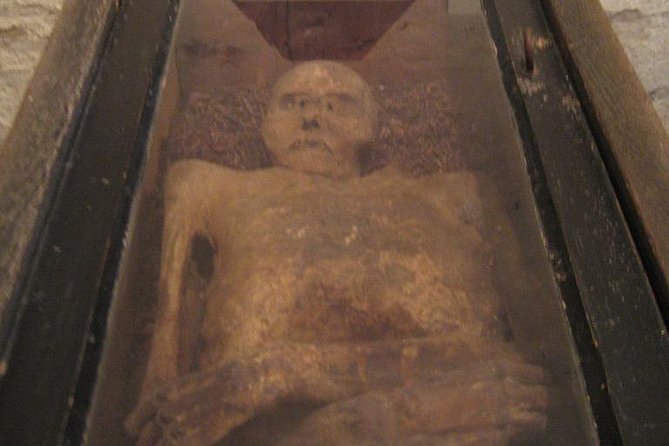
- The Wieuwerd crypt offers a genuine mystery: Four mummified people have rested there for more than three centuries.
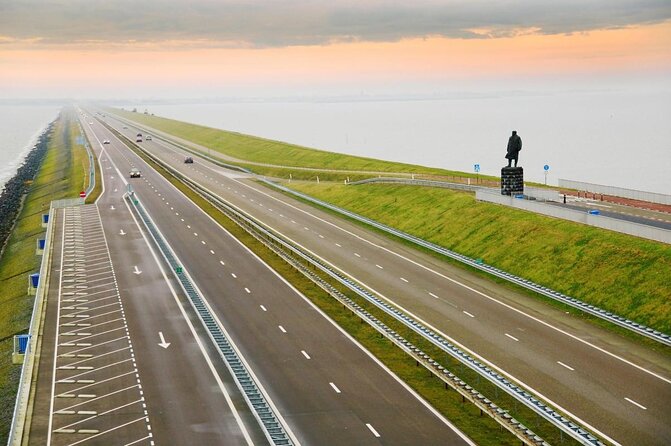
- The Afsluitdijk puts Dutch water control in perspective: From the watchtower, you can see the Wadden Sea on one side and the IJsselmeer on the other.
- The price pays for access and time: At $155 per person, it costs more than a basic half-day outing, but includes transport, snacks, and three admission fees.
Why this day trip reaches beyond the usual Dutch sights
Amsterdam is easy to enjoy without leaving the center. Its canals, museums, and historic streets can fill several days. But the Netherlands makes more sense once you see the villages and waterworks beyond the capital. This tour gives you that wider view without asking you to plan a complicated series of trains and local buses.
The route is especially good for connecting small details to big national ideas. A village such as De Rijp shows the wealth and design of the Dutch Golden Age. The windmill at Schermerhorn shows how people controlled water and created farmland. The Afsluitdijk shows that this work did not stop centuries ago.
The group size matters here. With a maximum of seven people, the day should feel less like a procession and more like a guided outing. Guides named Simon, Adrian, and Jan have led this route. The available details point to guides who explain Dutch history, drive, and keep the day moving without turning it into a lecture.
The van time is part of the bargain. You’ll pass through open countryside with grazing horses and cows in wet fields, but this is not a hop-on, hop-off trip. The stops are varied, yet the distances between them add up. Bring something to read, listen to, or simply watch the changing view through the window.
A few more Amsterdam trips worth a look
- Amsterdam: Van Gogh Museum Ticket
★ 4.7 · 52,054 reviews - Amsterdam Classic Saloon Boat Cruise with Drinks and Cheese
★ 5.0 · 31,825 reviews - Amsterdam Luxury Canal Cruise + Unlimited Drinks & Bites option
★ 5.0 · 30,518 reviews
De Rijp: a village with a Golden Age face
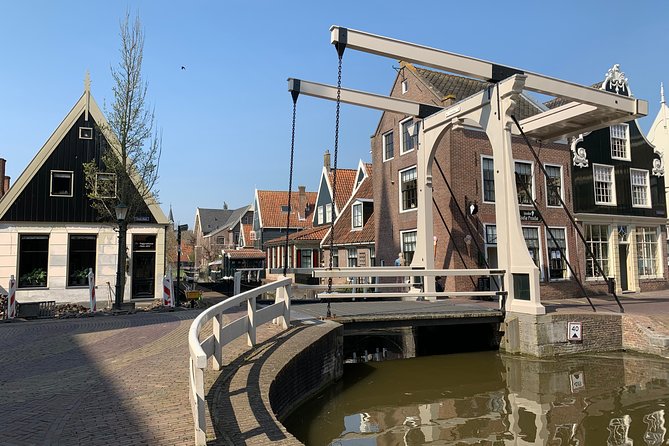
The first stop is De Rijp, a small village that looks carefully preserved but remains a real community. Its wooden houses, red roofs, canals, and old white bridge make it an excellent introduction to the day. You get about an hour to walk around, enough time to take in the main sights without trying to inspect every doorway.
The town hall is the star. Built during the Dutch Golden Age, it gives the village a sense of importance that might surprise you at first. De Rijp was not simply decorated for tourists. Its appearance reflects the prosperity and civic pride of an earlier period.
I like starting here because the pace is gentle. After meeting at the Italian Chamber on De Ruijterkade in Amsterdam at 9:00 a.m., you move quickly from city streets to a quieter setting. The contrast helps you see how different Dutch towns can be.
Keep your expectations sensible. De Rijp is a walking visit, not a major museum stop, and admission is free. Its appeal comes from the setting, the architecture, and the guide’s explanation of how the village fits into Dutch history. If you want a long café break or extensive shopping, this is not that kind of stop.
Schermerhorn: inside a working windmill
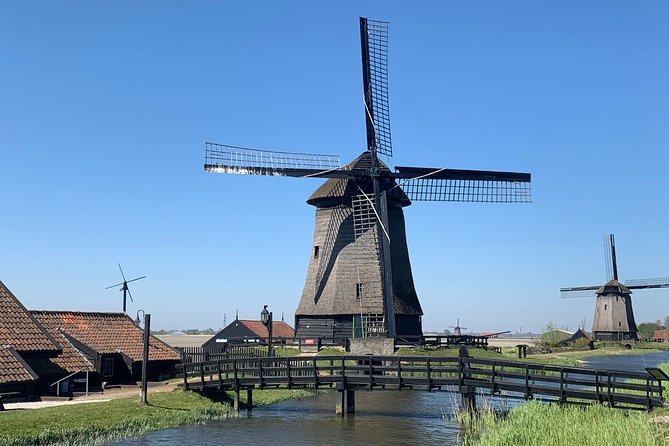
The next stop lasts about 45 minutes and focuses on one of the few surviving windmills in an area once drained by 52 mills. This is a useful correction to the postcard image of windmills as decoration. Here, the mill represents a working system that helped turn wet ground into usable land.
You can explore the mill from top to bottom. That makes the visit more satisfying than simply photographing a distant row of sails. You’ll get a closer look at the structure and the engineering behind it, while the view outside shows the flat country that Dutch water control made possible.
The setting also gives this stop a practical advantage over more famous windmill areas. Schermerhorn is less known than Zaanse Schans, so the experience can feel quieter and more focused. One guide-led day even had the mill operating, allowing the machinery to be appreciated as more than a historic shell.
You should allow for stairs and uneven movement inside an old windmill. The tour is not recommended for people with limited physical movement, and this stop is one reason why. Most people can participate, but the day involves walking and moving through historic buildings rather than staying on level museum floors.
Franeker: a solar system above a living room
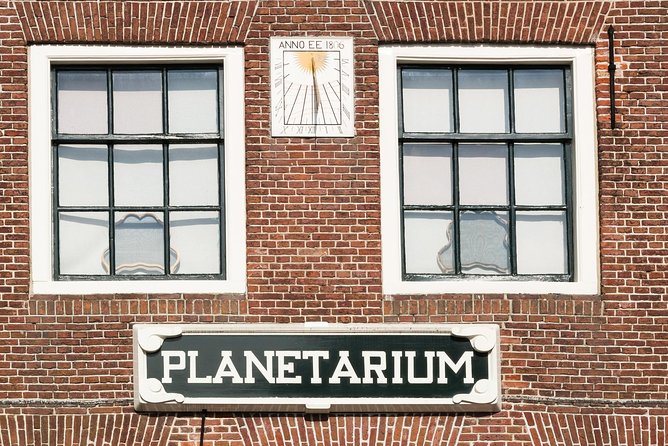
The Koninklijk Eise Eisinga Planetarium in Franeker is probably the most surprising stop. The planetarium is the oldest working one in the world, and its moving model of the solar system was built between 1774 and 1781 by Eise Eisinga, a Frisian wool comber.
What makes it memorable is the setting. The model hangs from the ceiling of a canal house living room. You are not entering a grand observatory designed by a royal court. You are looking at a precise piece of science built in an ordinary home by a skilled local man.
The visit lasts about 1 hour 30 minutes, making it the longest stop of the day. That gives you time to look closely and understand why the mechanism is so remarkable. The model is not just a static display. It continues to move, offering a clear picture of the solar system as understood when it was built.
Franeker is one of Friesland’s famous 11 cities and has other sights, but the planetarium is the reason this tour comes here. If you enjoy engineering, astronomy, old houses, or clever solutions to difficult problems, this is likely to be your favorite stop.
The admission fee is included, which matters because this is one of the tour’s three paid attractions. You won’t need to arrange a separate ticket or decide how to fit the planetarium into a rail journey from Amsterdam. The drawback is travel time: Franeker is well beyond the capital, so you pay for the convenience with a long day on the road.
Same country, a completely different kind of day:
- Amsterdam: Heineken Experience Ticket
★ 4.6 · 30,055 reviews - Amsterdam: Rijksmuseum Entry Ticket
★ 4.7 · 25,535 reviews - Amsterdam: Classic Boat Cruise with Optional Cheese & Wine
★ 4.6 · 22,925 reviews - Amsterdam: Evening Cruise with Optional Wine and Snacks
★ 4.4 · 19,696 reviews
Wieuwerd: four mummies and an unsolved question
The Mummy Crypt at the Reformed Church in Wieuwerd is the most unusual stop. In the village church, four mummified people were found in the crypt where they had been buried. They have remained there for more than three centuries.
This is not a grand royal tomb or a large collection. Its power comes from the small scale and the unanswered questions around the bodies. Scientists still puzzle over how the mummification happened and why the remains survived.
You’ll spend about 45 minutes here. The visit is direct: you go into the crypt and see the mummies where they lie. That can feel stark compared with the pretty villages and open fields earlier in the day. Anyone sensitive to grave sites or human remains should think carefully before booking.
For me, the stop works because it adds a note of mystery to a route otherwise centered on architecture and engineering. It also gives you a glimpse of a lesser-known Frisian village. Admission is included, and bathroom access is available at the places visited, a useful detail during a day with substantial driving.
Afsluitdijk: the Netherlands’ biggest engineering lesson
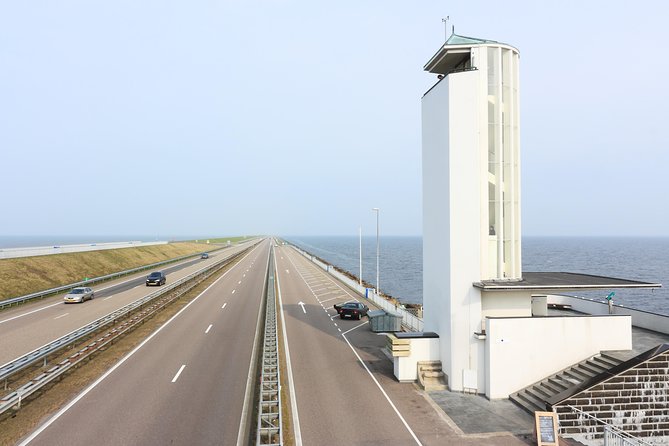
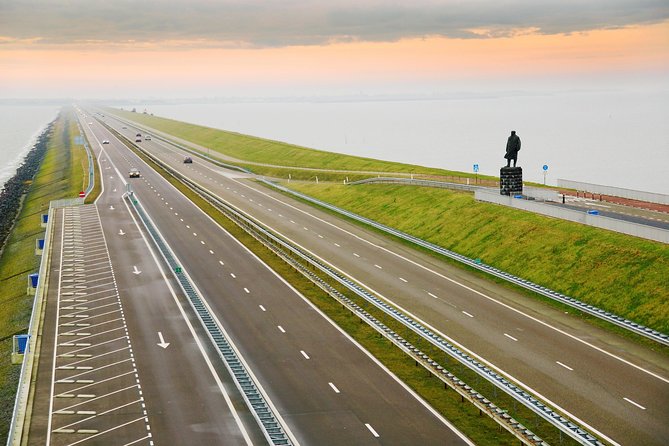
The final stop is the Afsluitdijk, a 32-kilometer barrier connecting North Holland and Friesland. Construction began about a century ago, and the dyke remains one of the clearest examples of the Dutch effort to manage water on a national scale.
The tour stops at a watchtower for about 30 minutes. From there, you can look toward the Wadden Sea on one side and the IJsselmeer lake on the other. Seeing both bodies of water from the same structure makes the purpose of the dyke easier to grasp than a written explanation alone.
This is a short stop, so don’t expect a full museum visit or an extended walk along the dyke. Its value is the view and the sense of scale. After seeing one windmill handle a local water problem, you finish with a massive structure built to protect and reshape an entire region.
The stop also gives the day a logical ending. You have seen how Dutch communities were built around water, how mills helped reclaim land, and how modern engineering continued that effort. Then you return to Amsterdam, ending at the original meeting point.
What the $155 price really covers
At $155 per person, this is not the cheapest way to see the Dutch countryside. The price makes more sense when you count what you would otherwise need to arrange: a vehicle for a full day, a driver, a guide, several regional journeys, and admission to three attractions.
You also receive snacks and water, plus an air-conditioned vehicle. A free snack pack will not replace lunch, but it helps during the long stretches between stops. Bring money or food for lunch because lunch, extra food, and beverages are not included.
The small group is another part of the value. A maximum of seven people allows for a more personal day than a large coach excursion. It also makes it easier for the guide to answer questions and adjust the conversation to the group.
The price is easier to justify if you want variety and convenience in one booking. It is harder to justify if your main goal is one famous windmill village, a slow café day, or the lowest possible cost. This tour covers a lot of ground. You are paying for access to places that are awkward to combine independently in a single day.
Timing, comfort, and practical limits
The tour begins at 9:00 a.m. at the Italian Chamber, De Ruijterkade 5, 1013 AA Amsterdam, and ends back there. The listed duration is approximately 8 hours 30 minutes, so plan your evening with some breathing room rather than booking a tight dinner reservation.
A mobile ticket is accepted, and the tour is offered in English. Confirmation arrives at booking. The vehicle is air-conditioned, and the small group size should make the ride more comfortable than a full coach.
Most people can participate, but the day is not recommended for people with limited physical movement. You’ll walk through villages, enter a windmill, and visit a crypt. Service animals are allowed, and the meeting point is near public transportation.
The experience requires good weather and a minimum number of participants. If poor weather cancels the day, you can choose another date or receive a full refund. The same applies if the minimum group size is not reached. For a full refund after booking, cancel at least 24 hours before the local start time. Changes or cancellations inside that window are not accepted.
Who will enjoy this route most
I would choose this tour if you have already seen Amsterdam’s central sights and want a fuller picture of the country. It suits people who enjoy local architecture, engineering, unusual museums, and stories that do not fit neatly into a standard sightseeing route.
It is also a strong choice for anyone who does not want to rent a car or organize several regional connections. The guide handles the driving and explains what you are seeing as the route unfolds. The countryside views, with horses and cows in wet green fields, become part of the experience rather than just empty time between attractions.
You may want to skip it if you dislike long vehicle journeys, need a slow pace, or prefer to spend a whole day in one town. The day has five stops, but none is designed for a long, unhurried stay. The mummy crypt may also be uncomfortable for some people.
The guide can make a real difference. Simon has been described as welcoming and engaging, while Adrian has been praised for clear English, safe driving, and courteous service. Jan has also led the route. Exact guide assignments can vary, but the experience depends on having someone who can connect the waterworks, villages, and Frisian sights into one story.
Should you book the Hidden Gems Tour?
Book it if you want a packed but thoughtfully varied day beyond Amsterdam, especially if you value a small group and included admissions. The Franeker planetarium, the working windmill, and the Afsluitdijk give the tour substance, while De Rijp and Wieuwerd add character and surprise.
Think twice if $155 feels high for a day with considerable driving, or if you want lunch included. Also check your comfort with stairs, walking, and a crypt containing human remains.
For the right visitor, this is a strong use of one day in the Netherlands. It shows you not just pretty buildings, but the ingenuity, oddities, and water-bound realities that shaped Dutch life.
FAQ
Where does the tour begin and end?
It begins at the Italian Chamber, De Ruijterkade 5, 1013 AA Amsterdam, at 9:00 a.m. The tour ends back at the same meeting point.
How long does the experience last?
The tour lasts approximately 8 hours 30 minutes.
How large is the group?
The activity has a maximum of seven participants.
Is the tour offered in English?
Yes. The tour is offered in English.
What attractions are included in the admission price?
Admission to the mill in Schermerhorn, the Koninklijk Eise Eisinga Planetarium in Franeker, and the mummy crypt in Wieuwerd is included.
Is lunch included?
No. Lunch, food, and beverages are not included, apart from the free snack pack provided with the tour.
Are snacks and drinks provided?
Snacks and water are provided. Additional food and beverages are not included.
Is the tour suitable for people with limited physical movement?
The tour is not recommended for people with limited physical movement. Most people can participate, and service animals are allowed.
What happens if the tour is canceled?
If poor weather causes a cancellation, you’ll be offered another date or a full refund. If the minimum number of participants is not reached, you’ll receive the choice of another date or experience, or a full refund. Free cancellation is available up to 24 hours before the start time.
Just added around Amsterdam
- Amsterdam: Giethoorn Tour with Canal Cruise and Windmills★ 5.0 · 3 reviews
- Amsterdam: Chocolate Fondue in the Dark★ 5.0 · 3 reviews
- Full-day excursion to Edam, Volendam, and Marken★ 3.7 · 3 reviews
- Amsterdam Old-West Vegan Food Tour with Local Guide★ 4.7 · 3 reviews
- Amsterdam Family Friendly Historical Walking Tour★ 5.0 · 3 reviews
- Amsterdam Private Walking Tour of Famous Painters★ 5.0 · 3 reviews
- From Amsterdam: visit Zaanse Schans, Muiderslot and more!★ 5.0 · 3 reviews
- Amsterdam Walking Tour with Dutch Pancake Lunch★ 5.0 · 3 reviews
Amsterdam Tours, compared.


Amsterdam Classic Saloon Boat Cruise with Drinks and Cheese
Read our review →
Amsterdam Luxury Canal Cruise + Unlimited Drinks & Bites option
Read our review →


Classic Boat Cruise with Optional Cheese & Wine
Read our review →
Evening Cruise with Optional Wine and Snacks
Read our review →