
Reviewed · AMSTERDAM TOURS
Financial History Tour
Amsterdam’s story looks different when you follow the money. On this private walk, Amsterdam’s grand exchange buildings, merchant wealth, bank vaults, and the famous tulip bubble fit together in one clear story. You begin at Beurs van Berlage and finish near Rokin, with several lesser-known corners along the way.
I like the private format, which lets your group move at its own pace and ask questions without competing with a crowd. I also like the mix of major sights and unusual details, especially the basement treasury in a former 1920s bank building. The main drawback is the price: $390.50 is fair for a full group of 10, but costly for one or two people.
- Amsterdam’s money trail begins at Beurs van Berlage, an exchange building near Dam Square.
- The former bank basement reveals a treasury space now connected with the city archives.
- Tulip Mania gets a place on the route, linking financial speculation with the floating flower market.
- Guide Tijs de Boer adds local context, historical insight, and practical city tips.
- The private group limit of 10 makes this a calm, flexible alternative to a large walking tour.
- The route takes about two and a half hours, ending roughly 500 meters from the starting point.
Why Amsterdam’s Financial Past Makes a Good Walking Tour
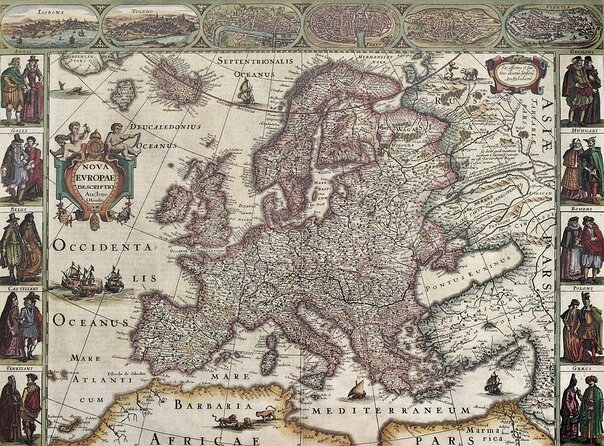
Amsterdam is often introduced through canals, paintings, merchant houses, and bicycles. Those subjects matter, but money explains why the city grew so quickly and why its culture took the shape you see today.
This tour uses finance as the main thread. You learn about the merchants who built fortunes, the exchange buildings that helped them trade, and the early economic excitement that reached a fever pitch during Dutch Tulip Mania. It is not simply a list of old buildings. The aim is to connect places with the decisions, risks, and ambitions that shaped Amsterdam.
I especially like this approach if you have already seen the obvious postcard views and want a new way to read the city. The route offers plenty of chances for photographs at famous central locations, but the subject matter gives those views more meaning.
The experience is offered in English and uses a mobile ticket. It is a private activity, so only your own party takes part. That matters in Amsterdam’s busy center, where a smaller group can usually pause, listen, and move on without the stop-and-go rhythm of a large crowd.
Starting at Beurs van Berlage Near Dam Square
The tour begins at Bistro Berlage, at Beursplein 1, beside Beurs van Berlage. The location is easy to reach by public transportation and puts you near one of the city’s key central squares.
Beurs van Berlage is a natural opening point. It was one of several exchange buildings built around Dam, and its presence helps explain how trade became part of Amsterdam’s public life. You spend about 10 minutes here, with admission included at no extra charge.
The building gives the subject an immediate physical setting. Instead of beginning with an abstract talk about banking, you start with the places where commercial activity took shape. Your guide can then explain why this part of Amsterdam became such an important financial center.
The stop is brief, which is useful if you are trying to cover several subjects in two and a half hours. It also means you should not expect a long architectural tour of Beurs van Berlage itself. The building works here as a starting point for the larger story.
Bring comfortable shoes. The distance covered is not specified, but this is a walking tour through the city center and requires a moderate level of physical fitness.
More History Tours in Amsterdam
- Amsterdam Food and Cultural Tour with Tastings
★ 5.0 · 2,442 reviews - Amsterdam: Haunted History and Ghost Walking Tour
★ 4.5 · 488 reviews - Amsterdam High-End Dutch Food & History Tour – Up to 8 guests
★ 5.0 · 482 reviews
Finding the Financial Heart of Amsterdam
After Beurs van Berlage, the route moves into the historic and financial core of Amsterdam. This is where the tour shifts from one building to the wider forces that made the area important.
You explore why events happened here rather than somewhere else. That question is more useful than memorizing dates. It helps you notice how commerce, public space, and city growth came together in the heart of Amsterdam.
This section should appeal to you if you enjoy cause and effect. You are not only looking at attractive streets. You are considering how merchants used the city, how money circulated, and how financial systems changed daily life and local culture.
The route also includes lesser-known places along the way. The exact stops are not fully specified, so you should expect the guide to shape the walk around the central area rather than follow a rigid list of museum interiors. That flexibility is one of the benefits of booking privately.
Guide Tijs de Boer is specifically associated with this experience. His role goes beyond pointing out buildings. You can expect historical explanations along with local hints about Amsterdam and its places of interest, making the walk useful for more than this one subject.
Inside the Former Bank Treasury at Stadsarchief Amsterdam
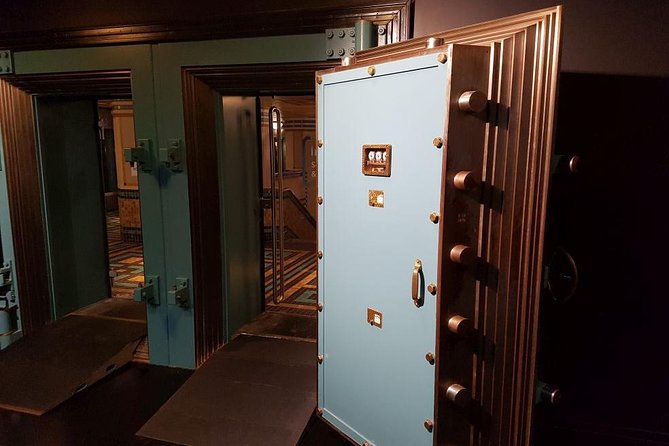
One of the most unusual stops is Stadsarchief Amsterdam, where the basement of a 1920s bank building reveals the former treasury of the city archives. You spend about 10 minutes here, and admission is included.
A basement treasury is a better setting for a financial history tour than a standard street-side explanation. It gives you a direct sense of how money, records, and security were handled inside a working bank building.
The stop also broadens the story. The tour is not only about wealthy merchants and dramatic bubbles. It shows the physical systems that supported finance: storage, protection, records, and institutions. Those practical details can be easy to miss when you only visit grand façades.
Because the visit is short, you should think of this as a focused historical stop rather than a full tour of the city archives. Still, it adds an unusual detail that many general city walks would skip.
The archives connection is also helpful for understanding how Amsterdam preserves its past. The former treasury has a very different feel from the open streets and market areas on the rest of the route, giving the walk some welcome variety.
How Amsterdam’s Merchants Built Their Fortunes
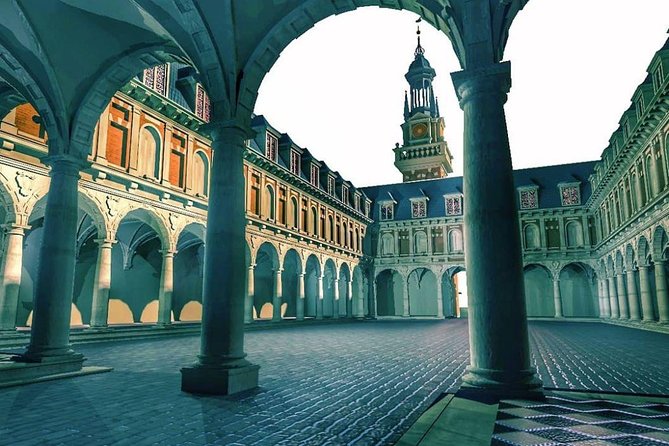
A central question on the walk is who Amsterdam’s wealthy merchants were and how they made their money. This is where the tour connects the city’s physical appearance with its economic activity.
You may find that the subject feels more personal here. Wealth was not an invisible force. It affected buildings, public institutions, social status, and the city’s sense of itself. Following the money helps explain why certain people gained influence and why Amsterdam developed the culture and heritage it is known for.
The experience is best suited to you if you like historical interpretation rather than a simple sightseeing checklist. The guide’s job is to show how a merchant economy worked and what it meant for the city. You get a clearer picture of the people behind the money, not only the institutions that handled it.
The private setup should help if your group has several interests. You can ask about merchant life, financial inventions, architecture, or places to visit later. The available description specifically notes that Tijs de Boer offers local hints on many subjects, so you can use the walk to gather ideas for the rest of your Amsterdam stay.
Same country, a completely different kind of day:
- Amsterdam: Van Gogh Museum Ticket
★ 4.7 · 52,054 reviews - Amsterdam Classic Saloon Boat Cruise with Drinks and Cheese
★ 5.0 · 31,825 reviews - Amsterdam Luxury Canal Cruise + Unlimited Drinks & Bites option
★ 5.0 · 30,518 reviews - Amsterdam: Heineken Experience Ticket
★ 4.6 · 30,055 reviews
Tulip Mania at the Floating Flower Market
The final major subject is Dutch Tulip Mania, presented at Amsterdam’s floating flower market. This is the tour’s most colorful financial episode and an easy way to understand the idea of an economic bubble.
Tulip Mania is often reduced to a funny story about expensive flowers. A good explanation should show why speculation became so powerful and how a product could take on a value far beyond its ordinary use. Here, the flower market gives the topic a fitting setting.
You get a chance to connect the past with a place that still reflects Amsterdam’s love of flowers. The market also offers a strong photo opportunity, especially if you want a livelier visual stop after the more institutional sections of the tour.
The market is not presented as a separate flower-focused excursion. Its role is to illustrate the bubble and place that financial episode in the city. If you want extensive time to shop or browse, you may need to return later on your own.
I like this ending because it leaves you with a memorable example. You begin with exchange buildings and financial institutions, then finish with a story about excitement, risk, and inflated value. That is a clear arc for a short walking experience.
A Private Tour Priced for the Right Group
The price is $390.50 per group, with up to 10 people allowed. That works out to about $39.05 per person if you fill every place. For five people, it is about $78.10 each, and for two people, the cost is much harder to justify.
This is where the group size matters most. Families, friends, or a small organization can get solid value from the private format because the total price does not rise with each person up to the 10-person limit. A solo visitor or couple pays the same group rate but receives less financial value.
You are paying for a dedicated guide, an English-language experience, flexible pacing, included admission at the archives stop, and a subject that is more specific than a standard Amsterdam highlights walk. The value improves if you are genuinely interested in finance, trade, business, or the forces behind the city’s development.
I would not choose this tour simply because you have two and a half hours to fill. Amsterdam has many less expensive ways to walk around the center. Choose it because you want a focused explanation and the ability to shape the conversation around your own group.
The tour is booked, on average, 28 days ahead. That does not guarantee that every date sells out, but it is a useful sign that you should reserve early if your schedule is fixed.
Timing, Meeting Point, and the Walk Back
The experience lasts about two hours and 30 minutes. It starts at Bistro Berlage, Beursplein 1, 1012 JW Amsterdam, and ends at Rokin 24HS, 1012 KS Amsterdam.
The finish is on the other side of Dam, about 500 meters from the starting point. That is convenient for continuing your sightseeing, reaching nearby transportation, or choosing a restaurant in the central area.
Since the tour is conducted on foot, wear shoes suited to city pavement. The stated fitness requirement is moderate, so this is not presented as an intense hike, but you should be comfortable walking and standing for the full duration.
The route’s central location makes it easy to pair with other Amsterdam plans. You might schedule it before or after major sightseeing in the center. Just leave enough time to arrive at Beursplein without rushing, especially if you are unfamiliar with the streets around Dam.
A mobile ticket keeps check-in simple. Confirmation is provided when you book, and the activity is offered in English.
Who Will Get the Most From This Experience
I would recommend this tour to you if you enjoy economic history, urban development, architecture, or stories about how societies organize money. It is also a good choice if you have already covered Amsterdam’s basic sights and want a more focused subject.
The private format works particularly well for:
- Friends who want to ask plenty of questions
- Families with older children interested in business or history
- Couples willing to pay more for a personal guide
- Groups of up to 10 who can share the cost
- Repeat visitors looking for a different view of central Amsterdam
You may want to skip it if your main goal is art, canal scenery, nightlife, or a broad introduction to every major sight. Finance is the organizing idea from beginning to end, so the subject should interest you before you book.
The route includes photo opportunities, but this is not primarily a photography tour. The photos support the history rather than replace it.
Booking Flexibility and Final Practical Advice
Free cancellation is available if you cancel at least 24 hours before the start time. Cancellations made less than 24 hours in advance are not refunded, and changes within that period are not accepted. The cut-off uses Amsterdam local time.
I would book this with a clear meeting plan and a little spare time before the start. Since the tour begins near Dam and uses a mobile ticket, the logistics are straightforward, but central Amsterdam can be confusing when you are watching bicycles, trams, and foot traffic.
Think about your group size before comparing the price. At 10 people, the cost is reasonable for a private, specialist walk. At two people, it becomes a premium experience and should be chosen for the guide and subject, not because it is the cheapest way to see Amsterdam.
Should You Book the Financial History Tour?
Book it if you want Amsterdam explained through trade, banking, merchant wealth, and speculation. The combination of Beurs van Berlage, a former bank treasury, the city’s financial center, and Tulip Mania gives the walk a strong structure, while the private format lets Tijs de Boer adjust the conversation to your interests.
I would especially choose it for a group of five to 10 people. The price makes much more sense when shared, and the private setting gives you room to ask about the city beyond the planned stops.
Skip it if you want a general city overview or a low-cost walk. But if you like understanding what made Amsterdam work, this is a smart, focused way to spend two and a half hours in the center.
FAQ
Where does the Financial History Tour begin?
It begins at Bistro Berlage, Beursplein 1, 1012 JW Amsterdam, Netherlands.
Where does the tour end?
The tour ends at Rokin 24HS, 1012 KS Amsterdam, on the other side of Dam and about 500 meters from the starting point.
How long does the tour last?
The experience lasts approximately two hours and 30 minutes.
What language is the tour offered in?
The tour is offered in English.
How much does the tour cost?
The price is $390.50 per group, for up to 10 people.
Is this a private tour?
Yes. Only your group participates in the activity.
What places are included?
The route includes Beurs van Berlage, the historic and financial center of Amsterdam, Stadsarchief Amsterdam, and the floating flower market where you learn about Dutch Tulip Mania.
Is admission included?
Admission is listed as included for the Stadsarchief Amsterdam stop. Beurs van Berlage has no admission charge for this tour.
How far in advance is the tour usually booked?
The experience is booked an average of 28 days in advance.
Can I cancel for a full refund?
Yes. You can receive a full refund if you cancel at least 24 hours before the experience start time. Cancellations and changes made less than 24 hours in advance are not accepted for a refund.
Just added around Amsterdam
- Amsterdam: Giethoorn Tour with Canal Cruise and Windmills★ 5.0 · 3 reviews
- Full-day excursion to Edam, Volendam, and Marken★ 3.7 · 3 reviews
- Amsterdam: Chocolate Fondue in the Dark★ 5.0 · 3 reviews
- Amsterdam Family Friendly Historical Walking Tour★ 5.0 · 3 reviews
- Amsterdam Private Walking Tour of Famous Painters★ 5.0 · 3 reviews
- Amsterdam Old-West Vegan Food Tour with Local Guide★ 4.7 · 3 reviews
- From Amsterdam: visit Zaanse Schans, Muiderslot and more!★ 5.0 · 3 reviews
- Amsterdam Walking Tour with Dutch Pancake Lunch★ 5.0 · 3 reviews
Amsterdam Tours, compared.


Amsterdam Classic Saloon Boat Cruise with Drinks and Cheese
Read our review →
Amsterdam Luxury Canal Cruise + Unlimited Drinks & Bites option
Read our review →


Classic Boat Cruise with Optional Cheese & Wine
Read our review →
Evening Cruise with Optional Wine and Snacks
Read our review →
75 Minute City Canal Cruise with Audio Guide
Read our review →Browse the lists this tour appears in