
Reviewed · AMSTERDAM TOURS
Amsterdam in World War II Tour
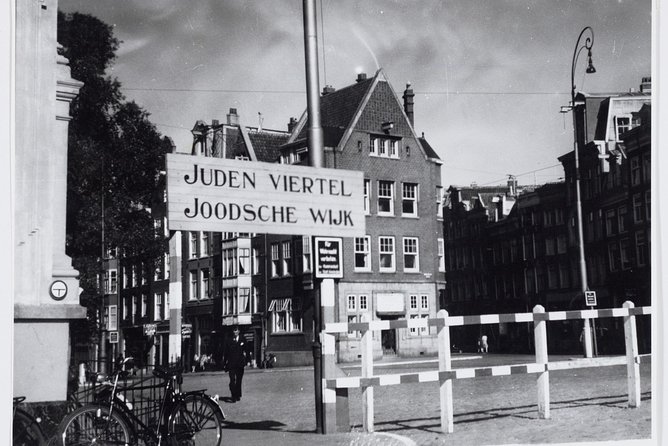
Amsterdam’s wartime story comes into sharp focus on this slow, three to three-and-a-half-hour walk. You begin outside Anne Frank House, then follow the occupation through canals, squares, former government buildings, and Jewish sites before ending at the National Holocaust Names Monument.
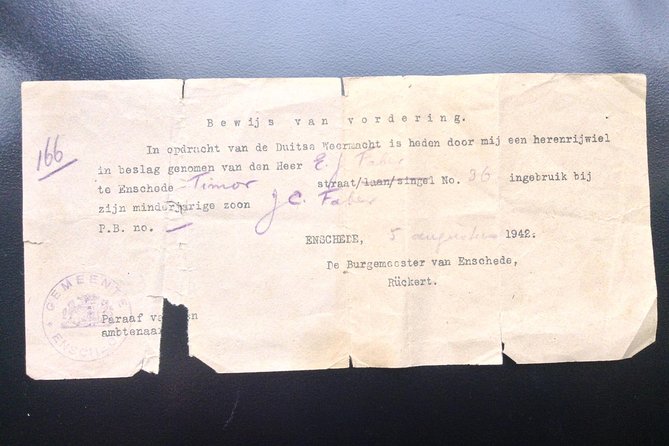
I like the small group of up to eight, which gives you room to ask questions and hear the guide clearly. I also like the use of wartime photographs, maps, logbooks, and copied documents. Peter and Ben are retired historians, and their material helps you compare today’s streets with Amsterdam during the German occupation.
The main drawback is simple: this is an outdoor walking tour, and the Anne Frank House is viewed only from outside. Bring a coat or rain layer, wear practical shoes, and remember that coffee, tea, museum admission, and transport are not included.
Key points at a glance
- Starts outside Anne Frank House: Learn about the German attack on the Netherlands, Jewish refugees, and the Frank family before moving into the wider city story.
- Small groups matter: The maximum is eight people, with some departures operating in even smaller groups.
- Retired historians lead the walk: Peter, Ben, and their fellow guides focus on the German occupation from 1940 to 1945.
- Original visual material adds context: Expect wartime photographs, maps, logbooks, and documents used to explain what happened at each place.
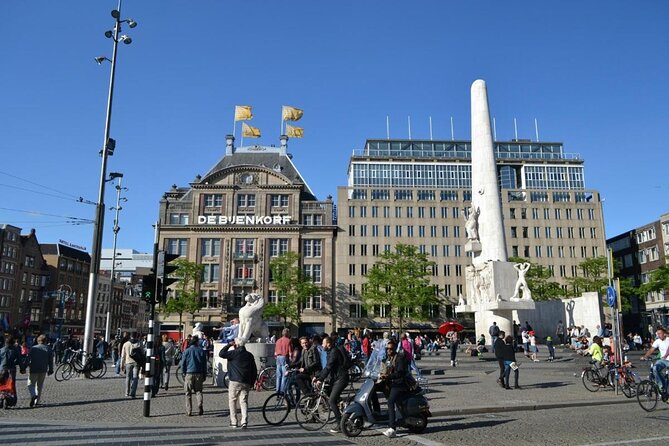
- Dam Square carries several wartime stories: The walk covers the occupation, a deadly shooting on May 7, 1945, recruitment for the Eastern Front, and Dutch remembrance traditions.
- Ends near the Holocaust Names Monument: The finish is close to the Portuguese Synagogue and not far from Amsterdam’s city hall.
Why Amsterdam needs a WWII walking tour
Amsterdam can look almost too pretty for its wartime past. Canal houses, bridges, bicycles, and busy squares can hide the fact that the city was occupied by German forces from 1940 to 1945.
This tour helps you read those ordinary streets differently. A former post office becomes a place tied to executions. A shopping mall points back to wartime civil service. A square filled with bicycles and visitors becomes the setting for both occupation-era events and a deadly shooting after the German surrender.
I find that approach more useful than a tour that simply lists dates. You move through the actual places where decisions, arrests, resistance, mourning, and public violence unfolded. The city itself becomes the classroom.
The focus is not only military history. You hear about Jewish life, refugees, deportation, resistance, Dutch officials, collaboration, and the confusion that followed liberation. That wider view matters because Amsterdam’s wartime story was shaped by civilians as much as soldiers.
A few more Amsterdam trips worth a look
- Amsterdam: Van Gogh Museum Ticket
★ 4.7 · 52,054 reviews - Amsterdam Classic Saloon Boat Cruise with Drinks and Cheese
★ 5.0 · 31,825 reviews - Amsterdam Luxury Canal Cruise + Unlimited Drinks & Bites option
★ 5.0 · 30,518 reviews
A personal walk with Peter, Ben, or another historian
The guides are three retired historians with a strong interest in the German occupation of the Netherlands. Peter and Ben are named in the tour details and feedback, and both are praised for their preparation, warmth, and ability to explain difficult events clearly.
You should expect a guide who brings supporting material rather than relying only on memory. Peter uses photographs linked to Amsterdam, while Ben has been described as carrying period images and answering questions at an unhurried pace. Other guides may also use maps, logbooks, and copies for you to take home.
That material is especially helpful in a city where the physical setting has changed. You may be looking at a modern building or a familiar street, then see how it appeared during the occupation. The contrast makes the past easier to picture without turning the tour into a lecture indoors.
The small size is another real advantage. With no more than eight people, you can usually hear the explanation and ask about a family connection, a resistance story, or a place you passed earlier. The guide also sets the pace so the slowest person can keep up.
This is not a brisk city walk designed to cover every major sight. The pace is deliberately slow, and the tour lasts about three hours. That makes it accessible to most people, but you still need to be comfortable walking around Amsterdam for an extended period.
Starting at Anne Frank House
The meeting point is outside Anne Frank House at Prinsengracht 263. The tour does not include entry to the museum, so you should think of this first stop as an introduction rather than a substitute for visiting Anne Frank House itself.
The guide begins with the German attack on the Netherlands and the arrival of Jewish refugees. From there, the story places Anne Frank and her family within the wider experience of Amsterdam’s Jewish population during the occupation.
This is a sensible opening because many people arrive in Amsterdam knowing Anne Frank’s story but not the larger setting around it. You get the broader political and human context before walking on to other locations.
Allow about ten minutes here, though the full opening section forms part of a longer route through Amsterdam. If visiting the museum is important to you, arrange that separately. A museum ticket is not included in the $46.44 tour price.
The Multatuli Statue and changing Amsterdam
The route continues toward the Statue of Multatuli, with time on Raadhuisstraat and the bridge over the Singel. This brief stop looks at how Amsterdam changed after World War Two.
That may sound less dramatic than the occupation sites, but it serves a useful purpose. War history is not only about what happened during 1940 to 1945. It is also about what a city removed, rebuilt, remembered, or allowed to fade from view afterward.
At this point, the guide can connect the older streets to the postwar city you see today. The short stop also breaks up the heavier material with a look at Amsterdam’s physical and social change.
Same country, a completely different kind of day:
- Amsterdam: Heineken Experience Ticket
★ 4.6 · 30,055 reviews - Amsterdam: Rijksmuseum Entry Ticket
★ 4.7 · 25,535 reviews - Amsterdam: Classic Boat Cruise with Optional Cheese & Wine
★ 4.6 · 22,925 reviews - Amsterdam: Evening Cruise with Optional Wine and Snacks
★ 4.4 · 19,696 reviews
Magna Plaza and the wartime post office
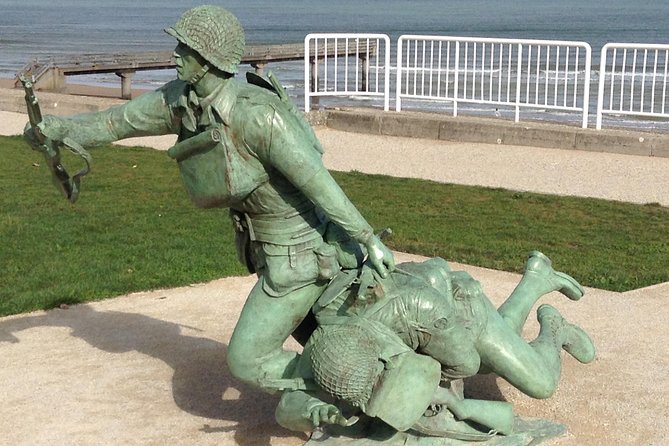
Magna Plaza is now a shopping mall operated by a Swedish entrepreneur. During World War Two, the building was Amsterdam’s post office.
The wartime story here concerns Dutch postmen who were executed by the Germans. That detail gives the occupation a local, personal scale. Instead of hearing only about armies and governments, you learn how ordinary public workers could become targets.
The stop lasts about five minutes, so do not expect a long visit inside the building. The value lies in the explanation and in seeing how a familiar commercial place once served a very different civic role.
I particularly like stops such as this because they challenge the idea that wartime history sits only in museums or monuments. In Amsterdam, it can be attached to a shopping center, a bridge, a hotel, or a street you might otherwise pass without a thought.
Nieuwe Kerk and the Mozes en Aäronstraat story
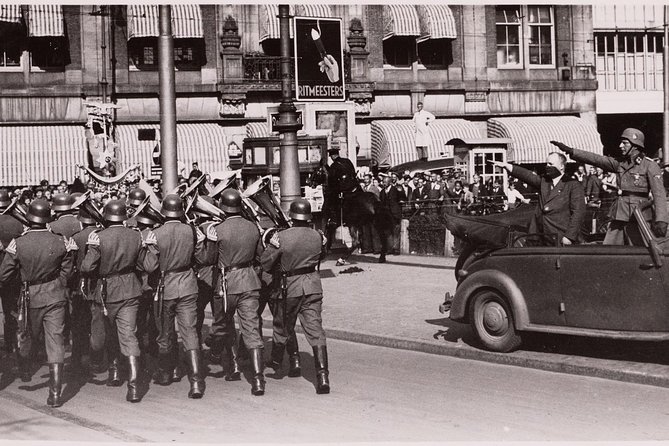
At Nieuwe Kerk, the guide explains a World War Two story connected with the street between the Royal Palace and the church, called the Mozes en Aäronstraat.
This is another short stop, listed at about five minutes. Its purpose is not to tour the church interior. Instead, you pause in one of Amsterdam’s central civic spaces and hear how a street near the palace and church became linked to wartime events.
The stop works best as part of the route’s larger pattern. By now, you have seen a private home, a bridge, a post office, and religious and royal buildings. Together, these places show how the occupation touched every part of city life.
Dam Square, from occupation to liberation
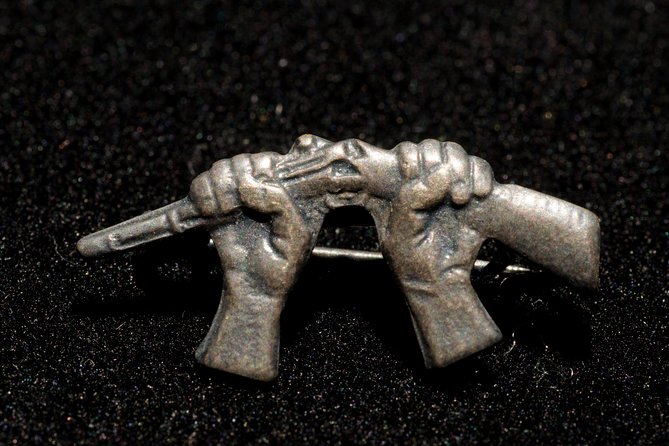
Dam Square receives the longest single stop, about 25 minutes, and rightly so. It is the heart of Amsterdam, and the guide covers several separate wartime episodes here.
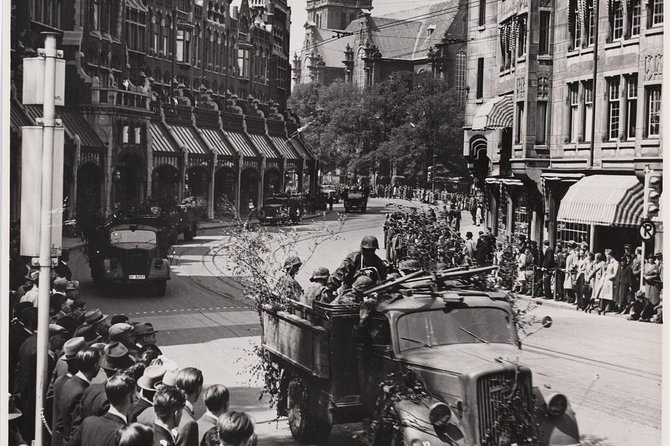
You hear about the German occupation and the recruitment of Dutch volunteers for the crusade against Bolshevism. The wording reflects the propaganda used at the time and opens a window onto the political pressures and choices faced by people in the Netherlands.
The guide also covers the shooting incident on May 7, 1945, two days after the German surrender. Liberation was not a clean switch from war to peace. Events in the square show how fear, confusion, and violence could continue even after the formal end of German control.
The square is also tied to May 4 remembrance and the World War Two monument. This gives the stop a present-day purpose. You are not simply hearing what happened decades ago. You are learning how the Netherlands publicly remembers its dead and marks the occupation.
Because Dam Square is active and open, you may encounter noise and movement around you. That can make it harder to concentrate than at a quiet monument, but it also reinforces the point that these events took place in the middle of daily urban life.
The former city hall at The Grand
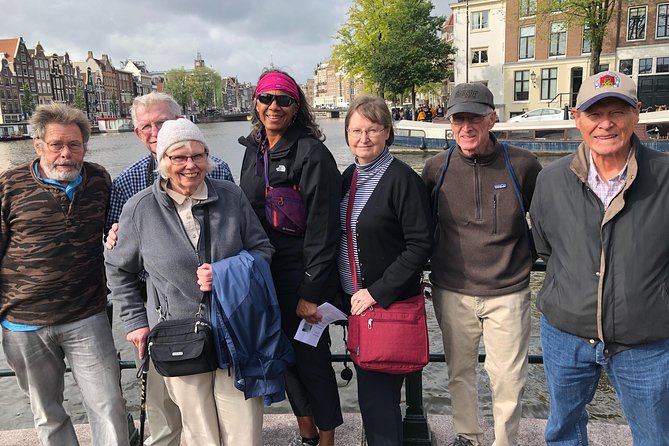
The final major city-center stop is Sofitel Legend The Grand Amsterdam. During the war, the building was city hall.
The guide explains that German troops were welcomed by Dutch civil servants on May 15, 1940. This moment raises questions about administration, accommodation, and the conduct of local officials under occupation. It is a useful counterpoint to stories of resistance because it shows that the wartime choices facing Dutch institutions were not simple.
Again, you do not need an admission ticket. The importance comes from the building’s former function and the story attached to it. A luxury hotel today, it once represented Amsterdam’s municipal authority at a critical moment.
Ending at the National Holocaust Names Monument
The walk ends at the National Holocaust Names Monument, close to the Portuguese Synagogue and not far from city hall. This is an appropriate place to finish a tour that has traced Jewish life, persecution, and the consequences of the occupation.
The location gives you a chance to pause after three hours of walking and discussion. The route does not treat Anne Frank’s story as an isolated episode. Instead, it places her experience alongside the wider destruction of Jewish communities and the many Amsterdam locations connected to that history.
Because the tour ends here rather than returning to the starting point, plan your next stop from the monument. The finish is still central, and the tour information notes that public transport is nearby.
What the $46.44 price gets you
At $46.44 per person, this is not the cheapest way to walk around Amsterdam. You are paying for a focused subject, a small group, and a guide who brings years of historical study to the streets.
The value is strongest if you want more than a general city introduction. The tour gives you about three hours of guided interpretation, with no extra entrance fees required for the outdoor stops. You also avoid spending time finding each location yourself or trying to connect scattered wartime sites on a map.
The price is less attractive if you mainly want to enter Anne Frank House. Museum admission is not included, and the building is visited from outside. It is also not the right pick if you prefer a broad overview of Amsterdam’s canals, art, architecture, and food.
Some departures may be very small, with only four people, while the stated maximum is eight. That can make the experience feel closer to a private discussion than a standard group tour. It also means you should book ahead, since the average booking point is 44 days before the start date.
Practical details before you book
The tour starts at 9:30 a.m. outside Anne Frank House. The endpoint is the National Holocaust Names Monument, near the Portuguese Synagogue.
Wear shoes suited to several hours of walking. The pace is slow, but the route still covers a substantial part of central Amsterdam. Amsterdam weather can change quickly, so a rain layer is sensible, especially because this is an outdoor experience and poor weather can lead to cancellation or a different date.
Coffee and tea are not included. One person specifically enjoyed a coffee break on a cold, windy day, but you should treat that as an informal pause rather than a promised inclusion.
Most people can participate, and service animals are allowed. The tour runs near public transport, and private transportation is not provided.
Free cancellation is available if you cancel at least 24 hours before the local start time. Late cancellations and changes are not accepted for a refund. If poor weather or an insufficient number of bookings cancels the experience, you are offered another date or a full refund.
Who should book this Amsterdam WWII tour?
I would choose this tour if you have a serious interest in World War Two, Jewish heritage, the Holocaust, or the Dutch resistance. It also suits you if you learn best through stories tied to real streets and buildings rather than through a long museum visit.
The tour is a good fit for people who appreciate patient guides and time for questions. Peter and Ben bring different personal styles, but the shared approach is clear: explain carefully, use period material, and keep the group together at a comfortable pace.
It may not suit young children who need constant activity, or anyone who wants a fast route through Amsterdam’s biggest attractions. The subject is also painful. You should be ready for stories about persecution, executions, deportation, and loss.
Should you book it?
Book this tour if you want Amsterdam’s World War Two story explained by a retired historian, with photographs and documents tied to the places you visit. The small group, slow pace, and carefully chosen stops make the $46.44 fee reasonable for a focused history experience.
Skip it if your main goal is entry to Anne Frank House, private transport, or a general sightseeing tour. For everyone else, this walk offers a thoughtful way to see Amsterdam beyond its postcard canals and connect familiar streets with the human choices and suffering of the occupation.
FAQ
How long does the Amsterdam in World War II Tour last?
The tour lasts approximately three to three-and-a-half hours. The walking pace is slow.
What time does the tour start?
The tour starts at 9:30 a.m.
Where does the tour begin?
It begins outside Anne Frank House at Prinsengracht 263, 1016 GV Amsterdam.
Does the tour enter Anne Frank House?
No. The tour starts outside Anne Frank House, and museum admission is not included.
Where does the tour end?
It ends at the National Holocaust Names Monument, near the Portuguese Synagogue and not far from city hall.
How large is the tour group?
The maximum group size is eight people. Some departures may operate with fewer participants.
Are coffee and tea included?
No. Coffee and tea are not included in the tour price.
Can I cancel for a full refund?
Yes, if you cancel at least 24 hours before the experience start time. Cancellations or changes made less than 24 hours before the start are not refunded.
Just added around Amsterdam
- Amsterdam: Giethoorn Tour with Canal Cruise and Windmills★ 5.0 · 3 reviews
- Full-day excursion to Edam, Volendam, and Marken★ 3.7 · 3 reviews
- Amsterdam: Chocolate Fondue in the Dark★ 5.0 · 3 reviews
- Amsterdam Old-West Vegan Food Tour with Local Guide★ 4.7 · 3 reviews
- Amsterdam Private Walking Tour of Famous Painters★ 5.0 · 3 reviews
- Amsterdam Family Friendly Historical Walking Tour★ 5.0 · 3 reviews
- From Amsterdam: visit Zaanse Schans, Muiderslot and more!★ 5.0 · 3 reviews
- Amsterdam Walking Tour with Dutch Pancake Lunch★ 5.0 · 3 reviews
Amsterdam Tours, compared.


Amsterdam Classic Saloon Boat Cruise with Drinks and Cheese
Read our review →
Amsterdam Luxury Canal Cruise + Unlimited Drinks & Bites option
Read our review →


Classic Boat Cruise with Optional Cheese & Wine
Read our review →
Evening Cruise with Optional Wine and Snacks
Read our review →