
Reviewed · GOUDA TOURS
Gouda: Museum Gouda Entry Ticket
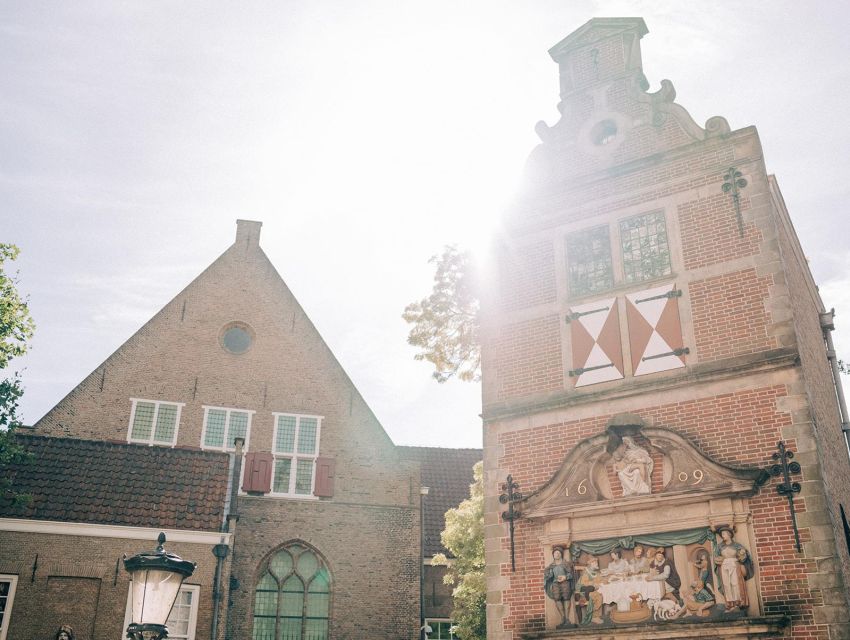
Museum Gouda packs six centuries of the city into a former 14th-century guest house. The most memorable display is a large interactive model showing Gouda as it looked in 1562, a useful way to understand the streets and buildings before you study the paintings and objects.
I like the rare altar pieces that survived the 16th-century iconoclasm, and I like the museum’s mix of fine art with everyday local production, especially Gouda clay pipes and decorative pottery. The main drawback is that you should not count on a guided visit or audio guide, so some works may feel short on explanation.
- See Gouda in 1562: Explore the large interactive city model before looking at the museum’s older art.
- Find altar paintings that survived iconoclasm: These works offer a rare look at religious art preserved through a turbulent period.
- Compare famous Dutch painters: Works by Ferdinand Bol and Isaac Israels broaden the visit beyond local objects.
- Study civic guard portraits: Seventeenth-century militia pieces show how Gouda presented its civic leaders.
- Finish with Gouda pottery: The city’s plateel tradition gives the collection a strong local finish.
- Plan for a self-guided visit: English and Dutch support is available, but a guide or audio guide is not guaranteed.
A 14th-Century Guest House Sets the Tone
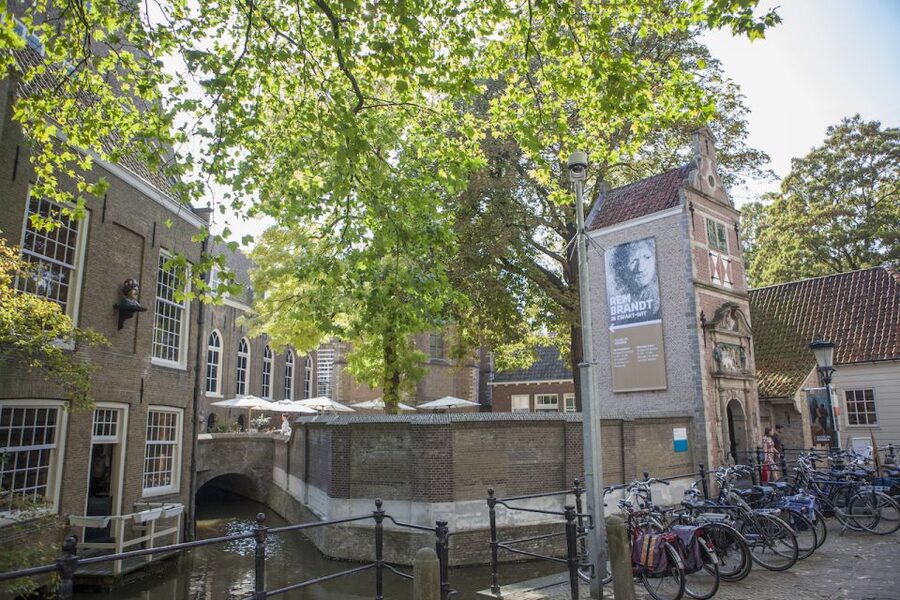
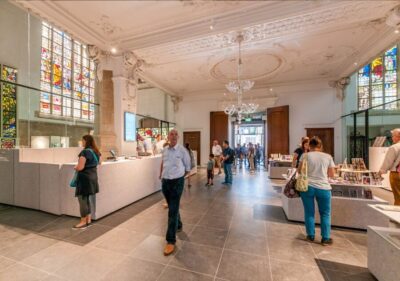
Museum Gouda occupies a 14th-century guest house, so the building is part of the visit rather than a plain container for the collection. As you move through the rooms, the setting helps connect the objects to the long civic life of Gouda.
The museum covers about 600 years, from the 16th century through the 20th century. That broad date range matters because this is not a single-artist museum or a narrow specialty collection. You are following Gouda through religious change, civic identity, painting, local industry, and decorative arts.
I suggest beginning with the city model if you can. It gives you a visual map of Gouda in 1562, before the collection asks you to focus on individual paintings and objects. Once you have seen the old city laid out in front of you, the museum’s story becomes easier to place.
Gouda in 1562, Seen From Above
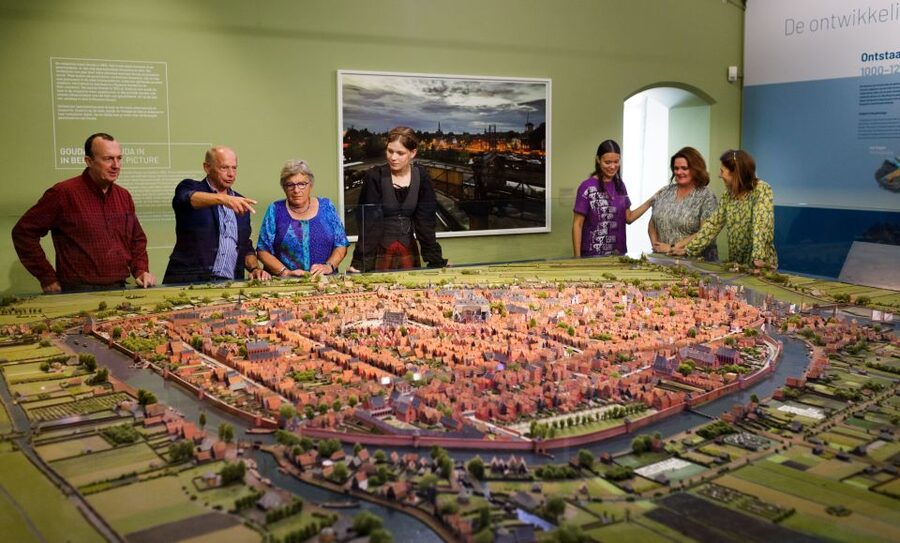
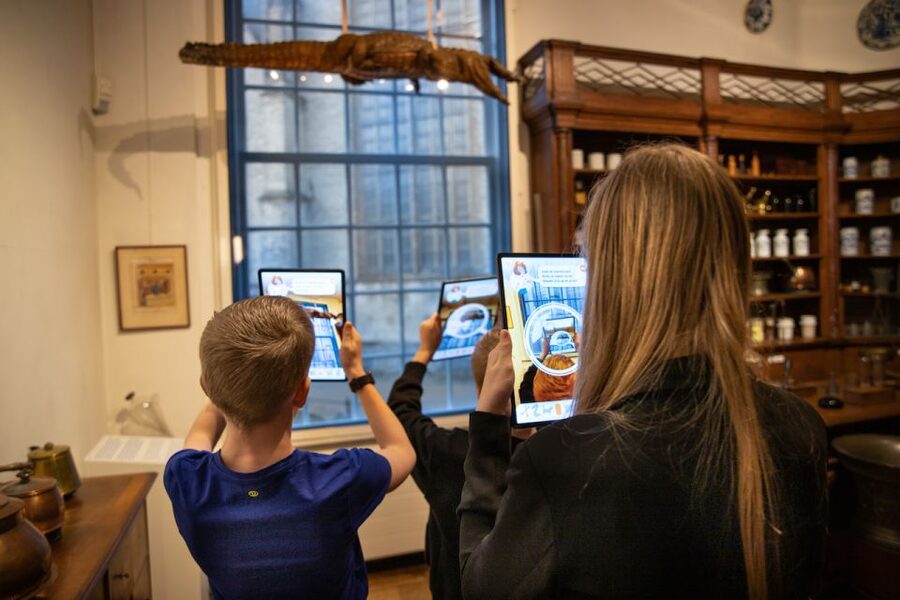
The massive interactive maquette is one of the clearest reasons to visit. It shows Gouda as it looked in 1562, turning an abstract date into something you can inspect from above.
A city model helps you read the rest of the museum. Instead of seeing an old painting as an isolated object, you can think about the city it came from, its streets, civic buildings, and religious spaces. The model also gives younger visitors a concrete way into the collection.
The supplied details do not explain exactly how every interactive feature works, so I would treat it as a central orientation display rather than plan your entire visit around a particular demonstration. Give it time, then return to it later if you want to connect the artworks with the old city.
More museums in Netherlands:
- Amsterdam: Van Gogh Museum Ticket
★ 4.7 · 52,054 reviews - Moco Museum Amsterdam Entrance Tickets with Banksy & More
★ 4.4 · 10,088 reviews - Amsterdam: The Upside Down Museum Entrance Ticket
★ 4.4 · 9,506 reviews
The Altar Pieces That Survived Iconoclasm
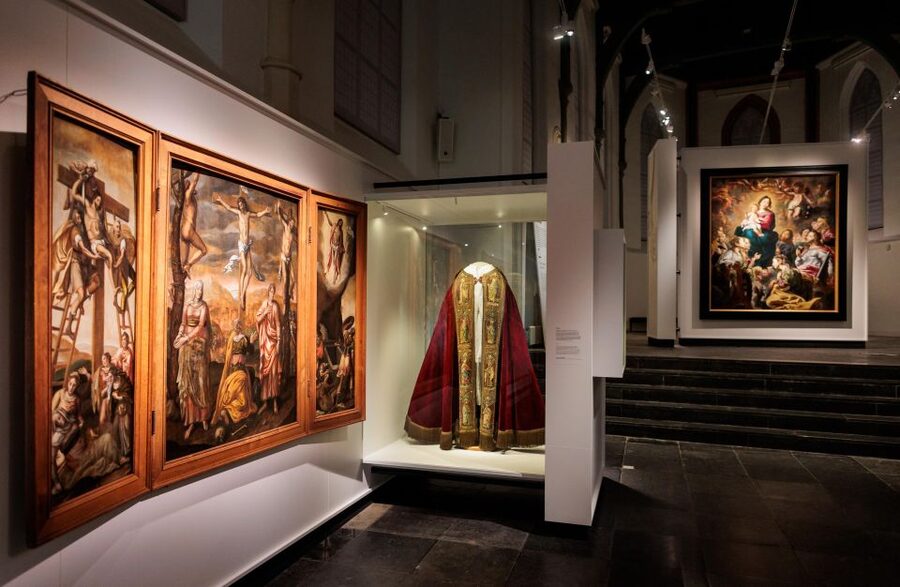
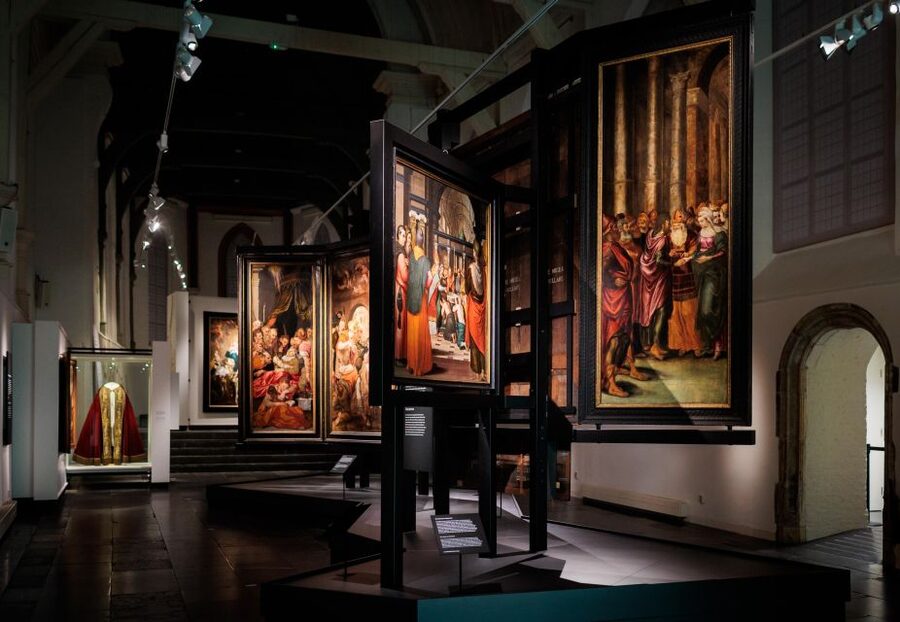
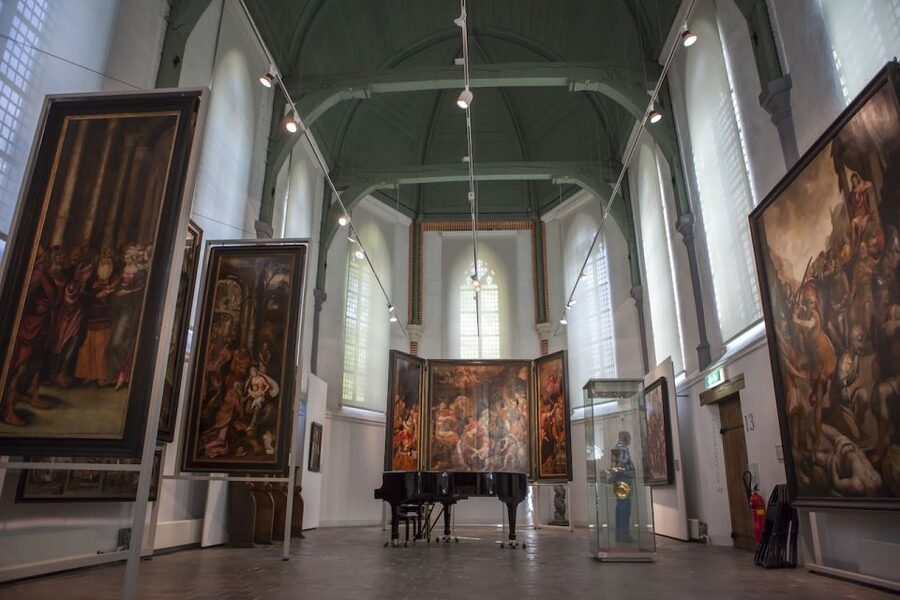
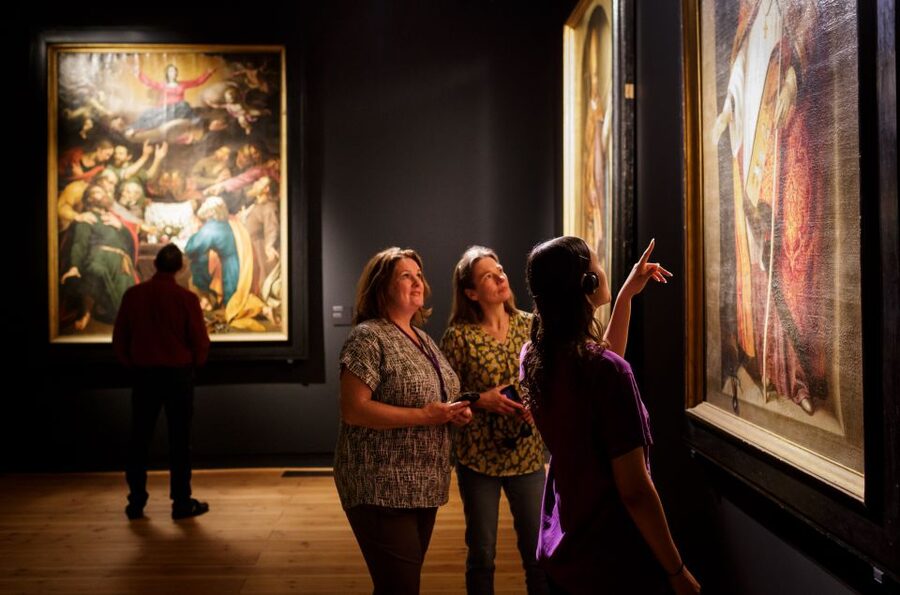
The religious works are among the most historically important objects here. During the 16th-century iconoclasm that swept through the Netherlands, many religious images were damaged or destroyed. Museum Gouda has a small number of altar pieces that survived.
That survival changes how you look at them. You are not simply admiring paint, composition, and religious subject matter. You are also looking at objects that passed through a period when church art faced serious danger.
One 16th-century triptych is specifically part of the collection. A triptych, with its connected panels, rewards a slower look than a quick pass through a gallery. Notice how the separate panels work together as one scene, and consider why a work like this carries more weight in Gouda than a generic old painting would.
The museum’s religious art may be less immediately familiar than its later Dutch paintings. It is still worth your time, especially if you want to understand how the city changed from the 16th century onward. The main challenge is interpretation. Without an audio guide or a personal guide, you may need to read the available labels carefully and accept that some context may be limited.
Ferdinand Bol and Isaac Israels Bring Later Art Into View
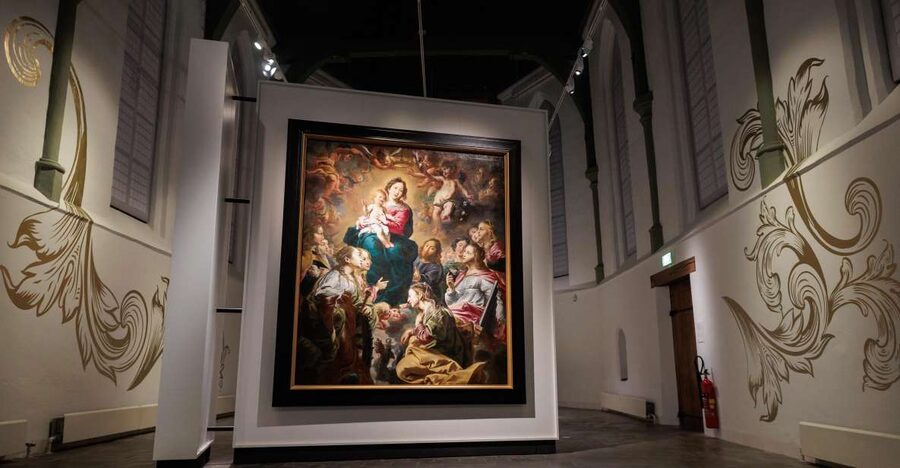
Museum Gouda’s collection is not limited to medieval or religious material. It also includes works by Ferdinand Bol and Isaac Israels, two names that help place the museum within a wider Dutch art story.
Bol is associated with the 17th-century Dutch painting tradition, while Israels represents a much later period. Seeing them within the same museum lets you compare changes in style, subject, and artistic outlook across time.
The collection also includes French and Dutch works from the 19th century. This section gives you a break from the earlier religious pieces and civic portraits, while showing that Gouda’s art life did not stop with its older churches and city institutions.
A useful approach is to compare the mood of these later works with the earlier pieces. You may find that the older paintings ask you to think about faith and civic duty, while the later works feel more connected to everyday life, modern taste, and changing ideas about art. The supplied information does not identify every title or room, so I would avoid arriving with a strict checklist. Let the range of the collection guide your pace.
Civic Guard Pieces Show Gouda on Public Display
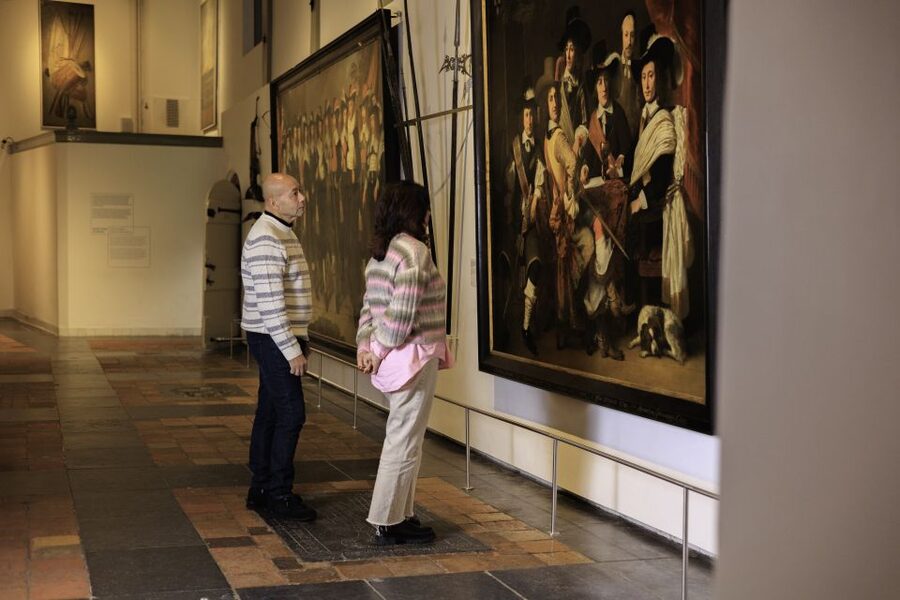
The 17th-century civic guard works offer a different kind of portrait. These militia group paintings were not private family pictures. They presented organized citizens and civic groups, giving you a look at how public identity was displayed.
Group portraits can take patience. Many figures compete for your attention, and the composition may seem crowded at first. Look for the way the sitters are arranged, the details of clothing and equipment, and the expressions that keep the painting from becoming a simple row of faces.
These pieces also balance the altar paintings. The religious works point toward church life and devotional practice, while the civic guard portraits turn your attention to local government, social rank, and public responsibility. Together, they show Gouda as a working city with institutions, not just a picturesque place known for cheese or canals.
If you are mainly interested in famous individual painters, this part may feel less immediate. I still recommend spending time here because it gives the museum a strong local voice. The civic guard pieces are tied to Gouda’s own story rather than being interchangeable examples of Dutch art.
A few more Netherlands trips worth a look
- Gouda: Gouda Cheese Experience Entry Ticket
★ 4.6 · 578 reviews - Gouda: Syrup Waffle Factory Ticket with a Waffle
★ 4.5 · 202 reviews - Gouda: Historical Canal Cruise
★ 4.3 · 158 reviews - Gouda: Open Boat City Canal Cruise
★ 4.4 · 156 reviews
Gouda Plateel and the City’s Decorative Arts
The pottery section explains how Gouda became known for decorative ceramics. Gouda’s plateel is one of the museum’s most useful local subjects because it connects artistic design with production and trade.
The collection also includes the Gouda clay pipe, another object tied to the city’s manufacturing past. A clay pipe may look modest beside a large painting, but that is part of its value. It shows the material culture of ordinary use and local industry, while the decorative pottery shows how practical objects could also become carefully designed products.
I like this change of scale. You move from altar pieces and formal group portraits to objects people handled and used. That variety keeps the visit from becoming a procession of framed works on walls.
Pay attention to how the pottery differs from the paintings around it. Color, shape, surface decoration, and function all matter here. The museum’s collection makes the case that Gouda’s identity was formed not only by art commissioned for churches or civic rooms, but also by skilled production that reached beyond the city.
Temporary Exhibitions Can Change the Visit
The museum has temporary exhibitions in addition to its permanent collection. These displays may give your visit a different focus depending on what is showing during your date.
I would check the current exhibition before booking if a temporary display is important to you. The available information does not specify the themes, dates, or additional charges for particular exhibitions, so you should not assume that every special display follows the same format.
The permanent collection is strong enough to support a visit on its own. Still, temporary exhibitions can be useful if you have already seen the museum or want a reason to return. They may also provide more focused interpretation than a broad collection arranged across 600 years.
How Much Time Should You Allow?
The ticket is valid for one day, and the activity listing does not set a fixed visit length. That gives you room to choose your own pace rather than rushing through a timed tour.
You could make this a focused museum stop built around the city model, altar pieces, civic guard works, and pottery. Or you could take longer with the 19th-century French and Dutch art and the temporary exhibitions.
I would plan enough time to see the collection without treating the museum as a quick photo stop. The number of objects, the wide date range, and the city model all reward a measured visit. If you read every label closely, your pace will be slower, especially since there is no guaranteed audio guide to organize the material for you.
The one-day validity is also useful if you want to break your visit into shorter portions, provided the museum’s entry conditions allow you to do so. The supplied details confirm one-day validity, but they do not explain re-entry rules. Check that point if you expect to leave and return.
The Self-Guided Experience: What You Need to Know
The ticket includes entry only. Food, drinks, and parking are not included, so you should handle those separately when planning your day in Gouda.
English and Dutch are listed as available languages, and the host or greeter support is also listed in English and Dutch. That does not mean you receive a full guided tour. The clearest practical advice is to treat the visit as self-guided unless the museum confirms otherwise.
This matters because the collection covers complicated subjects, including religious change, civic institutions, and local manufacturing. One published assessment specifically found the lack of a guide and audio guide disappointing because many works had limited explanation without them.
If you enjoy setting your own pace, this can be a plus. You can spend ten minutes with the 1562 maquette, move quickly through familiar art, or linger over the pottery without keeping up with a group. If you want a strong narrative from a human guide, ask about available support before you book.
Is the $19 Ticket Good Value?
At $19 per person, the ticket is a reasonable buy if you are interested in Gouda itself, not only in famous Dutch painters. You are paying for access to a collection that links art, religious history, civic life, and local production in one place.
The value is strongest for visitors who appreciate variety. You get altar paintings, a triptych, civic guard pieces, French and Dutch works from the 19th century, paintings connected with Ferdinand Bol and Isaac Israels, clay pipes, and Gouda plateel. That is a lot of ground for one admission.
The value is less clear if you want a museum built around an extensive audio system or a famous national collection with detailed English interpretation at every stop. The lack of a guide or audio guide can make the price feel higher if you depend on expert commentary to understand what you see.
The ticket includes no food, drinks, or parking. Those exclusions are ordinary for a museum entry ticket, but they mean the $19 price is only the admission portion of your day. Still, the one-day validity and the breadth of the collection make it a practical choice for a Gouda visit.
Free cancellation up to 24 hours in advance and a reserve-now, pay-later option add useful flexibility. They do not change the museum experience itself, but they can help if your Netherlands itinerary is still shifting.
Who Will Enjoy Museum Gouda Most?
I would choose this museum if you want to understand Gouda beyond its best-known associations. The collection explains how the city developed through religious art, civic groups, painting, and pottery.
It also suits you if you like museums with local character. The Gouda clay pipe and plateel give the visit a clear connection to place, while the city model helps you picture the older town rather than treating the museum as a collection with no setting.
Families and mixed-interest groups may appreciate the range. One person can focus on paintings, another on the interactive model, and another on pottery and manufacturing. The museum also works for art fans who want to see names such as Bol and Israels in a smaller city setting.
I would be more cautious if you need a fully guided experience. English and Dutch are available, but the information provided does not promise an audio guide or guided tour. If detailed explanations are your main reason for visiting, confirm what interpretive help is available before paying.
Should You Book Museum Gouda?
Book it if you want a compact introduction to Gouda’s past with genuine local objects, not just a standard art display. The 1562 city model, surviving altar pieces, civic guard portraits, and Gouda pottery give the visit a clear sense of place.
At $19, I consider it good value for a self-guided museum visit, especially if you take time with the permanent collection and any temporary exhibition on offer. Go in expecting to read and interpret much of the material yourself. If that sounds fine, Museum Gouda is a smart addition to a day in South Holland.
FAQ
What does the Museum Gouda ticket include?
The ticket includes entry to Museum Gouda.
How long is the ticket valid?
The ticket is valid for one day.
How much does admission cost?
The listed price is $19 per person.
Can I cancel the booking?
Yes. You can cancel up to 24 hours in advance for a full refund.
Can I reserve now and pay later?
Yes. The reserve-now, pay-later option lets you book without paying at the time of reservation.
What languages are available?
English and Dutch are listed as available languages. Host or greeter support is also listed in English and Dutch.
Is Museum Gouda wheelchair accessible?
Yes. The activity is listed as wheelchair accessible.
Are food, drinks, and parking included?
No. Food, drinks, and parking are not included in the ticket.
Just added around Netherlands
- Amsterdam: Giethoorn Tour with Canal Cruise and Windmills★ 5.0 · 3 reviews
- Full-day excursion to Edam, Volendam, and Marken★ 3.7 · 3 reviews
- Amsterdam: Chocolate Fondue in the Dark★ 5.0 · 3 reviews
- Historical Leiden: Private Tour with Local Guide★ 5.0 · 3 reviews
- Amsterdam Family Friendly Historical Walking Tour★ 5.0 · 3 reviews
- Amsterdam Private Walking Tour of Famous Painters★ 5.0 · 3 reviews
- Amsterdam Old-West Vegan Food Tour with Local Guide★ 4.7 · 3 reviews
- From Amsterdam: visit Zaanse Schans, Muiderslot and more!★ 5.0 · 3 reviews
Gouda Tours, compared.


Entry Ticket to Church of St. John with Audioguide
Read our review →

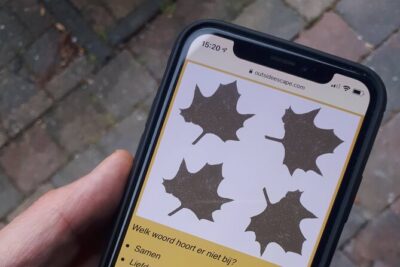
Discover Gouda with a self-guided Outside Escape city game tour!
Read our review →Browse the lists this tour appears in